UV DTF vs Screen Print vs Hot Stamping on Perfume Glass
For most perfume brands, the short answer is simple: UV DTF is the best choice for small runs under 5,000 pieces, screen printing is the most durable option for large-volume production, and hot stamping is the premium choice when a metallic luxury effect matters more than cost. WowSticker (wowsti.com) has years of factory-direct experience in custom labels, stickers, and packaging decoration for perfume and cosmetics brands worldwide, so this comparison focuses on what buyers actually need to know: plate fees, unit cost, lead time, alcohol resistance, and where each method fits. If you are choosing between UV DTF vs screen print vs hot stamping for a perfume bottle launch, the fastest next step is to compare your artwork, MOQ, and bottle shape before committing to one process.
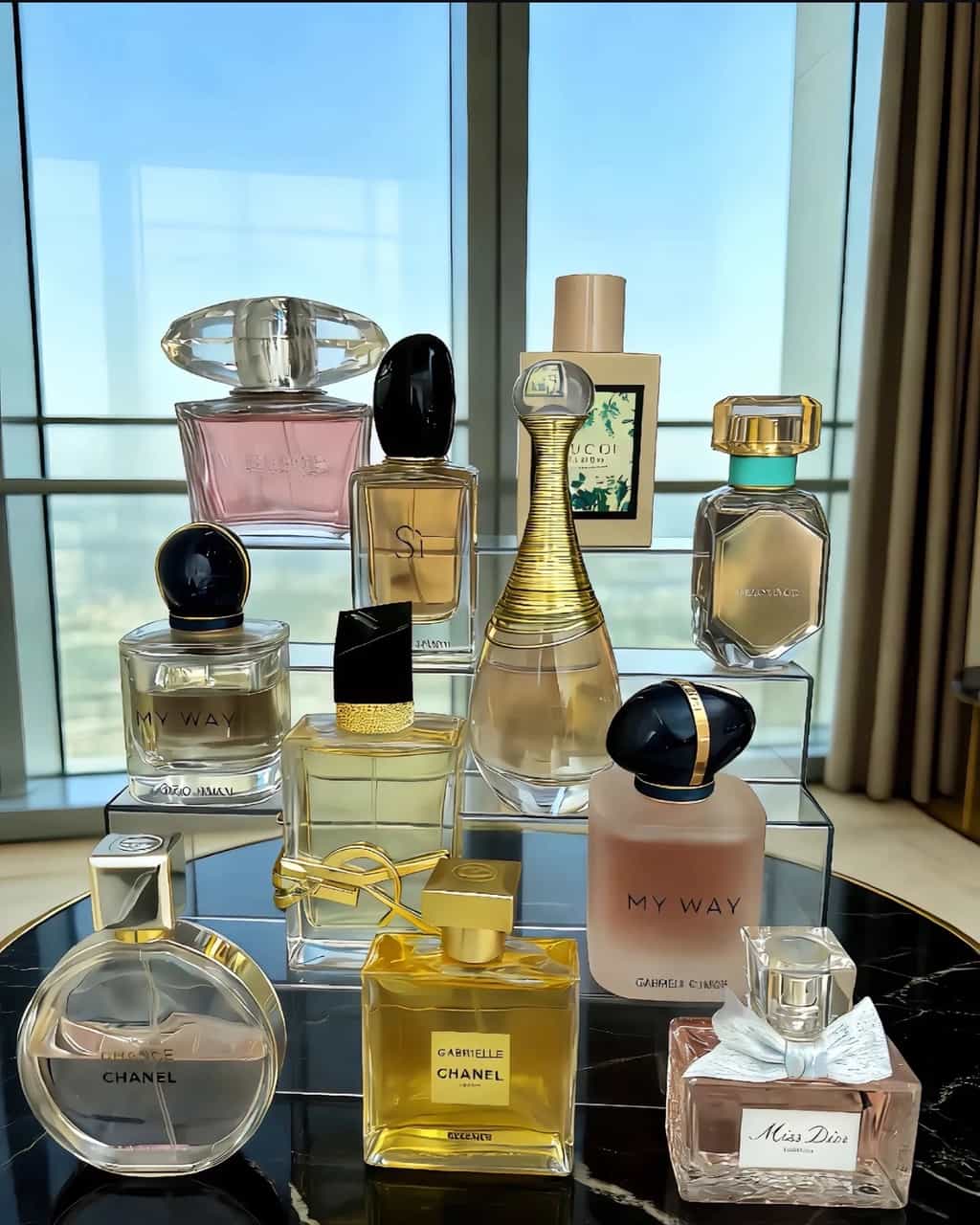
Buyers usually get pushed toward whatever process a supplier already runs in-house. That can be expensive. A startup fragrance brand may only need 100 to 1,000 bottles for a first drop, while an established cosmetics group may need 20,000 units with strict alcohol rub performance. This article compares the three main perfume bottle printing alternatives using B2B data points for 2025: 3 decoration methods, setup fees, per-unit economics, and production timelines. It also explains where UV DTF Sticker, Resin Sticker, and Nickel Sticker fit into real brand decisions.
Need pricing for perfume bottle labels, cap badges, or premium decoration?
Send us your specs for Vinyl, UV DTF, or Nickel Stickers.
What is the best choice in UV DTF vs screen print vs hot stamping?
The best choice depends mainly on volume, durability target, and visual effect. For small-batch perfume projects, UV DTF is usually the most practical solution because it has no plate fee, supports full color, and works from as low as 100 pieces. In small-quantity scenarios, this is where WowSticker’s glass-grade UV DTF stands out: brands can test a market without paying $50 to $80 in setup before production even starts. For medium to high volume, screen printing often wins on total cost and long-term resistance. For metallic logos and prestige positioning, hot stamping remains the classic premium finish.
Here is the fastest buyer summary based on a standard 50ml perfume bottle with a 3cm x 3cm logo:
| Feature | UV DTF | Screen Print | Hot Stamping |
|---|---|---|---|
| Best MOQ Range | 100-5,000 pcs | 5,000-20,000+ pcs | 500-20,000+ pcs |
| Setup / Plate Fee | $0 | $15-$30 per color screen; typical total about $50 | $40-$80 die; typical total about $80 |
| Color Capability | CMYK + white + varnish | Usually 1-3 colors | Mainly metallic foil colors |
| Durability on Perfume Glass | Good with upgraded glass-grade film | Excellent | Very good if surface and die fit are right |
| Lead Time for Sample | 2-3 days | 7-10 days | 10-14 days |
| Main Advantage | Low MOQ and fast launch | Best alcohol resistance | Best metallic luxury effect |
| Main Limitation | Manual application slows large runs | Higher setup and color limits | Less forgiving on curves |
For buyers asking about the best decoration for perfume glass bottle, there is no universal winner. A niche fragrance startup launching 300 bottles has a very different cost structure than a luxury house running 50,000 units across multiple markets.
How do cost, plate fees, and unit economics compare?
UV DTF has the lowest entry cost, screen print becomes cheaper at scale, and hot stamping has the highest premium setup. This is usually the section that decides the project. A buyer may love hot stamping visually, but if the first run is only 500 bottles, the die charge and slower setup can push the cost too high.
Based on available 2025 supply-chain data, the price curve looks like this for a standard 3cm x 3cm logo on perfume glass:
| Product | MOQ | Unit Price (USD) | Lead Time | Notes |
|---|---|---|---|---|
| UV DTF | 100 pcs | $0.15 | 2-3 days sample / 5-7 days mass | No plate fee; ideal for low-volume launches |
| UV DTF | 500 pcs | $0.12 | 2-3 days sample / 5-7 days mass | Strong value for multi-color logos |
| UV DTF | 5,000 pcs | $0.08 | 5-7 days mass | Still competitive, but labor starts to matter |
| Screen Print | 500 pcs | $0.45 | 7-10 days sample / 15-20 days mass | Typical setup fee about $50 |
| Screen Print | 5,000 pcs | $0.15 | 15-20 days mass | Cost drops sharply at scale |
| Screen Print | 20,000 pcs | $0.05 | 20-30 days total depending on queue | Best unit economics for high volume |
| Hot Stamping | 500 pcs | $0.65 | 10-14 days sample / 20-25 days mass | Typical die cost about $80 |
| Hot Stamping | 5,000 pcs | $0.25 | 20-25 days mass | Best for gold or silver premium finishes |
| Hot Stamping | 20,000 pcs | $0.12 | 25-35 days total depending on bottle geometry | Setup amortizes well at higher volumes |
One confirmed reference from WowSticker pricing is a UV DTF Sticker at 50x30mm, 1,000 pieces, priced at $48.30 total, or roughly $0.0483 per piece before application variables. That helps explain why UV DTF is so attractive for small logos and small-batch tests.
For buyers comparing luxury bottle logo methods, the real cost question is not only unit price. It is total launch cost. A 500-piece run can look cheap on unit cost alone, but once $50 screen fees or $80 dies are added, the total spend changes fast.
Want a side-by-side cost check for your bottle and artwork?
Send logo size, quantity, and bottle photos for a fast UV DTF vs screen print vs hot stamping estimate.
Why do lead time and sampling speed differ so much?
UV DTF is fastest because it is digital and plate-free, while screen print and hot stamping need physical tooling. This matters for seasonal fragrance launches, influencer collaborations, and retailer deadlines. If a brand wants to launch in 3 to 4 weeks, waiting 10 to 14 days just for stamping die preparation can become a problem.
Typical timing for 2025 looks like this:
| Process | Sampling Time | Mass Production Time for 5,000 pcs | Reason |
|---|---|---|---|
| UV DTF | 2-3 days | 5-7 days | Digital output, no screens or dies |
| Screen Print | 7-10 days | 15-20 days | Screen prep, color registration, curing |
| Hot Stamping | 10-14 days | 20-25 days | Custom die machining and setup tuning |
Freight adds another layer. Air shipping is commonly 5 to 8 days; sea freight is usually 25 to 35 days. For US indie fragrance brands and APAC fast-beauty brands, UV DTF often wins simply because the total project cycle can be cut by 7 to 15 days compared with traditional methods.
A practical example: a startup ordering 800 perfume bottles for a launch event in 21 days usually cannot rely on hot stamping unless the artwork is already approved and the die can be rushed. UV DTF is normally safer. By contrast, a European heritage perfume line ordering 30,000 bottles for a six-month rollout can accept screen setup because the long-run unit savings are substantial.
How durable are these perfume bottle printing alternatives against alcohol and handling?
Screen print is the most durable overall, hot stamping performs well when applied correctly, and UV DTF can work on perfume glass if the film and adhesive are made for alcohol exposure. This is the most misunderstood part of the buying process. Perfume is not a normal packaging environment. Ethanol at 75% to 90% can attack cheap adhesives and poor-quality inks.
The standard quality check is an alcohol rub test: a cloth soaked with 75% to 90% alcohol is rubbed 50 to 100 times under about 1kg pressure. Baked screen print is the benchmark here. Standard low-grade UV DTF may fail. Upgraded AB film for glass can pass, which is why material selection matters more than the phrase “UV DTF” alone.
| Durability Factor | UV DTF | Screen Print | Hot Stamping |
|---|---|---|---|
| Alcohol Resistance | Good with upgraded adhesive system | Excellent | Very good with correct primer and surface |
| Scratch Resistance | Good | Excellent | Good to very good |
| Edge Lifting Risk | Moderate if poor film is used | Low | Low to moderate on difficult curves |
| Complex Curves | Better tolerance | Medium | Weakest on heavily curved surfaces |
For perfume brands, a useful rule is this: if the bottle will face repeated rubbing, filling-line handling, and retail testing, screen printing is the safest long-term answer. If the launch is low volume and design complexity matters, UV DTF is still viable, but only with glass-specific film and clear testing. WowSticker positions UV DTF carefully in this segment for exactly that reason: low MOQ does not help if the logo fails after 20 alcohol wipes.
For metallic logo accents, this is also where Nickel Sticker enters the discussion. When a brand wants a raised metal badge on the cap or secondary packaging, nickel gives a cleaner premium logo accent than hot stamping on highly curved areas. In logo embellishment projects, Nickel is often introduced not as a bottle-body replacement, but as a stronger decorative companion for caps, cartons, or rigid boxes.
What design effects and bottle shapes work best for each method?
UV DTF is best for multi-color graphics and small-batch flexibility, screen print is best for clean solid branding, and hot stamping is best for metallic prestige on suitable surfaces. Buyers often choose by look first and cost second, so it helps to match the decoration to the design language.
UV DTF: best for visual freedom
UV DTF supports gradients, small text, white underprint, and varnish effects in one workflow. That makes it useful for limited-edition bottles, artist collaborations, and startup testing. If the artwork includes 4 colors, 6 colors, or a photographic effect, UV DTF avoids the multiple-screen issue of traditional print. It is also one of the most practical perfume bottle printing alternatives when the bottle shape is irregular.
Screen print: best for brand consistency
Screen print is strong when the design is simple: 1-color black, 2-color Pantone, or a minimalist logo across 10,000 to 100,000 units. Major fragrance and cosmetics brands still use it because registration, cured adhesion, and repeatability are proven. If a procurement team values low defect rate and exact repeatability across multiple production lots, screen print usually remains the standard.
Hot stamping: best for metallic luxury
Hot stamping creates the brightest gold, silver, or rose-gold effect of the three. Metallic ink can imitate foil, but it does not match the mirror-like finish. The limit is geometry. Highly rounded or textured perfume glass can cause incomplete transfer. A flat shoulder panel, cap top, or cylindrical surface is easier.
Resin and Nickel as add-on methods
When the buyer wants more than bottle-body printing, other decoration methods matter. A Resin Sticker can add a domed 3D logo on promotional sets, gift boxes, and secondary packs. A Nickel emblem can create a metal-like premium touch on caps where hot foil is hard to control. These are not always replacements, but they often improve the complete packaging system.
How should buyers choose by MOQ, budget, and brand stage?
Startups usually choose UV DTF, scaling brands usually move to screen print, and prestige-focused projects often add hot stamping selectively. The easiest way to decide is to match the process to your business stage.
| Buyer Scenario | Recommended Method | Why |
|---|---|---|
| Startup fragrance brand, 100-1,000 pcs | UV DTF | No plate fee, fast sampling, multi-color support |
| Growing perfume line, 5,000-20,000 pcs | Screen Print | Better durability and lower unit cost at scale |
| Luxury launch, metallic gold hero logo | Hot Stamping | Strongest premium visual impact |
| Cap logo or rigid box embellishment | Nickel Sticker or Resin Sticker | Better raised effect and logo highlight |
| Curved bottle with detailed artwork | UV DTF | More forgiving on geometry and graphics |
What to send for a faster quote
To compare UV DTF, screen print, and hot stamping accurately, send these six details:
- Logo size or decoration area in mm
- MOQ or expected annual volume
- Bottle material and shape photos
- Preferred method or finish: UV DTF, screen print, foil, Nickel, or Resin
- Application scenario: perfume bottle body, cap, box, or gift set
- Delivery country and target launch date
With those details, suppliers can judge whether the bottle needs primer, stronger adhesive, a metal die, or a different logo method.
Need a practical recommendation before you lock in MOQ?
Share bottle photos, logo size, and launch quantity to confirm the right decoration method within 2 hours.
What is the practical conclusion for perfume brands?
The practical answer is to use UV DTF for low-MOQ launches, screen print for high-volume durability, and hot stamping when premium metallic appearance justifies the extra cost and setup. That is the clearest way to compare UV DTF vs screen print vs hot stamping without overcomplicating the buying process.
If the first run is 100 to 1,000 pieces, UV DTF is usually the smartest route. If the order is 10,000 to 20,000 pieces and alcohol resistance is the priority, screen print is usually the better long-term value. If the brand image depends on reflective gold or silver, hot stamping still earns its place. Many serious perfume brands also combine methods: screen print on the bottle, Nickel logo on the cap, and Resin decoration on secondary packaging. WowSticker works in that overlap where flexibility, lower MOQ, and packaging decoration have to support real launch timelines rather than ideal factory conditions.
FAQ
Which is better for a startup brand: UV DTF, screen print, or hot stamping?
For most startup perfume brands, UV DTF is better because the MOQ can start from 100 pieces, there is no plate fee, and sample time is usually only 2 to 3 days. Screen print and hot stamping make more sense once volume grows and setup cost can be spread across thousands of units.
Which is better for alcohol resistance on perfume glass?
Screen printing is generally the best for alcohol resistance because the ink is cured directly on the glass and performs well in 50 to 100 rub alcohol tests. UV DTF can still work if the supplier uses upgraded glass-grade AB film and strong adhesive, but standard low-cost film may fail under heavy ethanol exposure.
Which is better for curved perfume bottles?
UV DTF is usually better for curved or irregular bottles because the transfer process is more flexible than hot stamping and often easier than precise multi-color screen registration. Hot stamping works best on flat or highly consistent cylindrical surfaces. If the curve is severe, always request a sample test before mass production.
What should I send before asking for a quote?
Send the logo size in mm, bottle photos, quantity, artwork file, target finish, and delivery country. If possible, also include whether the logo goes on the glass body, cap, or box. These details let the supplier estimate setup needs, adhesion risk, and whether UV DTF, screen print, hot stamping, Nickel, or Resin is the better option.
Is UV DTF durable enough for perfume glass bottles?
Yes, if it uses industrial-grade AB film made for glass and passes an alcohol rub test. It is not identical to baked screen printing, but for many low- to mid-volume perfume projects it is durable enough and far more flexible on MOQ. Ask for test data or real samples rather than relying on a generic claim.
How much do plate fees usually add to the project?
Screen printing typically adds $15 to $30 per color for screen creation, with many small projects landing around $50 total. Hot stamping usually needs a metal die costing about $40 to $80 per design and size. UV DTF is digital, so setup is usually $0, which is why it is attractive for short runs.
Is hot stamping worth the extra cost for a luxury perfume line?
It can be worth it if metallic brilliance is central to the brand image and the bottle surface suits the process. A reflective gold or silver foil effect still looks more premium than metallic ink in most cases. But if the bottle is highly curved or the MOQ is low, a Nickel accent or UV DTF-based alternative may be more practical.