Transparent vs. Opaque Perfume Bottles: Which Decoration Method Wins?
For most perfume brands, the short answer is this: a transparent vs opaque perfume bottle decision should be made by decoration method, not by appearance alone. Clear bottles usually win on lower base cost and easier label application, while opaque bottles win on UV protection and premium foil contrast. As of 2025, transparent 30ml glass starts around $0.34 per unit, while opaque or frosted glass is about $0.52, a 52% premium before decoration. WowSticker (wowsti.com) has years of factory-direct experience in custom labels, stickers, and packaging decoration for perfume and cosmetics brands worldwide. For buyers comparing shelf impact, defect risk, and total unit economics, the key is matching surface, reflectivity, and label structure correctly from the start.
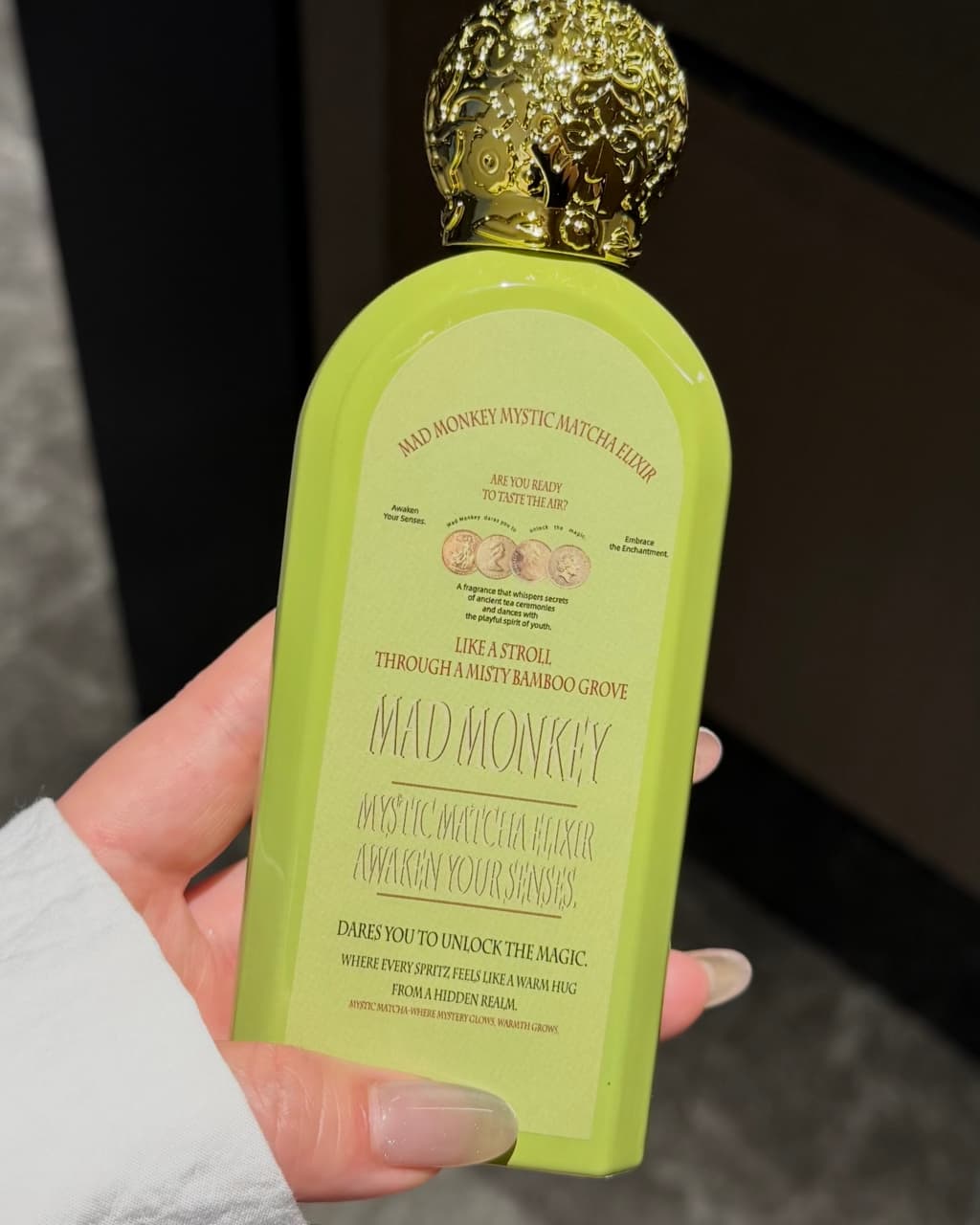
If the bottle is transparent, use decoration that preserves clarity and controls adhesive visibility. If the bottle is opaque, use decoration that builds contrast and texture without adhesion failure. A practical rule used by WowSticker buyers is simple: transparent bottles often work best with selective-transfer or metal accent decoration, while opaque bottles can support larger graphic coverage. Transparent bottles are better for liquid-color display and lower MOQs; opaque fragrance packaging is better for light-sensitive formulas and richer visual layering.
Need pricing for perfume bottle labels, cap badges, or premium decoration?
Send us your specs for Vinyl, UV DTF, or Nickel Stickers.
What is the real winner in transparent vs opaque perfume bottle projects?
The winner depends on formula protection, decoration style, and MOQ. For a mass-market or minimalist launch, transparent glass often wins because it is cheaper, easier to inspect during filling, and easier to decorate with standard label structures. For premium, light-sensitive, or essential-oil-heavy formulas, opaque fragrance packaging usually wins because it blocks light and creates stronger visual contrast for metallic details.
Two bottle light-transmission rates explain most buying decisions. Transparent perfume bottles typically allow more than 90% light transmission. Opaque bottles used for UV-sensitive fragrance formulas should be below 5% light transmission. That gap directly affects both product stability and decoration choices. A clear bottle can showcase amber, pink, or green liquid, but it also makes glue lines, back ink, and edge lift easier to see. An opaque bottle hides more structural defects but may require surface treatment to improve adhesion.
There is also a cost logic. Source A shows a 30ml transparent glass bottle at $0.34 and a 30ml opaque or frosted bottle at $0.52. Under 3,000 units, a transparent bottle with a white-backed label is about 20% more cost-effective than moving to a custom opaque bottle when MOQ limits are included. For startup perfume brands, that difference matters more than aesthetics alone.
| Factor | Transparent Bottle | Opaque/Frosted Bottle |
|---|---|---|
| Light transmission | >90% | <5% for protective opaque formats |
| 30ml bottle cost | $0.34 | $0.52 |
| Base decoration challenge | Adhesive visibility, color washout | Adhesion failure on matte/frosted coatings |
| Best for | Liquid visibility, lower MOQ launches | UV protection, premium contrast |
| Foil effect behavior | Can look weak without opaque backing | Usually stronger on matte dark surfaces |
How do decoration methods change on clear glass perfume label and dark bottle projects?
Transparent bottles need decoration that protects clarity, while opaque bottles need decoration that improves contrast and adhesion. This is where many perfume brands make an expensive mistake: they choose graphics first and substrate second. That often creates rework, low QC yield, or a label that looks flat in retail lighting.
For transparent bottle projects, the biggest issue is visual interference. Competitors often ignore the three main conflict points:
- Adhesive ghosting: glue patterns visible through clear glass
- Chromatic distortion: weak color on clear or dark backgrounds
- Edge visibility: label outline becomes obvious under side lighting
For dark perfume bottle decoration and opaque fragrance packaging, the main risks shift to substrate rejection, poor wet-out on matte coatings, and mismatch between bottle texture and decoration gloss level. Source A notes that labels on frosted or opaque surfaces show a 5% higher rejection rate during QC unless corona treatment is applied. That extra process costs about $0.004 per unit, which is low compared with the cost of rework.
The practical product matching is straightforward. Transparent bottles are best served by low-visibility, precision-applied transfers or metallic accents that do not block the whole bottle. Opaque bottles can handle larger graphic panels and layered finishes. In factory terms: transparent bottles often pair well with UV DTF Sticker or Nickel Sticker, while opaque bottles usually support broader coverage from Vinyl Sticker or Metal Plate.
A common use case: a niche fragrance brand launching a tea-based perfume in 1,500 units wants to show the pale amber liquid. A full white label would hide the formula color, so the better route is a selective UV transfer logo with a small white-backed text panel. By contrast, a 10,000-unit oud fragrance in matte black glass can use a larger metallic badge and side information label because the bottle itself already delivers visual depth.
Recommended method by bottle type
For transparency-preserving decoration, selective transfer and metal accents are usually safer than large white flood coats. For opaque surfaces, broad-area labels and rigid emblems can create a more premium layered look without exposing internal adhesive patterns. This is why many WowSticker projects are specified by bottle transparency first, then by visual target.
| Decoration Method | Best on Transparent Bottles | Best on Opaque Bottles |
|---|---|---|
| Vinyl Sticker | Good for small information panels with white backing | Very good for large graphic coverage and side labels |
| UV DTF Sticker | Excellent for no-label look and logo transfer | Good if surface is smooth and tested first |
| Nickel Sticker | Excellent for premium metallic logo without blocking transparency | Good for dark bottle contrast and cap/top decoration |
| Metal Plate | Best used sparingly to avoid visual heaviness | Excellent for layered luxury look on ceramic or coated glass |
Not sure if your bottle surface can hold the right decoration?
Send bottle photos, size, and finish for a fast compatibility check.
Why do reflectivity and visual conflict points matter so much?
Because shelf appearance changes under lighting, and the same decoration can look premium on one bottle but messy on another. Buyers often approve artwork on screen, then reject production samples because the bottle and decoration interact differently under store light, photography flash, or side illumination.
There are two reflectivity data sets worth separating. Source A gives a broad optical comparison: standard transparent glass reflects about 85% of light, while frosted or opaque glass diffuses light at around 40%. Source B focuses more on surface reflectivity behavior relevant to decoration: standard clear glass often presents a practical surface reflectivity of about 4% to 8%, matte opaque surfaces around 1% to 2%, and metallized opaque surfaces above 80%. The numbers differ because one is looking at material light behavior broadly and the other at decoration-facing surface response. For packaging buyers, both are useful.
What matters in practice is how metallic or glossy decoration reads on the bottle:
- Clear glossy glass plus bright foil can create clutter if the liquid is also dark.
- Matte opaque glass plus metallic accents usually creates cleaner premium contrast.
- Metallized opaque bottles already reflect heavily, so adding large metallic labels can overwhelm the design.
The three visual conflict points should be checked early:
- Adhesive ghosting on transparent glass, especially with full-surface clear labels
- Substrate rejection on soft-touch or matte opaque coatings if no surface treatment is used
- Chromatic distortion when a transparent label is applied on a dark bottle and the brand color loses vibrancy
For clear glass perfume label work, white-backed materials increase label material cost from $0.02 to $0.03 per piece, about 38% more, but improve color accuracy by about 90% compared with clear labels on transparent surfaces. That is often a good trade-off if logo color consistency is important. For matte dark perfume bottle decoration, adding corona treatment at roughly $0.004 per unit is usually worth it because it reduces adhesion-related failures during QC.
What does the cost comparison look like by decoration method and MOQ?
Transparent bottles usually cost less to buy, but the decoration choice can narrow or widen the gap fast. Buyers should compare bottle cost, decoration cost, hidden process cost, and expected reject risk together. Looking only at bottle cost gives the wrong answer.
Source C provides direct reference pricing from WowSticker’s pricing engine. For a 50x30mm format at 1,000 pieces, a Vinyl Label is $18.29 total and a UV DTF Sticker is $48.30 total. That means roughly $0.018 per unit for Vinyl and $0.048 per unit for UV DTF at that spec. Source A also shows typical label customization cost bands from $0.05 at 1,000 to 2,999 units, $0.03 at 3,000 to 9,999 units, and $0.02 at 10,000+ units depending on process scale.
| Product | MOQ | Unit Price (USD) | Lead Time | Notes |
|---|---|---|---|---|
| Transparent 30ml bottle | 500 pcs stock | $0.34 | 20-25 days with decoration | No mold fee for stock bottle |
| Opaque/Frosted 30ml bottle | 500 pcs stock / 5,000 pcs custom | $0.52 | 20-25 days with decoration | 52% higher than transparent bottle |
| Standard clear adhesive label material | 1,000 pcs | $0.02 | 7-10 days | May wash out on clear bottle |
| White-backed label material | 1,000 pcs | $0.03 | 7-10 days | Improves color accuracy on transparent glass |
| Vinyl Sticker 50x30mm | 1,000 pcs | $0.018 | 7-10 days | Based on WowSticker pricing engine total of $18.29 |
| UV DTF Sticker 50x30mm | 1,000 pcs | $0.048 | 7-10 days | Based on WowSticker pricing engine total of $48.30 |
| White ink base layer for direct print on transparent bottle | Applied per unit | $0.01 | Included in bottle decoration cycle | Prevents color washout |
| Corona treatment for opaque/frosted bottle | Applied per unit | $0.004 | Included in bottle decoration cycle | Improves adhesion, lowers reject risk |
Lead time also affects the real decision. Labels alone are typically 7 to 10 days after artwork approval. Bottles plus decoration run about 20 to 25 days after deposit. If you need delivery within 10 days, a rush order can add about 30% to total production cost. That is one reason many buyers choose stock transparent bottles and upgrade only the decoration for launch batches.
Another hidden cost is mold development. A new bottle shape can require a one-time mold fee of about $2,069 to $4,138. For brands under 5,000 units, it is often more sensible to use a stock bottle and adjust decoration method instead of building a custom opaque vessel immediately.
What to send for a faster quote
- Bottle size or exact dimensions
- MOQ or expected annual volume
- Material preference: transparent glass, frosted glass, coated glass, ceramic
- Decoration preference: Vinyl Sticker, UV DTF Sticker, Nickel Sticker, Metal Plate
- Finish details: matte, glossy, metallic, embossed, brushed
- Application scenario: perfume bottle front, side label, cap badge, gift box
- Delivery country and required timeline
How should buyers choose between UV DTF, Vinyl, Nickel, and Metal Plate?
Choose based on transparency level, desired coverage, and how much structure you want the decoration to add. Decoration engineering is not only about print quality. It is about whether the decoration disappears, stands out, or competes with the bottle.
A useful rule for perfume packaging is this: transparent bottles should keep visual openness, while opaque bottles can carry more physical layering. In practice, that means a clear bottle often benefits from finer transfer decoration or a small metallic emblem. An opaque bottle can support a wider information label, a rigid badge, or both. Transparent bottles should avoid unnecessary white flood areas unless the brand identity depends on dense graphics.
For buyers working on transparent vs opaque perfume bottle evaluations, these method profiles are practical:
- UV DTF Sticker: Best for a “printed-on” look on smooth glass. Good for logos, fine lines, and premium minimalism. Usually a strong choice for clear glass perfume label projects.
- Vinyl Sticker: Best for readable copy, ingredient panels, and larger coverage. Good cost control at 1,000 to 10,000+ pieces.
- Nickel Sticker: Best for premium metallic logos, especially when you want shine without covering too much bottle area.
- Metal Plate: Best for heavy visual layering on dark, ceramic, or coated bottles where a rigid emblem adds depth.
A packaging rule often used by WowSticker project teams is this: transparent bottles tend to work best with open-area UV transfer decoration or metallic logo accents, while opaque bottles such as ceramic or spray-coated glass often perform better with large-area label coverage or rigid metal elements. This keeps the visual hierarchy clean and avoids fighting the bottle’s natural character.
| Feature | UV DTF Sticker | Vinyl Sticker | Nickel Sticker | Metal Plate |
|---|---|---|---|---|
| Best use | Logo transfer on smooth bottle | Info label or graphic panel | Metallic brand mark | Rigid luxury badge |
| Visual weight | Low to medium | Medium to high | Medium | High |
| Best on transparent bottle | Excellent | Good with white backing | Excellent | Use sparingly |
| Best on opaque bottle | Good after testing | Excellent | Good to excellent | Excellent |
| Relative cost at 1,000 pcs | Higher | Lower | Mid to higher | Higher |
What is the best buying strategy for startups and established perfume brands?
Startups should usually optimize around stock bottles and scalable decoration, while established brands can justify custom opaque formats for protection and identity. The right route depends on batch size, formula sensitivity, and how much packaging equity the brand needs in year one.
For startup brands launching 500 to 3,000 units, stock transparent bottles with controlled decoration often give the best balance. You avoid mold fees, keep lead time shorter, and still build a premium look through decoration. A common path is a clear bottle, selective front logo, and one white-backed side label for legal copy. If the perfume liquid is visually attractive, the bottle itself becomes part of the design.
For established brands ordering 5,000 to 20,000 units or more, custom opaque fragrance packaging becomes more logical when formula protection and shelf distinction matter. The extra $0.18 per bottle base cost can be justified if it reduces UV risk and supports a stronger signature look. In Europe and North America, direct-to-glass screen printing on opaque bottles often costs $0.40 to $0.85 per unit, which is why premium sticker and transfer solutions remain attractive for global brands scaling production.
As of 2025, the broader fragrance packaging market is moving in two directions at once. Transparent bottles remain standard for minimalist and masstige brands. At the same time, demand for opaque fragrance packaging is rising about 15% year over year in “clean” and natural fragrance segments that require stronger light protection. That means buyers should not ask which bottle type is universally better. They should ask which bottle type fits the formula and the intended decoration logic.
Need help choosing the right decoration for clear or dark perfume bottles?
Share your bottle type, artwork, and quantity to get a practical recommendation.
Conclusion: which decoration method actually wins?
The best method wins when it matches bottle transparency, surface energy, and brand positioning. Transparent bottles usually win on cost, launch speed, and liquid visibility. Opaque bottles usually win on protection, foil contrast, and heavier premium styling. For a clear glass perfume label project, use methods that reduce ghosting and preserve openness. For dark perfume bottle decoration, use methods that add contrast and survive matte or coated surfaces. If your project is still undecided, compare not only bottle cost, but also reflectivity, reject risk, and the extra process steps required to make the decoration hold and look correct at scale.
FAQ
Which is better for a startup brand: transparent or opaque perfume bottles?
For most startups, transparent bottles are the safer first choice. Stock clear glass can start at 500 pieces with no mold fee, and the 30ml unit cost is about $0.34 versus $0.52 for opaque or frosted glass. If you need brand color accuracy, add a white-backed label or selective transfer instead of moving to a fully custom opaque bottle too early.
Which is better for light-sensitive formulas or essential-oil-based perfumes?
Opaque bottles are usually better when UV protection is a priority. Transparent bottles typically allow more than 90% light transmission, while protective opaque formats can be below 5%. If your formula is sensitive and your brand story already fits a premium dark package, opaque fragrance packaging is the more practical long-term option even with the higher bottle cost.
How do I prevent adhesive visibility or ghosting on clear glass perfume bottles?
Use smaller label areas, cleaner adhesive systems, and decoration methods that reduce visible backing. UV DTF logo transfers and Nickel Stickers are often better than full clear labels when transparency must stay open. If a larger label is necessary, use a structured white-backed area only where color density is needed, rather than flooding the whole bottle face.
Which is better for matte dark perfume bottle decoration: Vinyl Sticker or UV DTF Sticker?
Vinyl Sticker is usually the safer choice for matte or dark bottles when you need larger coverage or stronger readability. UV DTF can still work well, but the bottle surface should be tested first, especially on soft-touch or coated finishes. If the surface is frosted or matte, corona treatment is often worth adding to reduce adhesion-related QC failures.
Can transparent labels be used on dark perfume bottles without color distortion?
They can, but the result depends on the ink system and bottle color. On dark glass, transparent labels often lose vibrancy because the substrate shows through. For critical brand colors, use white backing under selected areas or switch to a more opaque decoration structure. Otherwise, chromatic distortion can make the label look weaker than the approved artwork.
What should I send before asking for a quote?
Send the bottle size, photos or drawings, MOQ, preferred material, surface finish, decoration method, and delivery country. Also mention whether the bottle is clear, frosted, coated, or ceramic. This helps suppliers judge whether you need white backing, corona treatment, or a different method such as Vinyl, UV DTF, Nickel Sticker, or Metal Plate.
Is upgrading from a standard label to a premium decal worth the extra cost?
If the bottle is the hero of the package and shelf image matters, yes, often it is. At 1,000 pieces in Source C, Vinyl is about $0.018 per unit while UV DTF is about $0.048. That difference is meaningful, but still far below the regional cost of premium direct screen printing in Western markets, which can reach $0.40 to $0.85 per unit on opaque bottles.