Screen Printing vs UV DTF for Small Perfume Runs Under 3,000 Units
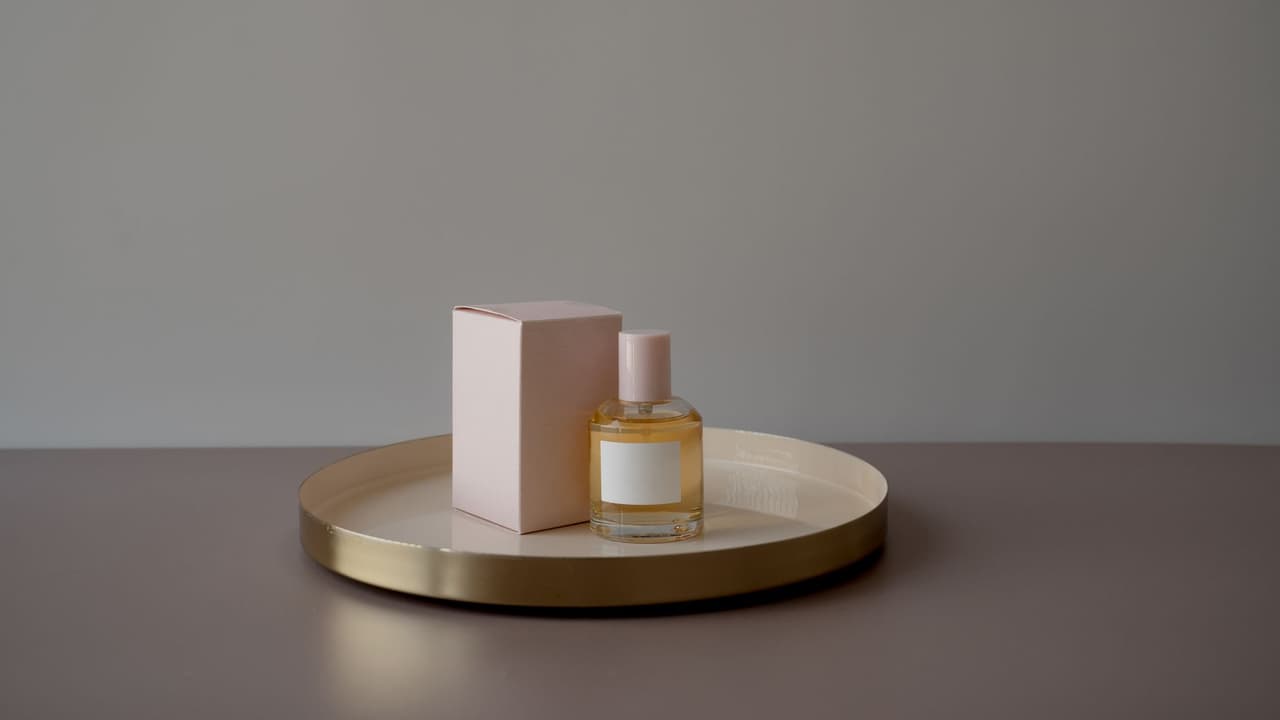
For most brands ordering under 3,000 bottles, the short answer is simple: UV DTF is usually the better choice for speed, lower upfront cost, and low-MOQ flexibility, while screen printing only starts to win when volume, alcohol resistance, and repeat production outweigh setup fees. WowSticker (wowsti.com) has years of factory-direct experience in custom labels, stickers, and packaging decoration for perfume and cosmetics brands worldwide, and one practical pattern appears again and again: early-stage fragrance launches rarely want to absorb $200 to $400 in screen setup fees before market validation. For brands testing 500 to 1,500 units, using UV DTF as a low MOQ bottle printing alternative is often the safer commercial move. If you already have bottle size, artwork, target quantity, and shipping country, send the specs now and compare both options before locking your decoration method.
Need pricing for perfume bottle labels, cap badges, or premium decoration?
Send us your specs for Vinyl, UV DTF, or Nickel Stickers.
The buying question behind screen printing vs UV DTF perfume is not only about print quality. It is about break-even math, launch timing, and risk. A founder launching 800 bottles in the US or EU usually cares more about total decoration spend staying below $150 to $500 than about shaving a few cents at 10,000 units. A procurement manager for a boutique perfume house may instead prioritize ethanol resistance, tactile finish, and REACH-ready ink systems. Both concerns are valid. The key is matching process to run size, decoration complexity, and refill or handling conditions.
For runs under 3,000 units, UV DTF usually wins on total startup cost, while screen printing wins on durability and scale.
When buyers compare small run perfume bottle decoration methods, the biggest mistake is looking only at unit price. Screen printing can look cheap on paper at scale, but under 3,000 units the setup cost changes the real economics fast. A 4-color bottle graphic may require 4 separate screens, with setup charges commonly ranging from $50 to $100 per color. That means $200 to $400 can be spent before the first production bottle is made.
UV DTF works differently. It prints CMYK plus white and varnish onto transfer film, then transfers the graphic to the bottle surface. There is no plate fee, and color complexity does not multiply setup cost the way screen printing does. That is why UV DTF has become a strong low MOQ bottle printing alternative for indie fragrances, pilot launches, holiday editions, and regional market tests.
| Feature | Screen Printing | UV DTF |
|---|---|---|
| Best order size | Usually 3,000+ units | Usually 100-3,000 units |
| Setup cost | $50-$100 per color screen | No plate fee |
| Multi-color artwork | Cost rises with each color pass | Complex graphics easier to manage |
| Sampling time | 7-10 days | 2-3 days |
| Production time | 15-20 days | 5-7 days |
| Tactile effect | Flat to slightly raised | Can deliver a 3D embossed feel with varnish |
| Alcohol resistance | Generally stronger | Must be tested by bottle, coating, and use case |
| Scalability | Very strong at high volume | Manual transfer limits efficiency above 3,000 units |
The real decision point is the break-even math between setup fees and unit economics.
For procurement, the useful question is not “Which process is better?” but “At what quantity does one process become cheaper for my artwork?” Based on the market ranges provided, the cost curve changes sharply between 500 and 3,000 units.
At 500 units, UV DTF is estimated at about $0.15 per unit, while screen printing can average $0.85 per unit once a multi-color setup fee is spread across a small run. At 1,500 units, UV DTF may drop to $0.12 per unit, while screen print may still be near $0.40 per unit. At 3,000 units, the gap narrows sharply, with UV DTF around $0.10 per unit and screen printing around $0.15 per unit. In other words, the break-even zone starts to appear near 3,000 units, especially if the artwork is simple and one or two colors only.
| MOQ Tier | UV DTF Est. Unit Price (USD) | Screen Print Est. Unit Price (USD) | Main Cost Driver |
|---|---|---|---|
| 500 units | $0.15 | $0.85 | Screen setup fee dominates |
| 1,500 units | $0.12 | $0.40 | Screen fee still heavy per bottle |
| 3,000 units | $0.10 | $0.15 | Break-even zone begins |
The single clearest takeaway from the UV DTF cost vs screen print comparison is this: if the project has 3 to 6 colors, gradients, metallic simulation, or seasonal artwork changes, UV DTF protects cash flow much better below 3,000 units. If the design is one solid color on a standard cylindrical bottle and the reorder plan is already stable, screen printing becomes more attractive sooner.
Why setup fee changes the whole decision
A founder with a total decoration budget of $300 cannot reasonably spend $280 on setup alone for a 4-color screen print test. That leaves little room for actual production. By contrast, UV DTF turns more of the budget into finished decorated bottles. This matters in the current fragrance market, where indie launches often start at 500 to 1,500 units to test demand before committing to a larger second batch.
What WowSticker pricing shows for real low-MOQ decoration
Source C gives one useful benchmark for UV DTF Sticker: 50x30mm, 1,000 pieces at $48.30. That works out to about $0.0483 per piece for that specific size and quantity. This is not directly equal to every perfume bottle graphic, because artwork size, transfer area, and bottle geometry vary, but it confirms the core point: for compact decoration zones and moderate quantities, UV DTF can be extremely cost-efficient.
| Product | MOQ | Unit Price (USD) | Lead Time | Notes |
|---|---|---|---|---|
| UV DTF Sticker 50x30mm | 1,000 pcs | $0.0483 | Usually 5-7 days | Reference based on WowSticker pricing engine, 1.500 m² total area |
Need pricing for perfume bottle labels, cap badges, or premium decoration?
Send us your specs for Vinyl, UV DTF, or Nickel Stickers.
Screen printing is stronger for chemical resistance, but UV DTF is faster and more flexible for launch testing.
Perfume packaging adds one technical issue many generic articles ignore: pure alcohol and ethanol exposure. Screen printing on glass, when correctly inked and cured, is widely preferred for strong durability. It is a direct print process, so there is no transfer layer edge to manage. For bottles that will face frequent rubbing, high handling, or direct contact with spilled fragrance, screen printing is generally safer.
UV DTF can still work very well on perfume bottles, but it must be tested carefully. Adhesion varies based on glass curvature, frost coating, lacquered surfaces, metallic spray, and cleaning method. A flat or gently curved bottle usually performs better than a sharply tapered bottle. A glossy clear bottle may accept transfer differently from a matte-frosted one. For B2B buyers, that means pre-production testing is not optional.
Where screen printing is safer
Screen printing is the safer choice when the perfume line is expected to stay in the market for multiple repeat runs, when the bottle has a simple logo in 1 or 2 spot colors, or when the pack must survive aggressive rubbing, alcohol splashes, and long retail handling. It is also better for brands that expect to scale from 3,000 to 10,000+ units without changing artwork.
Where UV DTF is smarter
UV DTF is smarter when the first run is only 300, 500, or 1,200 bottles, when artwork includes gradients or fine serif details, or when launch speed matters more than absolute durability. APAC-focused launch cycles under 30 days and urgent pilot runs by air often favor UV DTF because sampling can happen in 2 to 3 days, compared with 7 to 10 days for screen print samples.
For many perfume and cosmetics projects, UV DTF Sticker acts as the bridge between temporary labels and full direct printing. It offers a more premium look than standard paper or vinyl stickers, yet avoids the full tooling burden of screen print at startup stage.
Lead time is often the deciding factor when launch windows are tight.
Many buyers focus on decoration cost but ignore the cash cost of delay. Missing a distributor review, a holiday gift season, or a trade show slot can cost more than any setup fee. This is why lead time should sit next to price in the decision matrix.
Typical timing from the data is straightforward. UV DTF sample lead time is around 2 to 3 days, with production often 5 to 7 days. Screen printing samples typically need 7 to 10 days, and production can take 15 to 20 days. Add express air freight at 5 to 7 days for urgent runs, and UV DTF can materially shorten launch cycles.
| Stage | Screen Printing | UV DTF |
|---|---|---|
| Sampling | 7-10 days | 2-3 days |
| Mass production | 15-20 days | 5-7 days |
| Best logistics for pilot run | Express air if urgent | Express air if urgent |
| Total speed advantage | Slower due to setup and curing workflow | Faster for market tests and design iteration |
A real example: a niche fragrance founder preparing a 1,000-unit launch for a trade event in Los Angeles has only 21 days left. A 4-color floral bottle design with soft gradients is a poor fit for screen printing under that timeline. UV DTF is a more realistic path because the sample can be approved in the same week, production completed in the next week, and air shipment still leaves buffer time for filling and assembly.
The right choice depends on bottle shape, artwork complexity, and what you need to validate first.
There is no universal winner in screen printing vs UV DTF perfume. The smart choice depends on what risk you are trying to reduce.
| Buyer Situation | Better Option | Why |
|---|---|---|
| 500-1,500 unit launch with limited budget | UV DTF | No plate fee and lower total startup spend |
| 3,000+ units with stable repeat orders | Screen Printing | Better scale efficiency and stronger durability |
| Gradient artwork or photo-like detail | UV DTF | Handles complex visuals more easily |
| 1-2 solid spot colors on simple bottle | Screen Printing | Cleaner economics once volume increases |
| Luxury tactile effect for test market | UV DTF | Varnish layer can create a raised premium feel |
| High ethanol contact and heavy handling | Screen Printing | Generally stronger direct-to-glass resistance |
In practical sourcing terms, many buyers now split the strategy:
- Use UV DTF Sticker for the first market run at 300 to 1,500 units.
- Move to screen printing once reorder volume is validated above 3,000 units.
- Use premium add-ons like Nickel Stickers for caps or secondary pack decoration when the bottle body itself stays minimal.
This hybrid logic is increasingly relevant as of 2025, because indie fragrance growth remains strong, especially in the US market where niche and independent perfume launches continue expanding at a double-digit pace. Brands do not want to commit to rigid 10,000-unit decoration programs before they know the scent will repeat.
What to send for a faster quote
To compare screen printing and UV DTF accurately, send these details:
- Bottle size and decoration area in mm
- Target quantity, such as 500, 1,500, or 3,000 units
- Bottle material and surface type: clear glass, frosted glass, coated glass
- Artwork file and number of colors
- Finish preference: gloss, matte, raised varnish, metallic effect
- Application scenario: pilot launch, retail shelf, gift set, export
- Required alcohol or rub resistance level
- Delivery country and deadline
Sending these 8 points usually removes 1 to 2 rounds of back-and-forth and helps confirm whether UV DTF or screen printing is the more realistic process.
Need pricing for perfume bottle labels, cap badges, or premium decoration?
Send us your specs for Vinyl, UV DTF, or Nickel Stickers.
For most small perfume runs, start with UV DTF, test adhesion, then scale into screen printing only when reorder volume justifies it.
The practical sourcing path is straightforward. If the run is under 3,000 units, the design has multiple colors, and speed matters, choose UV DTF first. If the bottle will face high abrasion, direct ethanol contact, and repeat production above 3,000 units, prepare to move into screen printing after validation. This is usually the lowest-risk route for founders and procurement teams alike.
WowSticker fits this gap well because the market increasingly needs premium low-MOQ options, not just high-volume decoration. For many perfume and cosmetics brands, using UV DTF as a low MOQ bottle printing alternative is the most efficient way to launch, test, and then upgrade the process only after the demand data is real.
FAQ
Which is better for a startup perfume brand under 1,000 units?
UV DTF is usually better for a startup brand under 1,000 units because it avoids plate fees and keeps total decoration spend lower. It also supports gradients, fine detail, and fast design changes. If the startup is testing one fragrance in one market, UV DTF reduces risk. Screen printing makes more sense only if the design is very simple and the reorder plan is already predictable.
Which is better for alcohol resistance on perfume bottles?
Screen printing is generally better for alcohol resistance because the ink is printed directly onto the glass and cured. For bottles that may face spills, heavy rubbing, or long retail handling, it is usually the safer technical choice. UV DTF can still perform well, but it must be tested on the exact bottle surface, especially on frosted, coated, or irregular glass shapes.
Which is better for complex artwork, gradients, or many colors?
UV DTF is better for complex artwork. It handles multiple colors, gradients, and fine decorative detail without needing separate screens for each color. That makes it especially useful for boutique perfume branding where image quality matters but order volume is still low. Screen printing is better for simpler solid-color designs and repeat orders where setup costs can be amortized across larger quantities.
What should I send before asking for a quote?
Send bottle dimensions, printable area, target quantity, bottle surface type, artwork file, required finish, delivery country, and deadline. Also mention whether the bottle will be exposed to ethanol contact or heavy rubbing. These details determine whether UV DTF or screen printing is suitable, and they affect unit cost, sampling method, and production lead time.
Is UV DTF cheaper than screen printing for small runs?
For small runs, yes, usually. At 500 units, market estimates show UV DTF around $0.15 per unit while screen printing can reach about $0.85 per unit once setup fees are included. At 1,500 units, UV DTF may still be near $0.12 while screen print remains around $0.40. Around 3,000 units, the gap narrows and screen printing starts becoming more competitive.
Is this upgrade worth the extra cost for a luxury perfume brand?
If the goal is long-term retail durability and consistent repeat production, upgrading to screen printing can be worth it. If the goal is to launch quickly, validate demand, and preserve budget, UV DTF is often the smarter first step. Many luxury brands start with UV DTF for pilot runs, then shift to direct printing once the fragrance proves market traction and the reorder volume supports the setup investment.