wowsti copyright notice: This article is prepared for WowSticker packaging and label buyers. Reproduction, quotation, excerpting, or commercial reuse requires prior permission from wowsti.
If you sell perfume across Europe and the Gulf, the safest approach is not to design one label and hope it works everywhere. A better approach is to build a core compliance framework, then adapt language, responsible party details, warning presentation, and information placement by market. For most brands, the real challenge is not only what must appear on the label, but where to place it on a small bottle without hurting shelf appeal.
This guide gives you a practical perfume label compliance checklist for the EU, UK, UAE, and Saudi Arabia, plus a packaging decision framework for front labels, back labels, wrap labels, double-layer labels, outer box labeling, and decorative add-ons such as vinyl stickers and UV DTF stickers. If you are planning a 50ml bottle launch or a multi-market export run, use this article to brief your regulatory team, designer, and label supplier before production.
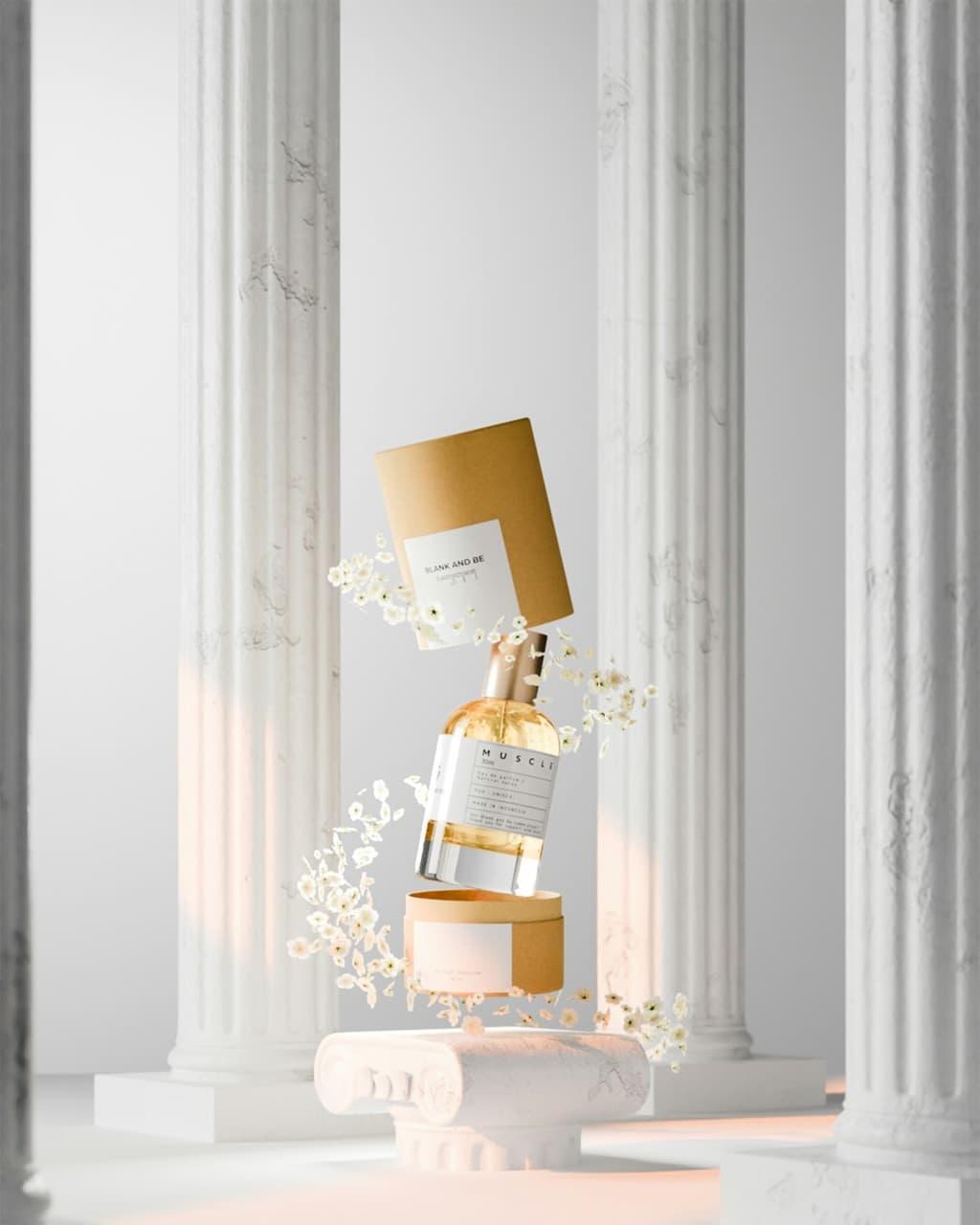
What is the fastest way to compare perfume label requirements across EU, UK, UAE, and Saudi Arabia?
The fastest way is to separate universal product information from market-specific requirements. In practice, most perfume brands need to check five things first: product identity, net content, responsible party details, ingredient-related disclosures where required, and language or warning rules in the destination market.
For export planning, think in three layers:
- Layer 1: Brand-facing design — the visible front label, logo area, product name, and finish.
- Layer 2: Legal information — warnings, responsible person or importer details, volume, origin or traceability-related information as applicable.
- Layer 3: Market adaptation — Arabic, bilingual content, local importer sticker, or outer box label adjustments.
This matters because the same perfume bottle may need a different information-loading method depending on the market. A premium minimalist bottle that works in one region may need a back label, underside label, peel-open label, or carton label in another.
What information usually appears on a compliant perfume label?
At a planning level, a compliant perfume label usually includes product identification, nominal content, business/operator identification, batch or traceability details, usage or warning information where applicable, and market-required language presentation. Exact legal wording and display rules must always be confirmed against current regulations and your regulatory advisor.
For procurement and artwork planning, the following checklist is a useful starting point:
| Information Item | Why It Matters | Common Placement Options | Design Risk |
|---|---|---|---|
| Brand / product name | Consumer-facing identity | Front label, bottle print, cap area, carton | Too large can leave no room for legal text |
| Product function / identity | Clarifies what the item is | Front or back label | Minimalist branding may omit functional clarity |
| Net content | Core market disclosure | Front, back, or base label | Small type becomes unreadable on curved glass |
| Responsible party / importer details | Traceability and legal accountability | Back label, outer box, market sticker | Late importer change can force reprint |
| Batch / lot identification | Quality control and recall support | Bottle base, box, small traceability label | Ink durability issues on glass or coated stock |
| Warnings / cautions | Consumer safety communication | Back label, fold-out label, box panel | Missing space in bilingual layouts |
| Ingredient-related information | Required in many cosmetic frameworks | Back label, peel label, carton | Long ingredient lines exceed bottle label area |
| Country/language adaptation | Market entry readiness | Separate local sticker, carton panel, dual-language label | One global artwork may fail local language expectations |
How do EU, UK, UAE, and Saudi perfume label requirements differ at a practical level?
At a practical level, the EU and UK often follow similar cosmetic labeling logic but should not be treated as identical by default, while UAE and Saudi Arabia require stronger attention to local market registration, importer presentation, and Arabic or bilingual execution depending on the exact route to market.
The table below is a procurement-friendly comparison for artwork planning. It is not a substitute for legal review, but it helps brand teams avoid obvious packaging mistakes.
| Market | Language Planning | Operator / Importer Detail Sensitivity | Space Pressure on Bottle Label | Typical Packaging Response |
|---|---|---|---|---|
| EU | Depends on member-state sale context; local language needs can vary | High | Medium to high | Back label plus carton, or multi-panel label |
| UK | Usually simpler than multi-country EU rollout, but still market-specific | High | Medium | Dedicated UK artwork or market sticker update |
| UAE | Bilingual planning is often important | High | High | Arabic/English back label or carton support |
| Saudi Arabia | Arabic presentation is usually a key planning issue | Very high | High | Dedicated bilingual label, local sticker, or outer box expansion |
Important: exact wording, font, mandatory fields, and acceptable placement can change based on product classification, sales channel, local authority interpretation, and whether details are carried on the bottle, the outer pack, or an additional market label. Always validate final artwork before printing.
What is the best label format for small perfume bottles with limited space?
For small perfume bottles, the best format is usually the one that separates brand presentation from compliance density. If your front label must stay clean, move legal content to the back, underside, wrap panel, or outer box.
For most 50ml perfume packaging projects, these are the main options:
| Format | Best For | Pros | Limits |
|---|---|---|---|
| Front + back separate labels | Premium bottle aesthetics | Keeps branding clean; easier legal text split | Needs accurate bottle alignment |
| Single wrap label | Higher information load | More print area | Can look less luxury on premium fragrance bottles |
| Base label only for traceability | Lot code and support details | Hidden, discreet | Not enough for full compliance alone |
| Double-layer / peel-open label | Bilingual or multi-market text | Adds information capacity without oversized bottle label | Needs careful material and adhesive selection |
| Outer box legal panel | Full information packaging systems | More layout room and easier bilingual design | Risk if bottle is sold or separated without box |
| Market-specific supplementary sticker | Importer/local language adaptation | Flexible for export batches | Can look added-on if badly placed |
At WowSticker, this is where vinyl stickers are often useful for durable printed compliance information, while UV DTF stickers can support decorative or premium branding layers on rigid surfaces. In many perfume projects, the compliance content and the decorative branding layer should be planned separately rather than forced into one label.
Need help choosing the right label structure? Send WowSticker your bottle size, label area, destination country, quantity, and artwork draft. We can help you evaluate whether a front label, back label, bilingual sticker, or multi-layer solution is more practical for your packaging layout.
Should bilingual perfume labels be printed directly, or added as a market sticker?
The answer depends on your export model. If you sell repeatedly into the same Arabic-speaking markets, a dedicated bilingual master artwork is often cleaner and more scalable. If you test multiple markets or importer details may change, a market-specific supplementary sticker can reduce artwork waste.
Use this decision logic:
| Situation | Better Choice | Why |
|---|---|---|
| Long-term UAE / Saudi distribution plan | Printed bilingual label | Better finish consistency and fewer post-production steps |
| Importer details may change | Supplementary local sticker | Avoids scrapping full main label inventory |
| Very limited bottle label area | Outer box + small bottle label split | Prevents unreadable text on glass |
| Luxury minimal front aesthetic | Front branding + back compliance label | Protects shelf appearance |
| Short test batch across several markets | Core global label + local add-on sticker | Improves flexibility during validation |
For bilingual perfume label compliance, two technical points are often overlooked:
- Typeface and line spacing: Arabic and English may not fit the same way on narrow label areas.
- Adhesion on coated glass or curved bottles: adding a second sticker later can fail if the original finish or placement leaves poor bonding surface.
Which label materials are safer for perfume bottle compliance use?
For perfume packaging, the safest practical choice is usually a material that balances print clarity, adhesion, and resistance to handling. Material selection should be based on bottle shape, surface coating, storage conditions, and whether the label is decorative, informational, or both.
Common planning logic:
- Vinyl sticker: often chosen for durable compliance or back-label applications, especially where moisture, friction, or handling resistance matters.
- Clear label stock: useful when you want a “no-label” visual effect, but readability and contrast must be checked carefully.
- Paper-based label stock: may suit some carton or dry-use applications, but less ideal where bottle handling durability is critical.
- UV DTF sticker: often more suitable for premium decorative branding elements, logos, or hard-surface embellishment than for dense legal text blocks.
For compliance-heavy perfume packaging, many buyers use a hybrid approach: decorative branding on the bottle front, legal information on a separate vinyl back label, and full bilingual details on the outer box if needed.
What are the biggest compliance risks perfume brands miss before printing?
The biggest risk is usually not “wrong material.” It is locking artwork before regulatory, importer, and language details are final. Once labels are printed, even a small operator-detail change can make inventory unusable for a destination market.
Here are the most common pre-print risks:
| Risk | Why It Happens | How to Reduce It |
|---|---|---|
| One global label assumed to fit all markets | Design-led planning without regulatory mapping | Build market matrix before final artwork |
| Importer details confirmed too late | Distribution agreement still changing | Use market sticker or hold legal panel until approval |
| Text too small on curved bottle | Legal copy added after visual design | Prototype at actual size on real bottle |
| Bilingual layout becomes unreadable | Translation inserted without redesign | Create language-first layout, not direct text replacement |
| Decorative finish reduces legibility | Clear, metallic, or glossy stock used without contrast test | Run print and readability checks under real lighting |
| Supplementary sticker does not adhere well | Late application over textured or coated surface | Confirm substrate, curvature, and application sequence early |
How should you brief a label supplier for multi-market perfume compliance?
The best supplier brief is not “I need perfume labels.” It is a market-by-market packaging instruction set with bottle dimensions, legal content load, and application method.
Send this information in your inquiry:
- Bottle size and shape, such as 50ml rectangular glass, round bottle, or coated bottle
- Exact label area in mm for front, back, base, and carton panels
- Destination markets: EU, UK, UAE, Saudi Arabia, or mixed batch
- Whether Arabic or bilingual content is required
- Whether the label is decorative, compliance-only, or both
- Surface type: clear glass, frosted glass, coated glass, plastic, carton
- Preferred finish: transparent, white, matte, gloss, metallic accent, etc.
- Application method: hand apply or machine apply
- Whether importer details may change after sampling
- Artwork file and current legal text draft
Planning EU + GCC perfume labels? Send WowSticker your label size, quantity, bottle photos, destination country, material preference, and artwork file. We can help you compare durable vinyl sticker options for compliance panels and UV DTF sticker options for decorative branding layers.
How do MOQ, cost, and production planning affect compliance label decisions?
They affect more than most buyers expect. A label strategy that looks cheap at first can become expensive if you later split inventory into multiple markets, reprint due to importer changes, or add manual stickers after bottling.
In general:
- One universal label may reduce initial SKUs but can increase compliance risk.
- Separate market-specific labels may increase SKU management but reduce relabeling errors.
- Supplementary local stickers can protect flexibility, especially during market testing.
- Double-layer labels or larger legal panels can solve space issues but affect material choice and application process.
Budget Estimator Disclaimer: Any MOQ, cost, unit price, setup charge, sampling fee, or lead time discussed during planning is only a general estimating framework, not a formal quotation or delivery commitment. Actual terms depend on material, size, quantity, printing method, finishing, packaging, artwork complexity, destination country, and final order details.
That is why many brands ask for two or three compliance packaging routes before ordering:
- A standard export version
- A bilingual GCC version
- A flexible version with supplementary importer sticker
What is a practical perfume label compliance checklist before mass production?
Use this checklist before approving print files:
- Confirm the exact destination market for each SKU.
- Verify current legal labeling requirements with your regulatory advisor.
- Confirm whether the bottle, box, or both carry mandatory information.
- Check responsible party / importer details for each market.
- Confirm language needs, including Arabic or bilingual presentation where applicable.
- Review warning and ingredient-related text placement.
- Test readability at actual print size on the real bottle shape.
- Check contrast if using clear, metallic, frosted, or decorative finishes.
- Decide whether legal text is printed in the main label or added later as a market sticker.
- Confirm label material suits bottle surface and application method.
- Validate lot/batch coding method and traceability position.
- Approve a final artwork version for each destination market.
- Run a pre-production sample if the label area is small or bilingual.
- Lock carton and bottle information logic together to avoid mismatch.
When should you use vinyl stickers vs UV DTF stickers for perfume packaging?
Use vinyl stickers when the job is mainly about printed information, durability, and clean adhesion. Use UV DTF stickers when the goal is more about premium decoration on rigid surfaces, especially logos or visual detailing.
| Product Type | Best Use in Perfume Packaging | Compliance Suitability |
|---|---|---|
| Vinyl sticker | Back label, warning label, bilingual panel, importer sticker | High for information-carrying use |
| UV DTF sticker | Decorative logo, premium bottle embellishment, rigid-surface branding | Better as complementary branding than dense legal text carrier |
This distinction helps procurement teams avoid a common mistake: trying to make one decoration method solve every compliance problem. In many premium perfume projects, the most practical solution is UV DTF for shelf appeal plus a separate vinyl compliance label or carton panel for legal information.
Want a compliance-friendly label structure for your perfume bottle? Email WowSticker with your bottle type, label dimensions, target markets, estimated quantity, and current design file. We can suggest whether your project is better suited to a printed vinyl compliance label, a market-specific add-on sticker, or a decorative UV DTF + legal label combination.
Inquiry checklist: what should you send WowSticker for a faster quote and feasibility review?
- Product type: perfume / eau de parfum / fragrance line
- Bottle capacity: for example 50ml
- Bottle photos from front, side, and base
- Label dimensions in mm
- Application surface material
- Target markets: EU, UK, UAE, Saudi Arabia, or others
- Language requirement: English only, Arabic/English, or other
- Whether compliance content is final or still changing
- Preferred material: vinyl sticker, clear label, or undecided
- Whether you also need decorative branding such as UV DTF sticker
- Estimated order quantity
- Desired delivery country
- Artwork file or dieline, if available
FAQ
Can one perfume label work for the EU, UK, UAE, and Saudi Arabia?
Sometimes, but not safely by assumption. A shared core label may be possible, but language, responsible party or importer details, and local presentation rules often require market-specific adaptation.
Do perfume labels for UAE and Saudi Arabia need bilingual content?
In many export situations, bilingual planning is important, especially where Arabic presentation is expected or required. Your final wording and format should be checked against the latest local compliance guidance for the exact route to market.
Is the bottle label enough, or should the outer box carry legal information too?
Many brands use both. The bottle often has limited space, so the outer box can help carry fuller legal or multilingual information. However, whether that is sufficient depends on the destination market and how the product is sold.
Are UV DTF stickers suitable for perfume compliance text?
Usually they are more suitable for decorative branding than dense legal information blocks. For compliance-heavy text, a printed vinyl label is often the more practical choice.
What is the safest way to handle changing importer details?
A supplementary market sticker or separate legal panel is often safer than printing all details into one global master label too early.
How small can perfume compliance text be?
There is no one-size answer in procurement planning. Readability depends on the legal standard, market expectations, label substrate, contrast, bottle curvature, and print quality. Always test actual size on the real package before mass production.
Quick conclusion
The best perfume label compliance strategy is rarely “one label for all markets.” For EU, UK, UAE, and Saudi Arabia, a better system is to define a core information set, identify local differences early, and choose the right packaging structure for your bottle size. In many cases, that means a premium front design, a durable compliance-focused back label, and a bilingual or market-specific information layer where needed.
If you are preparing a new fragrance launch, WowSticker can help you evaluate practical label formats for export packaging. Share your bottle dimensions, label area, target markets, quantity, material preference, delivery country, and artwork draft for a more accurate feasibility review.