Perfume Formula Cost Breakdown: Fragrance Oil, Alcohol, Maceration, Filling
For most indie and mid-size brands, a practical perfume formula cost breakdown for a 100ml bottle usually lands around $1.20 to $8.90 for the liquid and processing alone, before bottle, pump, cap, carton, compliance, and decoration are added. The biggest swing factor is almost always the fragrance concentrate, while alcohol, maceration, and filling costs are more stable but still important for COGS control. WowSticker (wowsti.com) has years of factory-direct experience in custom labels, stickers, and packaging decoration for perfume and cosmetics brands worldwide, so this article focuses not just on the juice cost, but on how brands should read cost structure together with packaging value. If you are comparing suppliers or planning a launch budget, use the benchmarks below to estimate your cost per bottle faster and more accurately.
Need pricing for perfume bottle labels, cap badges, or premium decoration?
Send us your specs for Vinyl, UV DTF, or Nickel Stickers.
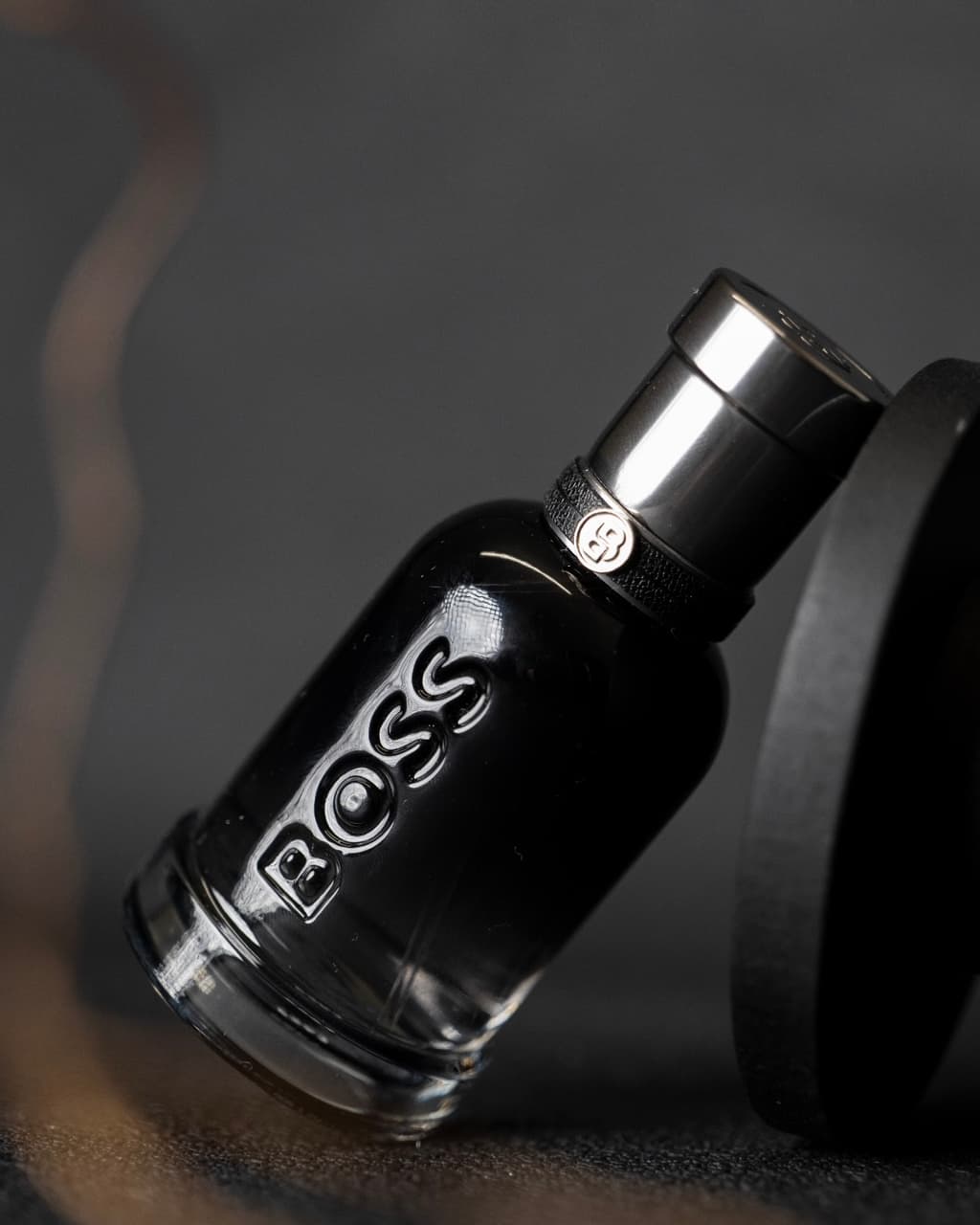
Across US, European, and UAE supply chains as of 2025, buyers usually review 7 cost nodes: fragrance oil, alcohol, demineralized water if used, compounding, maceration, chilling and filtration, and filling or final assembly. For a startup run of 1,000 to 5,000 bottles, even a small change in concentration can materially shift margin. Moving from a light Eau de Toilette to a fuller Eau de Parfum may add less than $1 on some formulas, but it can add several dollars on niche compositions using expensive naturals. That is why buyers should not ask only for a formula quote. They should ask how concentration, loss rate, and co-packing assumptions were calculated.
A perfume formula cost breakdown starts with 7 cost nodes, not just fragrance oil.
When buyers say “formula cost,” they often mean only the liquid blend. In production, however, the real benchmark includes process steps that directly affect perfume production cost per bottle. The most useful way to estimate COGS is to separate the liquid into seven measurable nodes and assign a range to each one.
| Cost Node | Typical Cost Driver | 100ml Bottle Benchmark (USD) | Notes |
|---|---|---|---|
| Fragrance Oil | Oil grade, naturals ratio, concentration | $0.16 - $6.40 | Largest variable in most formulas |
| Alcohol | SDA 40B or organic alcohol price | $0.23 - $0.76 | Usually stable unless certified organic |
| Water if used | Formula architecture | $0.01 - $0.03 | Some fine fragrance formulas use none |
| Compounding | Blending, batch handling, QC | $0.10 - $0.35 | Varies by batch size and site |
| Maceration | 15-20°C storage for 4-8 weeks | $0.15 - $0.40 | Often missed in early budgets |
| Chilling & Filtration | Cold stability and visual clarity | $0.08 - $0.25 | Can rise for tricky formulas |
| Filling & Assembly | Filling, crimping, capping, basic cartoning | $0.80 - $2.50 | Complex packs can exceed $3.50 |
A realistic first-pass estimate for a commercial 100ml Eau de Parfum in a 1,000 to 5,000 unit run is often $1.53 to $4.69 for formula plus processing, excluding primary packaging. A niche formula with costly naturals can move above $7.00 to $9.00 before bottle and presentation costs are added. For investors and founders, this is the key point: the internal juice cost is usually much lower than the finished pack cost, but it still controls scent quality, claim position, and long-term repurchase rate.
Fragrance oil is usually the most expensive part of the liquid formula.
The fragrance concentrate is normally the main driver in a perfume formula cost breakdown. Based on the non-China market benchmarks provided, masstige or commercial fine fragrance compounds often range from $40 to $100 per kg, while niche or luxury compounds can range from $250 to $800+ per kg. The final cost per bottle depends on dosage level and finished concentration.
How concentration changes cost per bottle
A 100ml bottle does not use 100ml of fragrance oil. It uses a percentage of concentrate diluted into alcohol and other permitted components. If a formula uses 10% oil, that is about 10ml of concentrate per bottle. If it uses 20%, that becomes about 20ml. On higher-end formulas, that difference matters fast.
| Fragrance Type | Typical Oil Load | Masstige Oil Cost per 100ml Bottle | Niche Oil Cost per 100ml Bottle |
|---|---|---|---|
| Eau de Cologne | 2% - 4% | $0.08 - $0.40 | $0.50 - $3.20 |
| Eau de Toilette | 5% - 12% | $0.20 - $1.20 | $1.25 - $9.60 |
| Eau de Parfum | 15% - 20% | $0.60 - $2.00 | $3.75 - $16.00 |
| Extrait de Parfum | 20% - 30% | $0.80 - $3.00 | $5.00 - $24.00 |
The table shows why founders should be careful with broad claims like “juice is cheap.” It can be cheap on a basic commercial EDT. It is not cheap when the concentrate comes from top-tier fragrance houses and includes high percentages of naturals such as iris, jasmine, rose, or oud accords.
Per bottle raw liquid cost example
Take a 100ml Eau de Parfum at 18% oil load. If the compound costs $60 per kg, the oil portion may land near $1.08 per bottle. If the same structure uses a niche-grade compound at $400 per kg, the oil portion rises to about $7.20 per bottle. This is why two brands with the same bottle and same box can have very different gross margins.
Perfumer's alcohol is a smaller cost, but it still affects margin and positioning.
For most brands, perfume oil alcohol cost is easier to benchmark than fragrance concentrate. In the US and Europe, perfumer's alcohol or SDA 40B typically ranges from $3.00 to $8.00 per liter. Standard denatured ethanol usually sits at the low end, while certified organic sugarcane alcohol can move higher.
Alcohol cost per 100ml bottle
In a 100ml bottle with 15% fragrance oil, roughly 85ml is alcohol and minor additives. At $3.00 per liter, 85ml costs about $0.26. At $8.00 per liter, it rises to about $0.68. Even after adding a small allowance for processing loss, the alcohol component is often below $0.75 per bottle.
That means alcohol is rarely the main cost problem. But it can affect brand claims and regulatory comfort. Organic alcohol, lower-odor alcohol, and region-specific sourcing can all influence both cost and customer perception. A premium brand may accept a higher alcohol input if it supports clean beauty messaging or a softer dry-down profile.
Loss rate matters more than many founders expect
One hidden issue is filling loss rate. In small runs, transfer loss, line priming, filtration retention, and rejected units can add 2% to 5% to the effective liquid consumption. For delicate or highly colored formulas, the loss can go higher if repeated filtration or line cleaning is needed. This does not usually break the budget, but it should be included when estimating actual consumption per production run.
| Scenario | Nominal Fill | Estimated Process Loss | Effective Liquid Needed for 1,000 Bottles |
|---|---|---|---|
| Efficient standard EDP run | 100 liters | 2% | 102 liters |
| Typical small-batch run | 100 liters | 3.5% | 103.5 liters |
| Complex formula or higher rejects | 100 liters | 5% | 105 liters |
Need decoration cost checked against your perfume COGS?
Share your bottle size, label area, and finish target for a faster estimate.
Maceration, chilling, and filtration add real overhead even when raw material cost looks low.
One common mistake in a perfume production cost per bottle estimate is ignoring post-blend processing. Maceration is not free. Holding fragrance in climate-controlled conditions at 15-20°C for 4 to 8 weeks, then chilling and filtering for clarity and stability, creates direct and indirect cost.
Why maceration costs money
The direct benchmark from Western facilities is about $0.15 to $0.40 per unit. This includes storage space, utilities, labor handling, work-in-progress capital, and in many cases later filtration. The longer the hold time, the more the product ties up capacity. For a new brand running 2,000 bottles, that may not sound severe. But on a 20,000 bottle schedule, holding inventory for 6 weeks instead of 2 has a meaningful cash-flow effect.
There is also a quality reason to keep this line item visible. Some formulas with heavier naturals or resinous bases can throw haze or sediment if process control is weak. A low initial quote can become expensive if the batch needs extra filtration passes or rework. That is why experienced buyers ask not only “Do you macerate?” but also “For how long, at what temperature, and what reject rate do you typically see?”
Use case: startup niche launch in Europe
A small niche brand launches a 100ml Eau de Parfum at 18% concentration, 2,500 units, with a woody floral formula. The fragrance oil cost is $3.60 per bottle, alcohol $0.42, compounding $0.20, and maceration plus filtration $0.33. Before filling, the liquid subtotal is already $4.55. If the founder budgeted only “about $3,” the error comes mainly from underestimating both concentrate quality and the time cost of aging the batch.
Filling and assembly costs are often the biggest process fee after the formula itself.
The market benchmark for fragrance filling cost in the US and Western Europe is typically $0.80 to $2.50 per bottle for automated or semi-automated co-packing. This usually includes filling, pump crimping, collar pressing, capping, and basic cartoning. If your pack includes hand-applied extras, the rate can exceed $3.50 per bottle.
What changes the filling price
Four factors drive the spread. First, run size: a 1,000-unit order has less efficiency than a 10,000-unit order. Second, bottle and pump compatibility: difficult tolerances slow line speed. Third, decoration complexity: labels, medallions, ribbons, shrink bands, and inserts all add handling. Fourth, quality protocol: AQL level, leak testing, and visual inspection intensity all affect labor cost.
| Filling Scenario | MOQ Context | Unit Price (USD) | Lead Time | Notes |
|---|---|---|---|---|
| Basic automated filling and crimping | 5,000+ units | $0.80 - $1.20 | 3 - 5 weeks | Standard bottle, cap, and carton |
| Semi-automated filling for smaller brands | 1,000 - 5,000 units | $1.20 - $2.00 | 4 - 6 weeks | Common for indie launches |
| Premium hand-finish assembly | 1,000+ units | $2.00 - $3.50+ | 5 - 8 weeks | Ribbons, charms, layered presentation |
For many startup brands, filling and assembly look expensive because the service is labor-heavy and line changeovers are costly. But buyers should also compare reject risk. A cheaper packer that causes leakage, bad crimping, or scratched surfaces can erase any apparent savings.
Besides the formula, decoration can increase perceived selling price more than many brands expect.
Even when the perfume liquid cost is tightly controlled, premium decoration often has a stronger effect on shelf value and gift appeal than a small change in alcohol or maceration cost. This is where packaging decoration should be considered alongside formula budgeting, not after it. For perfume and cosmetics brands, tactile and metallic details can support a higher MSRP, especially in travel sets, holiday launches, and boutique retail environments.
In this stage, WowSticker is relevant not as a formula supplier, but as a decoration partner. Brands commonly use UV DTF Stickers for curved bottles, Nickel Stickers for raised metal logo effects on caps or outer packs, and Resin Stickers when a domed badge look is needed. On a premium fragrance line, these choices may add far less to unit cost than changing from a commercial concentrate to a luxury concentrate, yet they can visibly shift customer perception at first touch.
A practical example: if a brand adds a premium badge or metallic branding element that increases decoration cost by $0.20 to $0.80 per unit, that may support a stronger unboxing impression and improve the perceived gap between a $49 perfume and a $79 perfume. That does not mean decoration replaces formula quality. It means formula and appearance should be budgeted together. WowSticker works with perfume and cosmetics projects that need this balance between visual impact, MOQ reality, and factory-direct cost control.
The best way to estimate cost per bottle is to build three scenarios: commercial, premium, and niche.
Many buyers ask for one number, but one number is misleading. A better approach is to build three ranges around concentration, fragrance grade, and co-packing complexity. The table below gives a practical planning view for a 100ml bottle in a 1,000 to 5,000 unit project.
| Scenario | Oil + Alcohol | Maceration + Filtration | Filling + Assembly | Total Formula/Process Cost per Bottle |
|---|---|---|---|---|
| Commercial EDT/EDP | $0.45 - $1.60 | $0.23 - $0.45 | $0.80 - $1.50 | $1.48 - $3.55 |
| Premium EDP | $1.50 - $3.50 | $0.25 - $0.55 | $1.20 - $2.00 | $2.95 - $6.05 |
| Niche/Luxury EDP or Extrait | $3.80 - $8.20 | $0.30 - $0.65 | $1.50 - $2.50 | $5.60 - $11.35 |
This framework also helps investors understand margin logic. If a 100ml perfume retails at $85, the actual liquid formula plus process cost may still be only a modest percentage of retail. In many brands, the bottle, cap, pump, carton, compliance work, freight, sampling, trade margin, and marketing spend exceed the liquid cost by a wide margin.
Planning a premium perfume launch with labels or metal-look decoration?
WhatsApp your bottle photos, size, MOQ, and target finish for practical feedback.
The main takeaway is that concentration and processing assumptions matter more than headline averages.
A useful perfume formula cost breakdown should show the cost of fragrance oil, alcohol, maceration, filtration, and filling separately. For a standard 100ml run, alcohol may only add a few cents more or less depending on grade, while fragrance concentrate can move total cost by several dollars per bottle. Maceration and filling are not minor details either. They are real cost nodes that affect cash flow, lead time, and quality risk.
If you are building a launch budget, estimate three versions of your product: a minimum viable formula, a target formula, and a premium stretch formula. Then align those costs with bottle choice, outer packaging, and decoration. That approach gives a much better buying decision than asking for a single formula price in isolation.
FAQ
What is the most expensive ingredient in a perfume formula?
In most cases, the fragrance concentrate is the most expensive part of the liquid formula. This is especially true when the composition uses costly naturals or natural-style accords built around ingredients such as iris, jasmine, oud, or rose absolutes. Alcohol is usually much cheaper by comparison, often below $0.75 per 100ml bottle.
How much does perfumer's alcohol cost per bottle?
For a 100ml perfume, the alcohol portion is commonly about $0.23 to $0.76 depending on concentration and alcohol grade. Standard SDA 40B or similar denatured ethanol in the US or EU typically ranges from $3.00 to $8.00 per liter. Organic or specialty alcohol can push the cost higher, but it is still usually a small share of total COGS.
Why does the maceration process increase production costs?
Maceration increases cost because the product must be stored under controlled conditions, often for 4 to 8 weeks at around 15-20°C. That creates utility, space, labor, and inventory holding costs. Many facilities also include chilling and filtration after aging, which adds more handling and can raise the per-unit cost by another few cents.
What is the cost difference between formulating an Eau de Toilette and an Eau de Parfum?
The main difference comes from the oil load. An Eau de Toilette may use roughly 5% to 12% fragrance oil, while an Eau de Parfum may use 15% to 20%. On a commercial formula the increase may be moderate, but on a niche formula using a $250 to $800+ per kg concentrate, moving to EDP can add several dollars per bottle.
How much do US and European contract manufacturers charge for perfume filling?
Typical contract filling and assembly costs range from $0.80 to $2.50 per bottle in the US and Western Europe. This usually covers filling, crimping, capping, and basic cartoning. If the pack includes hand-finished details or complex presentation, the cost can rise above $3.50 per bottle, especially on smaller production runs.
Which option is better for a startup brand: spend more on formula or more on decoration?
Most startup brands need a balanced approach. If the scent quality is too weak, repurchase suffers. If the product looks too basic, first purchase suffers. A practical strategy is to secure a solid mid-tier Eau de Parfum formula, then use selective upgrades such as premium labels, UV DTF Stickers, or Nickel Stickers where they create visible value without overspending.
RFQ and Production Checklist
Before asking for a final quote, prepare a short production packet so the supplier can answer with fewer assumptions. For perfume formula cost breakdown: fragrance oil, alcohol, maceration, filling, the packet should connect the design goal with the real packaging surface and the launch plan.
- package type, bottle size, cap or box material, and application surface
- label, sticker, badge, or seal size in millimeters
- artwork format, color reference, finish preference, and logo placement
- sample quantity, first production quantity, and expected reorder range
- destination country, retail channel, and packaging compliance notes
- alcohol, oil, hand-contact, humidity, heat, or shipping-pressure exposure
- approval method: digital proof, real-surface sample, or retained control sample
- budget range, launch deadline, and packing requirements for finished pieces