Perfume Brand Profit Margin Breakdown by 500, 1,000, and 3,000 Units
A realistic perfume profit margin at small-batch level depends less on hype and more on order volume, packaging choices, and sales channel. Based on current factory data, a 30ml Eau de Parfum with custom packaging can cost about $4.44 per unit at 500 pieces, $3.33 at 1,000, and $2.50 at 3,000, with packaging taking 22% to 28% of total cost. WowSticker (wowsti.com) has years of factory-direct experience in custom labels, stickers, and packaging decoration for perfume and cosmetics brands worldwide, so this guide focuses on the part many founders miss: how packaging decoration and unit scale change your margins. If you already have a bottle size, MOQ, or label idea, send your specs now and compare Vinyl Sticker, UV DTF Sticker, and Nickel Sticker options against your target retail price.
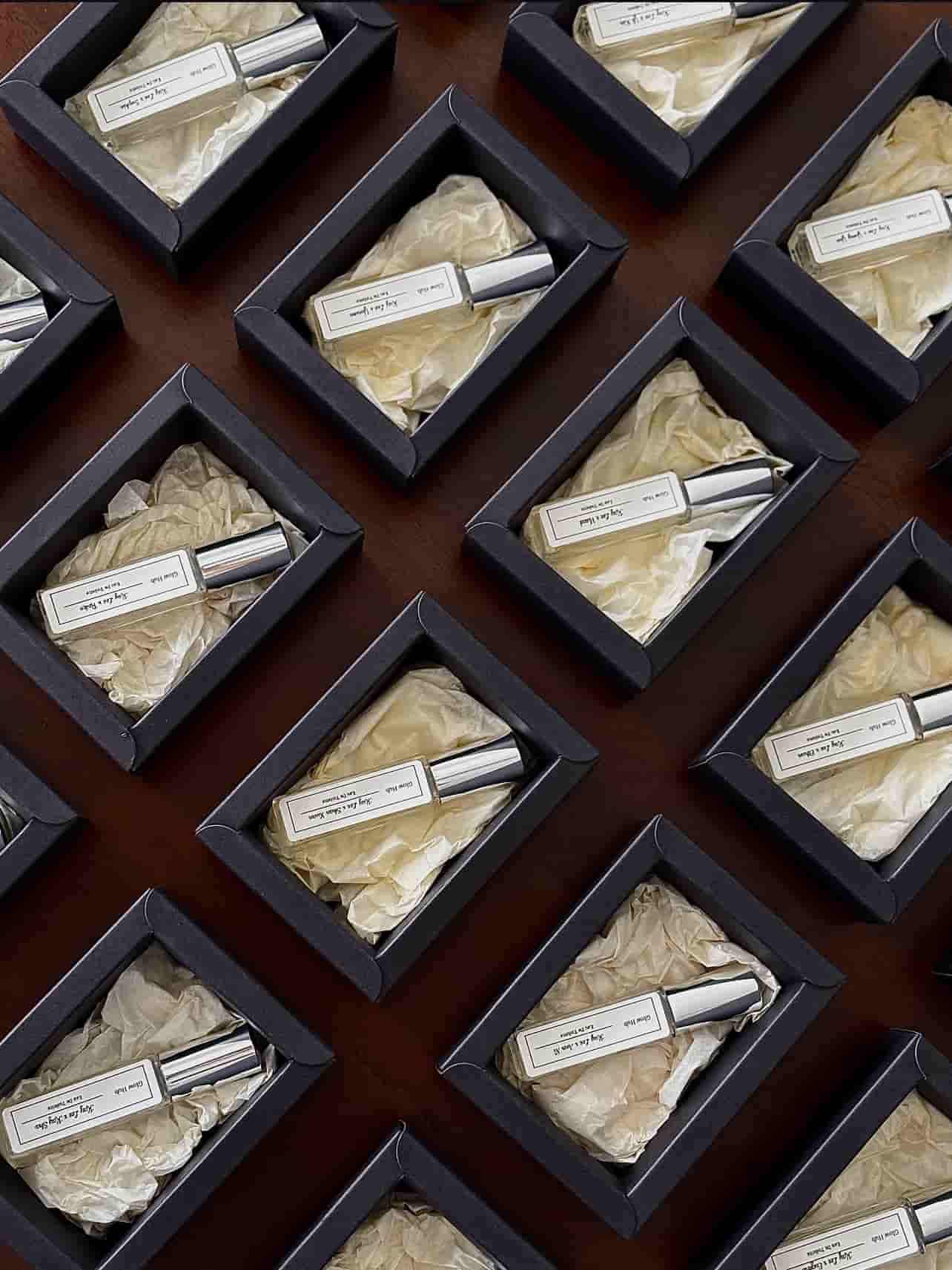
For most indie and growing perfume brands, the main question is not whether fragrance has high markup in theory. The real question is whether your margin still works after packaging upgrades, sampling fees, freight, export paperwork, and customer acquisition. That is where a clean perfume brand margin breakdown becomes useful. The numbers below show what changes between 500, 1,000, and 3,000 units, where the hidden costs sit, and when premium decoration actually supports profit instead of hurting it.
Need pricing for perfume bottle labels, cap badges, or premium decoration?
Send us your specs for Vinyl, UV DTF, or Nickel Stickers.
What is the perfume profit margin at 500, 1,000, and 3,000 units?
The short answer: gross margin improves sharply as volume rises, because unit cost drops from $4.44 to $2.50 while retail price does not need to fall at the same pace.
Using Source A factory data for a 30ml Eau de Parfum with custom packaging, the EXW unit cost falls by about 43% between 500 and 3,000 units. That scale effect is the main driver behind better small perfume brand unit economics. If a brand sells D2C at $22 to $28 for an entry premium positioning, gross margin is already healthy. If the brand sells through wholesale, margin becomes much tighter unless unit cost is controlled early.
To make the comparison practical, the table below shows factory cost, example selling prices, and estimated gross margin before marketing, warehousing, and platform fees.
| Order Volume | Factory Unit Cost (USD) | Suggested D2C Retail (USD) | Estimated D2C Gross Margin | Suggested Wholesale Price (USD) | Estimated Wholesale Gross Margin |
|---|---|---|---|---|---|
| 500 units | $4.44 | $22.00 - $28.00 | 79.8% - 84.1% | $11.00 - $14.00 | 59.6% - 68.3% |
| 1,000 units | $3.33 | $22.00 - $28.00 | 84.9% - 88.1% | $11.00 - $14.00 | 69.7% - 76.2% |
| 3,000 units | $2.50 | $22.00 - $28.00 | 88.6% - 91.1% | $11.00 - $14.00 | 77.3% - 82.1% |
Global fragrance benchmarks also support this. Source B notes that prestige fragrance gross margins often reach 70% to 90%, while net margin usually settles closer to 15% to 25% after marketing and distribution. That difference matters. A good gross margin does not automatically mean a good business. The next step is to break down exactly where the money goes.
How much does each cost component contribute to perfume brand margin breakdown?
The direct answer: juice is usually the largest cost driver, but packaging is the part founders can tune fastest, and it still represents 22% to 28% of total unit cost.
For a standard 30ml OEM/ODM perfume, Source A gives a useful baseline: fragrance oil and alcohol at $1.11 to $2.08, bottle at $0.49 to $0.83, pump and cap at $0.35 to $0.63, outer box at $0.28 to $0.63, labels at $0.07 plus $0.17 for foil, and assembly labor at $0.21. At low MOQ, packaging decisions can move margin more than founders expect.
| Cost Component | Typical Unit Cost (USD) | Impact on Margin | Buyer Note |
|---|---|---|---|
| Fragrance oil & alcohol | $1.11 - $2.08 | High | Premium oils improve story and scent profile, but raise COGS fast |
| Glass bottle | $0.49 - $0.83 | High | Custom molds add a one-time fee and 10-15 extra days |
| Pump & cap | $0.35 - $0.63 | Medium | Magnetic caps help premium feel but narrow wholesale margin |
| Outer box | $0.28 - $0.63 | Medium | Rigid boxes look premium but matter less for repeat buyers |
| Labels & decoration | $0.07 - $0.24 baseline | Medium to High | Decoration is a low-cost way to upgrade shelf perception |
| Assembly labor | $0.21 | Low | Usually stable unless packing process is complex |
For an indie brand launching 500 units, a common mistake is overbuilding the bottle and box while underpricing the product. A more balanced strategy is to keep the bottle stock, maintain clean print quality, and use premium surface decoration only where customers notice it first: the front bottle label, cap badge, or gift box logo panel. That is where WowSticker options like UV DTF Sticker or Nickel Sticker can create a better premium signal without forcing a full custom bottle program.
What is the perfume packaging cost percentage, and which decoration option makes sense?
The direct answer: perfume packaging cost percentage is about 28% at 500 units, 25% at 1,000 units, and 22% at 3,000 units, and label material choice should match your retail positioning, not just your artwork.
Source A gives the core ratio: packaging accounts for 22% to 28% of total landed cost in small-batch perfume production. This is why packaging is not a minor detail in a perfume brand margin breakdown. It is a controlled lever. You can keep scent and fill volume constant, but improve perceived value through decoration.
The table below compares standard packaging ratio by volume and shows how common label routes differ for perfume and cosmetics packaging. The label price examples use available WowSticker data where possible.
| Volume Tier | Total Unit Cost (USD) | Packaging Cost % | Estimated Packaging Cost per Unit (USD) | Paper Label | Vinyl | UV DTF | Nickel |
|---|---|---|---|---|---|---|---|
| 500 units | $4.44 | 28% | $1.24 | Lowest cost, basic branding | Better durability, good for moisture handling | Raised premium effect without plate tooling | Best for logo badge look, premium metallic finish |
| 1,000 units | $3.33 | 25% | $0.83 | Typical front/back label route | About $0.018 per piece at 50x30mm based on WowSticker pricing | About $0.048 per piece at 50x30mm based on WowSticker pricing | Higher than UV DTF, used for premium cap or carton badge applications |
| 3,000 units | $2.50 | 22% | $0.55 | Still cost-efficient at scale | Works well for secondary SKUs and line extensions | More affordable when used only on hero panel areas | Best when brand needs luxury signal for retail display |
| Decoration Product | Reference Spec | MOQ Context | Unit Price (USD) | Typical Use on Perfume Packaging |
|---|---|---|---|---|
| Paper label | Front & back basic label | Common OEM baseline | About $0.07 | Budget launch, ingredient or barcode label |
| Vinyl Sticker | 50x30mm, 1000 pcs | 1,000 pcs | About $0.018 | Durable bottle label, secondary packaging, sampler kits |
| UV DTF Sticker | 50x30mm, 1000 pcs | 1,000 pcs | About $0.048 | No-print-look decoration on glass, cap, or box panel |
| Nickel Sticker | Custom metallic logo badge | Project-based | Quoted by spec | Luxury logo badge for carton or cap top |
Want to compare decoration cost against your target retail margin?
Send your bottle size, label size, and MOQ for a fast cost check.
How do hidden costs change small perfume brand unit economics?
The direct answer: hidden costs can add $0.07 to $0.40+ per unit at lower volumes, and they often make the difference between a healthy launch and a pricing mistake.
Many startup founders look only at factory unit cost. That is incomplete. Source A shows several non-obvious charges: sample investment of about $111.00 for liquid and packaging prototypes, domestic shipping to port of $55.56 for 500 units and $125.00 for 3,000 units, export documentation of $41.67 per shipment, Pantone color matching at $69.44, and third-party inspection at $138.89 per man-day for orders over 1,000 units.
If a 500-unit order absorbs a fixed pre-production cost of $111 for samples and $41.67 for documents, that alone adds about $0.31 per unit before freight. At 3,000 units, the same fixed cost is only about $0.05 per unit. That is why small perfume brand unit economics improve faster than many first-time buyers expect.
| Hidden Cost Item | Total Cost (USD) | Approx. Cost per Unit at 500 | Approx. Cost per Unit at 1,000 | Approx. Cost per Unit at 3,000 |
|---|---|---|---|---|
| Liquid + packaging samples | $111.00 | $0.22 | $0.11 | $0.04 |
| Export documentation | $41.67 | $0.08 | $0.04 | $0.01 |
| Domestic shipping to port | $55.56 - $125.00 | $0.11 | Estimated $0.08 - $0.10 | $0.04 |
| Pantone color matching | $69.44 | $0.14 | $0.07 | $0.02 |
| Third-party inspection | $138.89 | Not typical | $0.14 | $0.05 |
A practical example: an indie perfume brand ordering 1,000 units for a D2C launch may accept a UV DTF front logo and standard stock bottle, because that keeps the visual impact high while avoiding custom mold fees of $416 to $694 and an extra 10 to 15 days. That is often a better financial choice than spending on tooling too early.
Why do D2C and wholesale channels produce very different perfume profit margin results?
The direct answer: D2C can preserve 80%+ gross margin, while wholesale often cuts your retained margin nearly in half, so your pricing model must match your channel from day one.
Source B notes that standard retail markup is often 2.5x to 3x wholesale cost. In practice, that means if your perfume costs $20 to make in a premium Western supply chain, it may wholesale for $40 to $50 and retail for $120 to $150. The same logic applies at smaller cost levels. The channel, not just the product, defines your working margin.
For a 30ml fragrance with a $3.33 cost at 1,000 units, selling D2C at $24 gives a gross margin of about 86.1%. But if the same SKU is wholesaled at $12, gross margin drops to about 72.3%. That still looks good on paper, but wholesale also adds tester units, retail support, lower reorder control, and slower cash cycles.
Then comes CAC. A D2C brand may enjoy strong gross margin, but paid social or search can easily consume $20 to $40 per first order in competitive beauty markets as of 2025. If your gross profit per bottle is $20 and your blended CAC is $28, the order is not healthy unless repeat purchase is strong. This is why many fragrance founders feel confused: the product margin looks excellent, but the business margin does not.
Next action for buyers is simple: build pricing from the intended channel, then reverse-check whether your decoration level still fits the margin target.
What should you send to get an accurate perfume packaging and margin quote faster?
The direct answer: send dimensions, MOQ, material preference, finish, application, and destination first, because these six details remove most pricing guesswork.
For label and decoration sourcing, missing details can delay quotation by 24 to 48 hours and lead to ranges that are too wide to be useful. If you want fast comparison between paper label, Vinyl Sticker, UV DTF Sticker, and Nickel Sticker routes, use the inquiry template below.
Inquiry Template for Faster Pricing
Send these details:
- Product type: perfume bottle label, cap top badge, box logo, or sampler label
- Size / dimensions: for example 50x30mm front label, 25mm cap badge
- MOQ: 500 / 1,000 / 3,000 units
- Material preference: paper, vinyl, UV DTF, nickel, metal plate
- Finish / surface treatment: matte, gloss, foil, embossed look, metallic, raised effect
- Application scenario: glass bottle, coated carton, cap top, rigid box
- Artwork status: AI/PDF ready, logo only, or need production adjustment
- Delivery country: US, UK, UAE, EU, Australia, etc.
- Target timing: sample date and mass production deadline
Helpful extra: share bottle photos, box dieline, and target retail price. That makes it easier to recommend the right decoration level for your margin.
Have your bottle size, MOQ, or artwork ready?
WhatsApp the specs and get a decoration recommendation within 2 hours.
Which volume tier usually makes the most sense for a startup perfume brand?
The direct answer: 500 units is safer for validation, 1,000 units is usually the best balance, and 3,000 units works only when demand or distribution is already proven.
At 500 units, capital risk stays lower, but your unit cost is highest at $4.44 and packaging cost percentage reaches 28%. This tier fits founders testing one scent, one market, or one creator-led launch. At 1,000 units, the cost falls to $3.33, sample fees are often deductible, and packaging cost percentage drops to 25%. This is the most practical point for many D2C perfume brands. At 3,000 units, the unit cost falls to $2.50, but inventory and channel risk rise. It suits brands entering retail, subscription boxes, or multi-country distribution.
If you are still choosing between standard print and premium surface decoration, a balanced launch path is often: stock bottle, controlled outer box cost, and premium focal decoration through WowSticker labeling or badge solutions. That approach supports margin without locking you into expensive tooling too early.
Conclusion: what should buyers do with these perfume margin numbers?
The direct answer: use 1,000 units as your planning benchmark unless you have clear proof of demand or a very tight testing budget.
The numbers are clear. A perfume profit margin can look excellent at all three tiers, but your real outcome depends on packaging discipline, fixed-cost absorption, and sales channel. The strongest planning logic is simple: start with your intended retail or wholesale price, reserve room for CAC or distributor margin, then choose packaging decoration that supports the brand story without pushing COGS too high. For many early-stage fragrance brands, that means keeping the structure simple and using targeted premium touches such as Vinyl Sticker durability, UV DTF premium graphics, or Nickel Sticker metallic branding where customers notice it most.
FAQ
What is the average profit margin for a niche perfume brand?
Gross margin for niche perfume can often range from 70% to 90%, especially in D2C sales. Net margin is much lower, usually around 15% to 25%, because ads, influencer seeding, samples, and retail support absorb a large share of profit. Founders should calculate gross and net separately before choosing packaging upgrades.
How much does it cost to manufacture 500 units of a custom perfume?
Based on the factory data used in this article, 500 units of a 30ml Eau de Parfum with custom packaging cost about $4.44 per unit EXW, or about $2,220 total before extra fixed items such as samples, export documents, and destination freight. Packaging typically accounts for about 28% of that low-volume cost structure.
Which option is better for a startup brand: 500 or 1,000 units?
If capital is tight and demand is untested, 500 units reduces inventory risk. If the brand already has audience traction or a launch plan, 1,000 units is usually better because unit cost drops from $4.44 to $3.33 and sample fees are often easier to absorb. Many startup brands find 1,000 units gives the best balance between cost and flexibility.
Do perfume profit margins increase significantly between 1,000 and 3,000 units?
Yes. The factory cost in this data set falls from $3.33 to $2.50 per unit, which meaningfully improves gross margin in both D2C and wholesale scenarios. The gain is real, but it only helps if you can sell through the extra stock. Higher margin on paper is not useful if inventory sits for six months.
What should I send before asking for a quote on labels or premium decoration?
Send the bottle or box dimensions, MOQ, material preference, finish, application surface, artwork status, and delivery country. A front photo of the bottle and your target retail price are also helpful. These details allow a supplier to recommend whether paper, vinyl, UV DTF, or nickel decoration makes the most sense for your budget and brand level.
Is a premium decoration upgrade worth the extra cost?
Usually yes, if it improves perceived value on the hero visual area without forcing expensive tooling. For example, a UV DTF or nickel logo can create a more premium shelf look at a fraction of the cost of a full custom mold. It is most worth it when the product is sold D2C or positioned as a giftable fragrance.