How to Validate a Perfume Business Idea Before You Spend $5,000
If you want to validate perfume business idea fast, the short answer is this: do not start with a full custom production run. A lean test can stay under $938–$1,310 for a 500-unit custom-labeled packaging run, and even lower if you begin with label-only visual testing at just $0.25–$0.48 per label. WowSticker (wowsti.com) has years of factory-direct experience in custom labels, stickers, and packaging decoration for perfume and cosmetics brands worldwide, so this article focuses on practical validation steps that protect cash before you commit to scale.
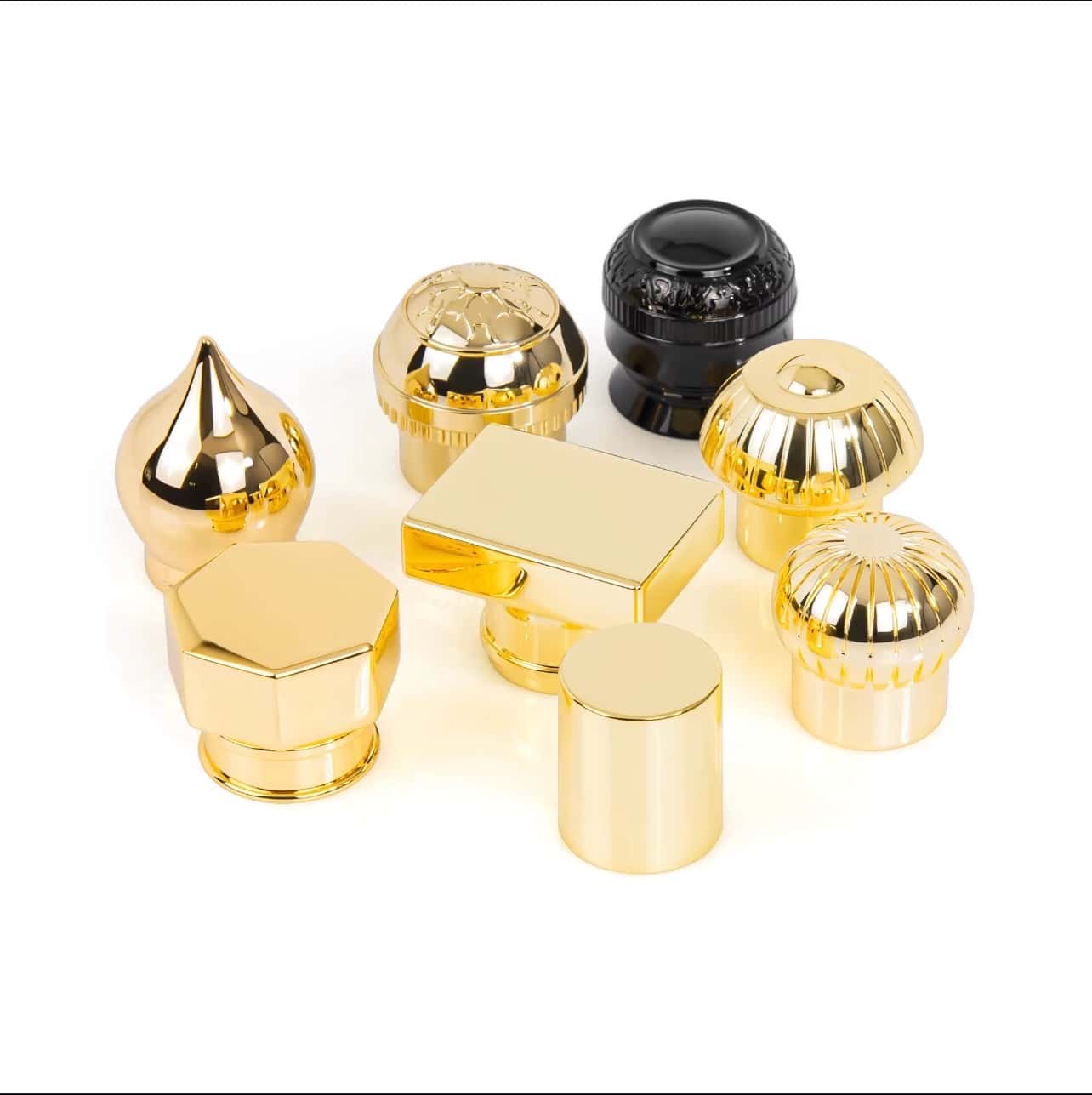
A realistic 60-day validation sprint can test scent interest, shelf appeal, price tolerance, and repeat intent without freezing your first $5,000 in slow-moving inventory. Below is a 7-step process, 3 low-cost test channels, budget ranges in USD, and the exact packaging information suppliers need to quote quickly.
Need pricing for perfume bottle labels, cap badges, or premium decoration?
Send us your specs for Vinyl, UV DTF, or Nickel Stickers.
What is the safest way to validate a perfume business idea?
The safest way is to test demand in layers, not all at once. Most first-time founders fail because they buy 1,000 to 3,000 finished bottles before they know whether customers like the scent, the name, or the packaging. A safer model is a minimum viable perfume brand: one scent concept, one target buyer, one packaging direction, and one simple sales offer tested across a small audience.
The goal is not to look “big” in month one. The goal is to answer 4 commercial questions with real signals:
- Will people stop and smell the concept?
- Will they click, sign up, or pre-order?
- Will they pay your target price, such as $39, $59, or $89?
- Will the packaging style support the story you want to tell?
As of 2025, the global perfume market is valued at about $50.4 billion and projected to exceed $77 billion by 2030. That growth is one reason indie perfume founders keep entering the category. But growing demand does not remove startup risk. It only means there is room for brands that validate early and spend carefully.
If you are still shaping your concept, the next action is to map your test around a fixed budget ceiling and one clear validation window, usually 30 to 60 days.
How much does it cost to validate a perfume business idea under the $5,000 threshold?
You can usually validate a perfume idea for $500 to $2,500, and still stay well below the $5,000 risk line. Source A shows that a complete 500-unit custom-labeled packaging run can land around $938–$1,310. But most founders should spend less before they have proof of demand.
Use the budget in 3 layers: visual test, sample test, then micro-batch packaging. This keeps your cash flexible. For example, US and UK private label fragrance houses often offer 50–100 sample-run units for under $1,000, leaving room for landing pages, market stalls, and ad tests.
| Validation Stage | Typical Budget (USD) | MOQ / Volume | What You Learn |
|---|---|---|---|
| Visual packaging test | $30–$180 | 50–200 labels or mockups | Name appeal, shelf impact, premium perception |
| Scent sample test | $300–$1,000 | 50–100 sample units | Preference, wear feedback, repeat intent |
| Micro-batch packaging run | $938–$1,310 | 500 units | Operational readiness, unboxing, final conversion test |
| Setup / die / proofing fees | $55–$110 | Per artwork or project | Real cost floor for custom packaging validation |
For factory-packed sets, the economics improve as volume rises. A 300–500 unit validation run often carries a 35–50% price premium over a standard 1,000–3,000 unit run, but the smaller order reduces risk. That tradeoff is usually worth it when your brand is still in testing mode.
| MOQ Tier | Factory-Direct Price per Set (USD) | Typical Market Price per Set (USD) | Lead Time | Notes |
|---|---|---|---|---|
| 300–500 units | $2.34–$4.83 | $3.20–$6.50 | 22–30 business days | Best for validation; carries premium pricing |
| 1,000–3,000 units | $1.79–$3.59 | $2.50–$4.80 | 22–30 business days | Baseline commercial run |
| 5,000+ units | $1.45–$3.03 | $2.10–$4.20 | 25–35 business days | Scale economics improve 12–18% |
The next action is to decide whether you need visual validation first or a finished micro-batch. For most new brands, visual validation comes first because it is cheaper and faster.
Want a fast cost check for low-MOQ perfume packaging tests?
Send your bottle size, label size, MOQ, and finish to compare factory-direct options.
How can you do low-cost visual validation before ordering full packaging?
Start with labels and decoration, not full custom boxes and bottles. For early-stage founders, packaging is often the easiest place to test brand fit at low cost. You can apply new branding to stock sample bottles, plain cartons, or presentation cards and learn a lot before buying full inventory.
在“做低成本视觉验证”部分,建议先用小批量 Vinyl Sticker 或 UV DTF Sticker 测试包装风格。 A small run lets you compare 2 to 3 naming systems, colors, or logo placements with actual people instead of relying on your own taste.
Vinyl Sticker works well when you need a low-cost printed label for temporary mockups, bottle wraps, and market test packs. UV DTF Sticker is useful when you want a cleaner premium look on glass, caps, or rigid surfaces without changing the underlying bottle. Some brands also compare these with Nickel Sticker later for cap logo upgrades, but that is usually a second-stage validation move.
| Test Option | Best Use | MOQ | Typical Cost (USD) | Decision Value |
|---|---|---|---|---|
| Digital printed label | Fast artwork testing on stock bottles | 50–200 pcs | $0.21–$0.52 each | High for names, layouts, and claims |
| Vinyl Sticker 50x30mm | Simple mockup and bottle branding | 1,000 pcs | $18.29 total | Very cost-efficient at small size |
| UV DTF Sticker 50x30mm | Premium transfer look on bottle or cap | 1,000 pcs | $48.30 total | Better for luxury appearance testing |

A useful real-world scenario: a startup founder testing a clean unisex fragrance can apply two front-label designs to the same 30ml stock bottle, then show both versions at a weekend artisan market. If 40 visitors prefer one label by a margin of 2:1 and more of them ask the same price question, that is better evidence than an internal design review.
The next action is to connect your visual test with a structured demand test, not just opinions.
What are the 7 steps to validate a perfume business idea in 60 days?
A 7-step validation flow gives you enough market proof without dragging the process out. This is the most practical answer to how to test a perfume brand idea when budget matters.
1. Define one buyer and one scent story
Choose one segment only: for example, clean unisex office scent, Middle East-inspired amber oud, or travel-size wellness fragrance. If you target everyone, your test data will be weak. Keep your retail hypothesis within a clear band like $39–$69 for entry indie or $79–$120 for niche positioning.
2. Source 50–100 scent samples
Use white-label labs or sample compounding programs. Source B notes that US and UK houses can provide 50–100 units for under $1,000. This is enough to test wear feedback, rejection rate, and first-purchase interest before custom compounding at scale.
3. Build a one-page landing page
Use 3D bottle renders or real mockup photos. Track click-through rate, email capture rate, and price sensitivity. A useful benchmark is simple: if 100 targeted visitors produce fewer than 3–5 email signups, your positioning may still be weak.
4. Run three low-cost test channels
The lowest-cost channels are usually:
- Instagram or TikTok content plus DMs
- Weekend artisan markets or pop-ups
- Landing page pre-orders or waitlist
These 3 channels can be run together for under $300–$800 if you stay disciplined.
5. Test packaging visually before production
Use stock bottles plus labels, or UV DTF decoration, to compare which format looks giftable, premium, or gender-neutral. This is where WowSticker often fits the workflow, because founders can validate design presentation before they buy full custom packaging.
6. Measure commercial signals, not compliments
Track pre-orders, repeat sampling requests, and conversion by scent profile. “I like it” is not validation. “I will pay $59 today” is validation. Try to collect at least 20–30 pieces of structured feedback and at least 5–10 real purchase-intent actions.
7. Decide scale, revise, or stop
If one scent, one story, and one package direction perform clearly better, move to a 300–500 unit run. If test results are flat, revise only one variable at a time. If interest is weak even after revisions, stopping early saves thousands.
The next action is to gather the technical details suppliers need so your quote and timeline match your test plan.
What should you send suppliers to get a fast quote for perfume label testing?
Send complete specs upfront so you get a usable quote, not a vague estimate. Inquiry delays usually happen because founders ask for “perfume stickers” without dimensions, bottle type, or finish details. If you want to launch perfume brand with low budget, quoting accuracy matters because hidden setup fees and MOQ changes can destroy the plan.
Perfume Packaging Inquiry Template
- Product needed: Vinyl Sticker, UV DTF Sticker, label-only set, or full packaging decoration
- Size / Dimensions: label size in mm, bottle volume such as 30ml or 50ml, cap area if decoration is needed
- MOQ: 50 pcs, 100 pcs, 300 pcs, 500 pcs, or 1,000+ pcs
- Material preference: PET, synthetic paper, vinyl, UV transfer, metal badge, etc.
- Finish / Surface treatment: matte, gloss, foil, emboss, soft-touch, transparent, white ink
- Application scenario: market test, discovery set, investor sample, e-commerce pre-launch, retail shelf test
- Delivery country: USA, UK, UAE, Australia, EU country, etc.
- Artwork status: AI/PDF ready, draft logo only, or need file check
With this information, a supplier can usually tell you whether your job fits digital printing, offset printing, or transfer decoration. Lead time also becomes clearer: 5–8 business days for stock blanks plus digital labels, versus 22–30 business days for full custom print and assembled packaging. From August to December, add 7–10 days in peak season.
Also ask about setup charges early. Source A shows one-time plate or emboss die costs around $0.05–$0.19 per artwork when spread across volume, while project-level proofing and matching often create a non-recoverable floor of $55–$110. That is small compared with a failed bulk order, but it should still be planned.
The next action is to decide what metrics tell you your idea is actually working.
Have bottle size and artwork ready?
WhatsApp the specs to get a practical quote for low-MOQ label or decoration testing.
How do you know if your minimum viable perfume brand is ready to scale?
Your brand is ready to scale when buyer behavior, not founder optimism, supports the next order. A minimum viable perfume brand is not just a bottle with a logo. It is a testable offer with enough proof that a larger MOQ makes financial sense.
Good scale signals usually include:
- Pre-order or direct purchase rate: enough real buyers to justify a 300–500 unit run
- Consistent winner: one scent concept and one package style outperform others
- Stable price acceptance: buyers accept your intended margin zone, such as $49 or $69 retail
- Low confusion: customers understand the scent family, use case, and target identity quickly
For example, if you tested 3 packaging looks and one version lifted signups from 4% to 9%, while also producing better in-person reactions, that is a useful packaging validation result. If 25 sample recipients give feedback and 8 ask where to buy, that is stronger than generic praise. If your costed 500-unit packaging plan still leaves marketing budget available, the business case improves further.
One caution: do not confuse social engagement with demand. A video may collect 20,000 views and still produce zero purchases. Scaling decisions should be based on actions with commercial weight: signups, deposits, pre-orders, or retail sell-through in test settings.
So the practical rule is simple: if your concept wins on scent, packaging, and price at small scale, move to the next MOQ. If one of those three fails, revise before you scale.
Why does lean packaging validation matter before a full perfume launch?
Lean packaging validation protects your capital and gives you better negotiating power later. A full launch usually combines fragrance filling, packaging, logistics, content, and customer acquisition. If you lock too much money into finished goods too early, you lose flexibility on every other decision.
Factory data shows a 500-unit custom-labeled packaging run can remain well below the $5,000 validation threshold. That means you still have room for ads, sampling, shipping tests, and revisions. It also means you can enter supplier conversations with data: which label size converted better, which finish looked more premium, and what retail price customers accepted.
For perfume brands and cosmetics brands, this is often the smartest sequence:
- Test scent
- Test message
- Test packaging look
- Then commit to larger packaging MOQ
That sequence is why many founders use WowSticker or wowsti-compatible label and decoration workflows early. A low-cost sticker or transfer test can answer brand presentation questions before the expensive parts of launch begin.
If your aim is to validate rather than impress, the right move is usually a smaller order, faster proof cycle, and tighter measurement plan.
FAQ
How much money do I really need to validate a perfume business idea?
Many founders can get meaningful proof with $500 to $2,500, depending on whether they are testing only visuals, scent samples, or a 300–500 unit micro-batch. A full 500-unit custom-labeled packaging run can be around $938–$1,310, but most early validation starts cheaper with sample units and low-MOQ labels.
Which option is better for a startup brand: label mockups or full custom packaging?
For most startups, label mockups are better first. They are faster, cheaper, and flexible. You can test naming, logo size, premium feel, and shelf impact on stock bottles before paying for custom boxes or decorated glass. Move to full custom packaging only after scent and positioning show real demand.
What should I send before asking for a quote?
Send bottle size, label dimensions, MOQ, material choice, finish, delivery country, and artwork status. If you want a faster quote, also explain whether this is for a market test, discovery set, or retail launch. Suppliers can then recommend digital labels, Vinyl Sticker, or UV DTF Sticker based on your actual use case.
Is a premium packaging upgrade worth the extra cost during validation?
Usually only if premium presentation is central to your price point. Foil, embossing, soft-touch lamination, and gradient effects can add 20–40% to base packaging cost. If you are testing whether buyers accept a luxury price, a premium mockup may be worth it. If you are only testing concept-market fit, keep it simple first.
How long does low-MOQ perfume packaging validation take?
Label-only or stock-bottle visual tests can be ready in 5–8 business days. Full custom print with box assembly and QA is usually 22–30 business days, with another 7–10 days added in peak season from August to December. A practical validation sprint usually fits inside 30–60 days.
Can I launch perfume brand with low budget and still look premium?
Yes, if you separate “premium look” from “premium MOQ.” Many early-stage brands use stock bottles plus carefully chosen labels or UV DTF decoration to create a polished presentation without committing to large custom orders. That approach keeps capital available for scent testing, marketing, and revisions.
The safest way to validate a new perfume concept is to stage your spend: test the scent, test the message, test the package look, and only then increase MOQ. That approach gives you commercial evidence before you risk the full $5,000. If your numbers are positive, scaling becomes a decision based on proof, not hope.