How to Negotiate Payment Terms with Fragrance Manufacturers in China
If you need to negotiate payment terms perfume manufacturer deals in China, the short answer is this: new buyers should expect 50% upfront by default, but orders above 10,000 units, clear QC terms, and smart cost separation can often move that closer to 30/70. For perfume and cosmetics brands, that difference matters because hazardous-goods shipping can add 35 to 55 days of cash tied up before inventory is sellable. WowSticker (wowsti.com) has years of factory-direct experience in custom labels, stickers, and packaging decoration for perfume and cosmetics brands worldwide, so this article is written from the practical side of how Chinese factories price risk, production, and packaging. If you want faster cost visibility on premium bottle decoration such as Vinyl Sticker or UV DTF Sticker, it is often smarter to price those separately before you accept a bundled factory quote.
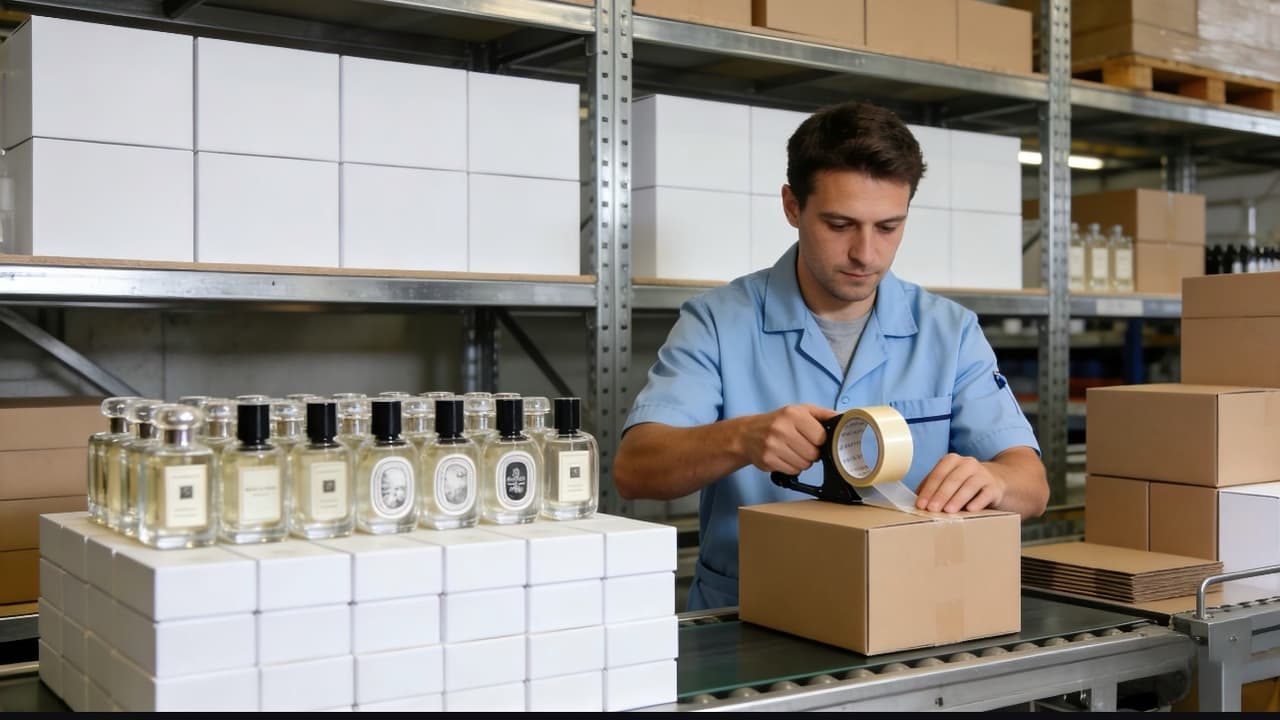
Many fragrance factories quote on a bundled basis and charge a noticeable premium for full-package sourcing. In practice, factories usually add higher markups when they handle all materials and labor together. Buyers can take back cost control by sourcing high-value decoration components from competitive specialists, then asking the filling factory to apply them. For example, some perfume brands buy premium decals and badges directly from WowSticker and send them to the factory for application, instead of accepting the manufacturer’s marked-up decoration package. That simple move improves both payment negotiations and total landed cost.
Need pricing for perfume bottle labels, cap badges, or premium decoration?
Send us your specs for Vinyl, UV DTF, or Nickel Stickers.
What are the standard payment terms when you negotiate with a perfume manufacturer?
The standard answer is 50% upfront for new buyers, while 30/70 is common once the supplier sees repeat volume or lower risk. In fragrance and cosmetics sourcing, the manufacturer is financing formula preparation, bottle procurement, atomizer assembly, packaging labor, and production line time. That is why many Chinese suppliers start with conservative terms.
Source A shows a clear benchmark: 50% upfront is the default for new clients, while 30% upfront is more standard for repeat buyers with order history. If your order exceeds 10,000 units, payment terms become more negotiable. This is the first practical threshold to remember in any contract manufacturing negotiation.
For private label perfume, the usual progression looks like this:
| Buyer Stage | Typical Payment Terms | Risk Level to Factory | What Improves Terms |
|---|---|---|---|
| First order | 50% deposit / 50% before shipment | High | Smaller SKU count, standard packaging, paid samples |
| Growing relationship | 30% deposit / 70% before shipment | Medium | Repeat orders, 10,000+ units, stable forecast |
| Established account | 30% deposit / 70% against QC and shipping docs | Lower | Good payment history, annual contract, fewer claims |
| Strategic account | Net 15 to Net 30 on portion of invoice | Low | Large annual spend, audited buyer, long cooperation |
For most indie and mid-sized fragrance brands, trying to jump directly to Net 30 on the first order is unrealistic. A better target is to move from 50/50 to 30/70 with milestones. That keeps enough leverage on your side without looking disconnected from market norms.
The next action is simple: document what your supplier is really financing, then separate what should be prepaid from what should stay tied to production and QC.
How should you structure 30/70 terms so they protect cash flow and product quality?
The safest 30/70 structure is not just about percentage; it is about attaching the final 70% to objective fragrance-specific milestones. This is where many buyers fail. They negotiate a lower deposit but still agree to release the balance before real inspection.
Perfume is not a simple dry-goods product. It involves alcohol-based contents, fragile glass, atomizers, crimping, label application, and export compliance. Source B highlights why this matters: global transit for dangerous goods can take 35 to 55 days, and the global perfume market was valued at about $50.85 billion in 2022, with strong ongoing growth. In other words, working capital matters, and one faulty batch can block revenue for months.
When paying Chinese cosmetic suppliers, ask for the 70% balance to be tied to these checkpoints:
- Approved bulk production photos and batch records
- Third-party inspection pass, such as SGS or Intertek
- Vacuum leak test or crimp seal test for atomizers
- GC-MS consistency or batch conformity record where applicable
- Export compliance documents ready for DG shipment
- Final carton count and pallet details confirmed
A practical wording example is: “70% balance payable after third-party QC pass, leak test approval, and copy of shipping documents.” That is stronger than “before shipment” because it creates measurable conditions.
If a supplier pushes back, offer a compromise: release part of the final balance after QC pass and the rest after Bill of Lading copy. That still protects your side more than a blind pre-shipment payment.
The next action is to identify the exact negotiation levers you can use to justify better terms without damaging trust.
What are the 3 strongest negotiation levers you can use with Chinese fragrance factories?
The 3 strongest levers are order volume, production simplicity, and timeline flexibility. These are better than emotional bargaining because they directly reduce factory risk or cost.
1. Use order volume and forecast visibility
Source A states that orders above 10,000 units qualify for more flexible terms. Even if your first PO is 5,000 units, an annual blanket forecast of 20,000 to 50,000 units across 2 to 4 releases can help. Factories care about line utilization more than one isolated order.
Instead of asking, “Can you lower the deposit?” say, “If this first 5,000-unit run passes, we plan three repeat POs in the next 12 months. Can we set first order at 40/60 and repeat orders at 30/70?” That sounds commercial, not adversarial.
2. Use standardization to lower their risk
Complex custom projects trigger higher upfront demands. Multiple bottle shapes, custom caps, Pantone matching, and foil stamping all increase material commitment. Source A shows several one-time or semi-fixed costs: $42 per color plate fee, $70 color matching fee, and $56 die-cut mold fee. If you reduce colors, use standard components, or lock artwork earlier, you can ask for lower deposit terms in return.
This is also where decoration sourcing matters. Factories often add a premium for “all-inclusive” packaging decoration. Buyers can regain control by directly buying premium labels, emblems, or transfer decals from specialist suppliers. For example, ordering Vinyl Sticker or UV DTF Sticker from WowSticker and sending them to the fragrance factory for application can lower the manufacturer’s cash exposure on packaging materials. That makes your payment term request more credible.
3. Use timeline flexibility instead of rush requests
Rush orders usually weaken your position. Source A shows that production under 10 days often adds a 15% to 20% surcharge. If your launch allows a standard 10 to 15 working day mass-production schedule, you can ask the factory to trade that schedule certainty for better payment terms. A useful line is: “We can keep standard production timing and avoid rush charges if you support 30/70 terms.”
These three levers work because they speak to what the factory actually values: predictable volume, lower setup complexity, and stable scheduling. The next action is to reduce the deposit itself with practical tactics that do not make you look risky.
How can you reduce the upfront deposit without losing supplier support?
The two most practical strategies are to start with low-risk proofing and to split packaging procurement from filling production. These are usually more effective than demanding aggressive credit terms on day one.
Strategy 1: Use sample verification before a bigger deposit
Source A gives a useful low-risk entry point: digital proof is free, and a physical pre-production sample costs about $28, refundable when the mass order exceeds 5,000 pieces. This matters because the sample stage lets you verify print quality, label fit, bottle finish, and carton details before making a larger transfer.
For buyers worried about supplier reliability, the smart sequence is:
- Approve virtual artwork proof
- Pay the $28 physical sample fee
- Review fit, finish, seal, decoration, and carton markings
- Convert to production with a lower deposit ask
This gives the supplier comfort that your project is serious while giving you evidence to support a reduced prepayment.
Strategy 2: Separate decoration sourcing from factory package deals
Many perfume factories charge a higher markup for full-service sourcing of labels, badges, and decorative add-ons. That is common in “package and labor included” quotes. If the bottle filler is not a decoration specialist, the premium can be significant.
Buyers can take back cost control by sourcing high-value decoration separately. A common approach is to purchase bottle decals, label sheets, or premium transfer graphics from WowSticker, then ship those components to the fragrance factory for assembly. This reduces bundled material markup and can lower the amount of deposit the manufacturer asks for, because fewer outside materials are being financed by the factory.
| Decoration Item | MOQ | WowSticker Factory-Direct Price | Typical Bundled Factory Markup Situation | Notes |
|---|---|---|---|---|
| Vinyl Label 50x30mm | 1,000 pcs | $18.29 | Usually higher when bundled into full packaging quote | Good for bottle body labels and outer pack decoration |
| UV DTF Sticker 50x30mm | 1,000 pcs | $48.30 | Usually higher when manufacturer sources and applies all materials | Useful for premium tactile branding on caps, glass, and boxes |
Want separate pricing for premium bottle decoration before you accept a bundled factory quote?
Send artwork, size, and quantity for Vinyl Sticker or UV DTF Sticker costing.
What costs should you separate and question during OEM payment terms talks?
You should separate fixed setup costs, sample costs, rush surcharges, and packaging decoration from the main production deposit. This makes the negotiation factual. It also helps you see which part of the supplier’s request is genuine cash exposure and which part is margin.
Source A provides useful cost references. For custom label-related inputs, waterproof PVC face stock can be about $0.004 per label base, coated paper about $0.003, and adhesive about $0.001. Printing can range from about $0.035 per piece for digital low-volume work to $0.011 per piece for flexographic higher-volume work, with foil adding about $0.007 per piece.
Typical custom label pricing by MOQ tier also drops fast:
| MOQ Tier | Reference Unit Price (USD) | Production Method Context | Negotiation Use |
|---|---|---|---|
| 500 - 1,000 pcs | $0.042 | Low-volume custom runs | Higher deposit is more common |
| 3,000 - 5,000 pcs | $0.021 | More efficient batch pricing | Ask for plate fee reduction or sample credit |
| 10,000+ pcs | $0.013 | Best pricing efficiency | Good threshold for 30/70 talks |
In real OEM payment terms discussions, ask the supplier to break out:
- Plate fees: about $42 per color
- Pantone match fee: about $70
- Die-cut mold fee: about $56 one time
- Sample courier: about $3 domestic inside China before export
- Port delivery: about $42 to $70 per shipment
If your total order value exceeds about $700, plate fees are often waived. That is a concrete point you can use. Instead of only asking for lower deposit, ask for one of these trade-offs:
- Deposit stays at 40%, but plate fees are waived
- Deposit stays at 50%, but final payment is after third-party inspection
- Deposit drops to 30%, but buyer accepts standard lead time with no rush
The next action is to send a better inquiry, because vague RFQs almost always result in stricter payment demands.
What should you send to get faster quotes and better contract manufacturing negotiation outcomes?
You should send complete technical and commercial details so the supplier does not price uncertainty into your deposit terms. Incomplete RFQs force factories to protect themselves with higher advance payment, longer lead times, and wider price ranges.
Inquiry Template for Faster Payment-Term Review
Product: Perfume / body mist / fragrance packaging decoration
Size / Dimensions: Bottle ml size, label size, carton size, cap decoration size
MOQ: 1,000 / 5,000 / 10,000+ units
Material Preference: Glass bottle, aluminum cap, paper box, Vinyl Sticker, UV DTF Sticker
Finish / Surface Treatment: Matte, gloss, hot foil, embossed, metallic, transparent
Application Scenario: Bottle body, cap top, outer carton, gift box, tester unit
Quality Checks Required: Leak test, crimp test, barcode check, color match, third-party inspection
Delivery Country: USA, UK, UAE, EU, Australia, etc.
Target Timeline: Sample date, mass production date, launch date
Requested Terms: Example: 30% deposit, 70% after QC pass and shipping docs
A complete inquiry improves both price accuracy and negotiating power. It shows the factory that you understand process control. That reduces perceived buyer risk.
One practical example: a prestige fragrance startup ordering 8,000 bottles with custom carton foil and premium cap branding may get a much tighter offer by separately pricing UV DTF Sticker for the cap and standard labels for the bottle, instead of asking one supplier to improvise every decorative part. Better scope clarity often leads to better payment terms.
Need a fast review of label and decoration specs before you negotiate factory terms?
Share dimensions, MOQ, finish, and destination for a practical costing reply.
Why does separating decoration sourcing help you negotiate payment terms more effectively?
Because it reduces the factory’s financing burden and removes hidden margin from bundled quotes. This is one of the most overlooked tactics in perfume sourcing.
Many bottle fillers and OEM perfume factories are strongest at liquid filling, crimping, assembly, and export coordination. They are not always the most competitive source for premium branding pieces. When they handle all decoration under a package-and-labor model, they often add a higher markup to cover procurement time, spoilage risk, and vendor coordination. That is normal from their side, but expensive for the buyer.
The smarter alternative is selective outsourcing. Buyers can purchase premium branding components directly from specialists like WowSticker, then send them to the contract manufacturer for application. This works especially well for bottle labels, cap graphics, outer box seals, and promotional gift-pack details. It gives you three advantages:
- Lower material markup on visible branding components
- More transparent supplier comparison
- Better grounds to ask the OEM for lower upfront payment
As of 2025, this is becoming more common among independent perfume brands that want prestige presentation without locking too much cash into one supplier relationship. It is also useful for cosmetics, electronics accessories, and food & beverage packaging, where decoration quality is brand-critical but not always best sourced from the final assembler.
In short, if you want to negotiate payment terms perfume manufacturer deals more effectively, do not negotiate percentages in isolation. Negotiate scope, risk, and who actually supplies each material.
The practical next step is to put your payment milestones, QC triggers, and separated material responsibilities into writing before you send the PO. That is where a strong negotiation becomes an enforceable process.
Conclusion: how should buyers approach the next negotiation round?
The practical answer is to target a controlled 30/70 structure, tie the final payment to fragrance-specific QC, and remove marked-up decoration items from bundled factory sourcing whenever possible. For new suppliers, 50% upfront is still common, but it is not the only option. If your order volume is above 10,000 units, your launch schedule is realistic, and your RFQ is complete, you have room to negotiate. The strongest buyers do not just ask for lower deposits. They reduce supplier risk, separate decoration procurement, and make every payment milestone measurable.
For perfume and cosmetics brands, this approach protects cash flow during long DG shipping cycles and lowers the risk of paying too early for a batch with packaging or atomizer issues. It also helps you compare suppliers on facts instead of sales language.
FAQ
What are the standard payment terms for private label perfume manufacturers?
For a first order, many Chinese fragrance factories ask for 50% upfront and 50% before shipment. Once there is order history, 30% deposit and 70% before shipment or against approved documents becomes more realistic. If your order is above 10,000 units or part of a repeat buying plan, the chance of getting improved terms is much higher.
How can I tie my fragrance supplier payments to quality control milestones?
Use objective triggers, not vague wording. Common examples include third-party inspection pass, leak or vacuum test pass for atomizers, approval of final packaging photos, and readiness of dangerous-goods export documents. A practical clause is that the final 70% is payable after QC approval and shipping document confirmation, rather than simply “before shipment.”
Which option is better for a startup brand: 50/50 with one supplier or 30/70 with separated decoration sourcing?
For many startups, 30/70 with separated decoration sourcing is safer if the team can manage two vendors. It reduces the OEM’s bundled markup and preserves cash. But if your internal team is small and timing is tight, one supplier may still be easier operationally. The key is to compare total landed cost and payment risk, not just the headline unit price.
What should I send before asking for a quote or better payment terms?
Send bottle size, label dimensions, MOQ, artwork files, material preference, finish, destination country, target lead time, and required QC checks. If you want 30/70 terms, state that clearly and explain why your order is lower risk, such as repeat forecast, standard components, or third-party inspection acceptance. Complete RFQs usually get more flexible responses.
Is it worth paying separately for third-party QC before releasing the final balance?
Yes, especially for perfume. Third-party inspection costs are usually small compared with the risk of receiving leaking atomizers, wrong labeling, or export-document issues on a 5,000 to 10,000-unit order. For fragrance products with long hazardous-goods transit times, inspection before final payment often saves much more money than it costs.
Are Letters of Credit accepted by contract perfume manufacturers?
Some larger manufacturers may accept L/C for bigger orders, but many small and mid-sized OEM suppliers prefer T/T because it is faster and simpler. If your order value is modest, pushing for L/C can slow the deal. In many cases, a better compromise is T/T with milestone-based final payment and documented QC conditions.