How to Apply Perfume Labels Straight Every Time Without a Machine
If you need to apply perfume labels straight by hand, the fastest fix is a simple repeatable setup: clean the bottle, mark a centerline, peel only 10-15 mm of the liner first, and use a low-cost positioning jig. For most indie fragrance brands, this cuts crooked placement and bubbles enough to reduce scrap by up to 80% compared with fully freehand labeling. WowSticker (wowsti.com) has years of factory-direct experience in custom labels, stickers, and packaging decoration for perfume and cosmetics brands worldwide, so this guide focuses on what actually works on glass bottles, not hobby tips. Besides technique, material matters too: WowSticker offers Vinyl Sticker options with air-release channel structures and UV DTF Sticker options with transparent transfer film, both of which make manual placement easier. If you want a faster material recommendation for your bottle shape and MOQ, send your specs now.
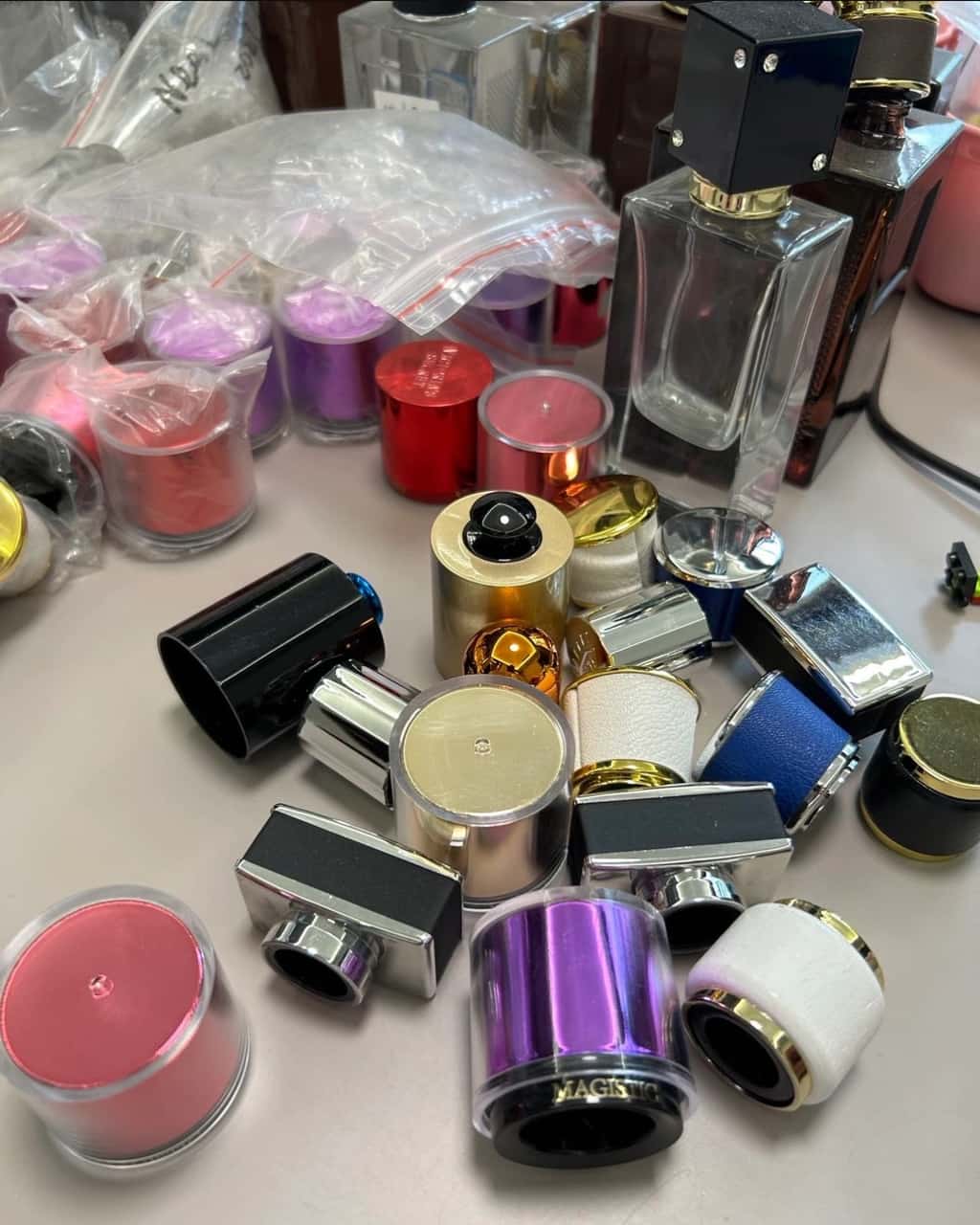
Many small perfume and cosmetics brands work in runs of 100 to 5,000 bottles, where a $3,000-$8,000 labeling machine is hard to justify. The real issue is not only labor speed. A crooked front label can make a $50-$150 fragrance bottle look defective on shelf, and clear films can trap bubbles that are impossible to ignore. Below is a practical manual perfume labeling guide built for launch-stage and growth-stage brands that need better results today.
Need pricing for perfume bottle labels, cap badges, or premium decoration?
Send us your specs for Vinyl, UV DTF, or Nickel Stickers.
What is the best way to apply perfume labels straight by hand?
The best method is to control one fixed reference point and one controlled contact point before the full label touches the bottle. For square or flat perfume bottles, use the center seam, edge radius, or cap center as your visual reference. For round bottles, mark a vertical centerline with removable tape and align the label midpoint to that line.
4 manual positioning techniques that work
1) Mark the bottle centerline with low-tack tape. 2) Mark the label midpoint on the liner edge. 3) Peel back only 10-15 mm first instead of removing the full liner. 4) Tack the center first, then squeegee outward left and right. These four steps are simple, but they are the main reason some teams cut scrap from 10-15% down to around 2-3% in short runs.
For hand applied cosmetic stickers, pressure order matters. Use light pressure for the first contact, then medium pressure with a felt squeegee from center to edge. On a 50x30 mm front label, even a 1 mm tilt is visible. On a 70x40 mm label, trapped air near the center becomes harder to push out once more than 50% of the adhesive has touched the glass. That is why partial peel application is more reliable than full peel freehand placement.
Why do perfume labels go crooked or trap bubbles so easily?
They fail because of three things: slippery glass, aggressive full-surface contact, and the wrong label material for manual work. Clear films on round bottles are the hardest case. Static, fingerprint oils, and invisible dust make bubbles more likely, while a thin flexible film can drift off-axis before you notice it.
For buyers trying to stick labels without bubbles, bottle prep is not optional. Wipe the application area with 70% isopropyl alcohol, then let it dry for at least 30 seconds. If the room is humid, give it 60 seconds. A dusty tabletop can ruin 20 bottles in one session.
Material also changes the difficulty level. Thicker textured papers and laminated films are more rigid and often easier to align than thin clear films. Besides technique, material is key. WowSticker’s Vinyl Sticker with air-release channel design can help release trapped air during manual application, while UV DTF Sticker with a transparent positioning film helps users see placement before transfer. For cosmetics gift sets, promo minis, and small perfume batches, that can save rework time immediately.
How can you make a $5 DIY tool for straight label placement?
You can build a basic positioning jig with a wood block, cardboard or acrylic guides, and rubber bands for about $5 total. It is enough for test runs, launches, and boutique production.
For cylindrical bottles, cut a shallow V-shaped cradle into foam board or use two angled guides to stop rolling. Add a back stop so every bottle sits at the same height. Then add a front window or top mark showing where the label center should land. For square bottles, a 90-degree corner stop is even simpler.
| DIY Jig Part | Typical Cost (USD) | Function | Best For |
|---|---|---|---|
| Wood block or thick foam base | $1.50-$2.00 | Stable base | Round and square bottles |
| Cardboard or acrylic side guides | $1.00-$1.50 | Prevents lateral movement | Square bottles |
| Rubber bands or clip stops | $0.50-$1.00 | Hold bottle in repeat position | Short production runs |
| Removable tape and marker | $1.00 | Creates centerline reference | All bottle shapes |
In practical use, this manual perfume labeling guide works best for 30 ml to 100 ml bottles when you have 100 to 1,000 units per SKU. Above that, labor time may become the bigger cost than scrap.
What does perfume label pricing look like for manual-friendly options?
Basic factory pricing can start low, but material choice should be based on application difficulty, not only unit cost. All figures shown in USD, converted at the reference rate of 7.20 RMB = 1 USD at time of writing.
| Product | MOQ | Unit Price (USD) | Lead Time | Notes |
|---|---|---|---|---|
| WowSticker Vinyl Label 50x30mm | 1000 pcs | $0.018 | 7-10 days | Good for durable cosmetic bottle labeling |
| WowSticker UV DTF Sticker 50x30mm | 1000 pcs | $0.048 | 7-10 days | Transfer-style decoration with transparent positioning film |
| Typical premium BOPP label with foil | 500 pcs | $0.45 | 7-12 days | Launch-phase reference for custom premium runs |
| Typical premium BOPP label with foil | 1000 pcs | $0.25 | 7-12 days | Better value and extra labels for setup practice |
Want a material recommendation before you order?
Send bottle photos, label size, and quantity for a faster factory-direct suggestion.
How do you choose between Vinyl Sticker and UV DTF Sticker for perfume bottles?
Choose Vinyl Sticker for standard label panels and choose UV DTF Sticker when you want logo decoration without the look of a traditional label edge. Both can support manual application, but they solve different problems.
| Feature | Vinyl Sticker | UV DTF Sticker |
|---|---|---|
| Best use | Front/back information labels | Brand logo and decorative transfer |
| Manual application help | Air-release channel can reduce bubbles | Transparent positioning film improves alignment |
| Bottle style | Flat, slightly curved, or standard cosmetic containers | Glass perfume bottles, caps, rigid packaging surfaces |
| Typical buyer | Perfume, cosmetics, food & beverage | Perfume, cosmetics, electronics gift packaging |
If your team is still learning to apply perfume labels straight, ordering 1,000 pieces instead of 500 often makes sense. The extra labels give room for setup, staff training, and bottle-to-bottle variation without stopping production. As of 2025, that is still cheaper than reworking filled bottles after misalignment.
What information should you send to get the right quote and application advice?
Send bottle shape, exact label size, MOQ, material preference, finish, application surface, and delivery country. That is the minimum needed to recommend the right adhesive and construction.
Fast Quote Inquiry Template
Bottle / surface: round, square, flat, cap, carton, or glass body
Size / dimensions: label width x height in mm
MOQ: 500 / 1000 / 5000 / other
Material preference: vinyl, clear BOPP, textured paper, UV DTF
Finish / surface treatment: matte, gloss, foil, emboss, spot UV
Application scenario: hand application, short-run packing, gift set, retail launch
Delivery country: US, UK, France, UAE, Australia, etc.
A clear inquiry avoids two common mistakes: choosing a film that is too soft for manual placement, and choosing an adhesive that cannot handle alcohol or perfume oil exposure for 48 hours. That matters for perfume brands, cosmetics brands, and even premium beverage miniatures using glass containers.
Need help picking the easiest label material for hand application?
WhatsApp your bottle photo and target quantity for a practical recommendation within 2 hours.
Why is manual labeling still a good option for small perfume brands?
Manual labeling is still cost-effective when your run size is low, your SKU count is high, and your process is controlled. For a brand launching 4 scents at 500 bottles each, hand application can be more practical than buying equipment too early. The key is to standardize the setup, not rely on “careful hands.”
A good target is under 2-3% scrap for premium bottles. If you are above 10%, the problem is usually not staff effort alone. It is often a mix of poor alignment method, wrong label stiffness, no jig, and no bottle cleaning step. When those are fixed, hand applied cosmetic stickers can look consistent enough for boutique retail and sampling campaigns.
Why do my clear perfume labels keep bubbling on round glass bottles?
Clear films show every defect, and round glass increases the chance of uneven first contact. Static, dust, skin oil, and full-liner peel application are the main causes. Clean the bottle with alcohol, peel only a small leading edge first, and use a felt squeegee from center outward. If bubbles are still common, switch to a more rigid construction or a film designed for easier manual release.
Which option is better for a startup perfume brand: Vinyl Sticker or UV DTF Sticker?
For most startups, Vinyl Sticker is better for front and back information labels because it is cost-efficient and easier to scale. UV DTF Sticker is stronger for logo decoration when you want a printed-on look without a standard label border. If budget is limited, use vinyl for the main label and reserve UV DTF for special edition branding or caps.
What should I send before asking for a quote?
Send six things: bottle photo, label size in mm, quantity, material preference, finish, and delivery country. Also mention whether labels will be applied by hand or machine. That last point affects adhesive and material advice. If the bottle is curved or textured, include a side-view photo too. It prevents costly sampling mistakes.
Is a thicker label worth the extra cost for manual application?
Often yes. A slightly thicker or laminated label is usually easier to hold, align, and squeegee than a very thin film, especially on short runs of 100 to 1,000 bottles. If crooked labels are forcing rework or scrap, paying a little more for a more stable construction can reduce labor loss enough to justify the upgrade.
What is an acceptable scrap rate for hand-applied cosmetic stickers?
For small-batch premium packaging, 10-15% scrap is common when there is no setup standard. With a centerline mark, partial peel method, bottle cleaning, and a basic jig, many teams can bring that down to around 2-3%. That is close to an 80% reduction in scrap and usually the difference between profitable and frustrating short-run production.
If you need to apply perfume labels straight without buying a machine, the practical answer is simple: fix the process first, then choose a label material that helps rather than fights manual application. A $5 jig, four positioning habits, and the right construction can dramatically improve consistency for short runs.