How to Add Embossed Text to Perfume Bottles Without Custom Tooling
If you need an embossed perfume bottle without tooling, the practical answer is yes: use a Resin Sticker or UV DTF Sticker to create raised text and logo effects directly on ready-made glossy bottles, without paying custom glass mold fees. For many indie fragrance launches, this avoids $2,000+ in tooling cost, shortens development by up to 60 days, and still delivers tactile depth of up to 1.5mm depending on structure. WowSticker (wowsti.com) has years of factory-direct experience in custom labels, stickers, and packaging decoration for perfume and cosmetics brands worldwide. If you already have bottle size, artwork, and quantity in mind, send your specs now and get a factory-direct quote before you commit to expensive custom glass.
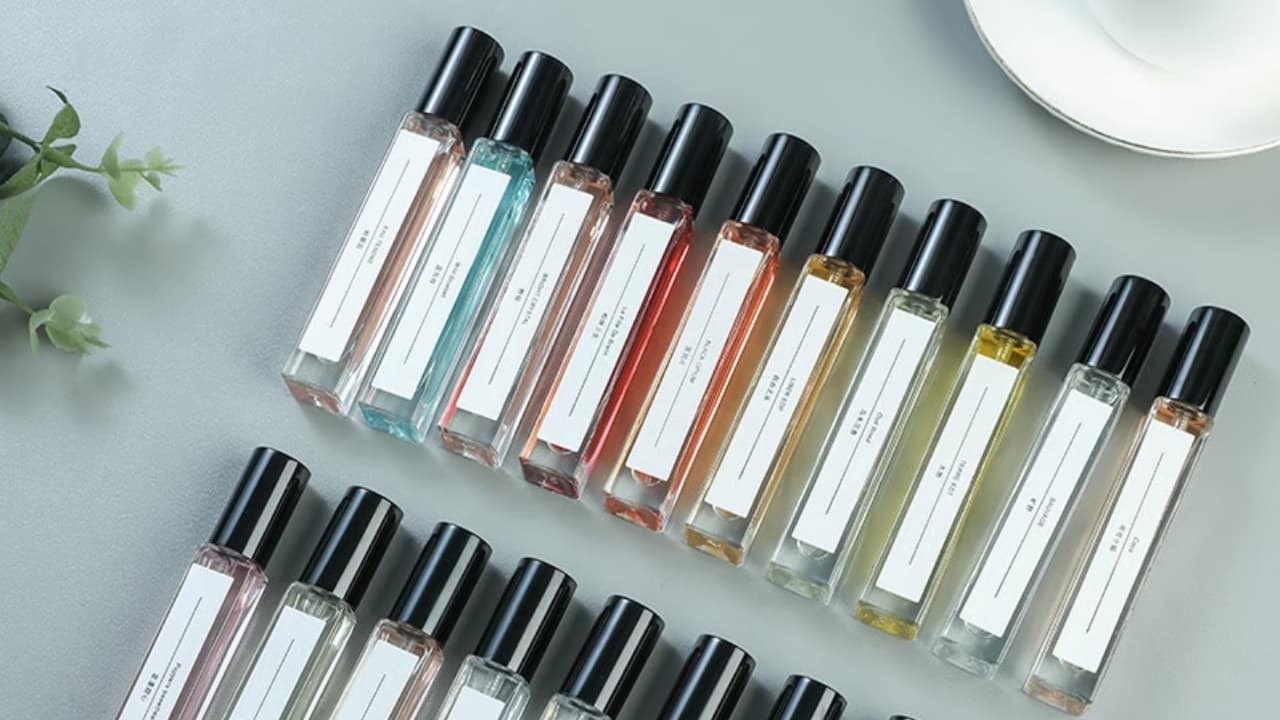
Most perfume founders do not actually need a new bottle mold to get raised lettering on glass bottle packaging. The better route is to decorate a standard stock bottle with 3D resin or multi-layer UV ink transfer. This gives a custom glass embossing alternative that is faster, cheaper, and easier to test at 500 to 5,000 pieces. It also works well for limited editions, investor samples, seasonal sets, and market validation runs where a 10,000-piece bottle MOQ is too risky.
Need pricing for perfume bottle labels, cap badges, or premium decoration?
Send us your specs for Vinyl, UV DTF, or Resin Sticker options.
What is the best way to create an embossed perfume bottle without tooling?
The best way is to apply a 3D surface label, not remake the glass. For most commercial perfume projects, the strongest options are UV DTF Sticker and Resin Sticker. Both are designed to “stick” an embossed effect onto an existing bottle, especially a standard glossy bottle that is already in stock.
UV DTF Sticker uses multiple ink layers and a transfer film to build relief on the surface. Resin Sticker uses a domed or raised resin layer for visible height and touch. In practical sourcing terms, these two options solve the same problem: they replace custom mold tooling with a flexible decoration process that starts from existing bottles.
For perfume brands, this matters because traditional glass embossing usually means three separate costs: mold development, higher bottle MOQ, and longer lead time. Typical mold charges in the market range from $2,000 to $5,000+, while glass production timelines can stretch to 60 to 90 days. By comparison, high-build decoration sampling can often be completed in 3 to 5 days, with production in 7 to 12 days and express shipping in 5 to 7 days.
If your target is a luxury look without locking cash into bottle tooling, the next decision is not whether to emboss the glass, but which label technology gives the right look, thickness, and bottle fit.
How do UV DTF Sticker and Resin Sticker create raised lettering on glass bottle surfaces?
They build height above the glass through layered material, then transfer or bond it to the bottle. This is why they work as a 3D texture perfume label system instead of a flat print.
How UV DTF Sticker works
UV DTF Sticker is built by printing multiple UV ink layers onto a transfer structure. The design is then moved onto the bottle in a simple 3-step process: clean the bottle, position and press the transfer, then peel away the carrier film. The raised effect comes from stacked ink and varnish, not from the glass itself. On perfume packaging, this usually gives a cleaner and more “integrated” look than thick conventional decals.
For curved fragrance bottles, UV DTF is usually the safer option because it has more flexibility than rigid metal badges. Typical raised height is around 0.3mm to 1.0mm, depending on design and build. In some premium structures, selected areas can visually feel even stronger through layered gloss contrast.
How Resin Sticker works
Resin Sticker adds a real 3D layer above the printed or shaped base. This can create a stronger tactile profile and, in some constructions, total thickness up to 1.5mm. For logos, medallions, cap top emblems, front plaques, and badge-like fragrance decoration, this extra body can look more premium than a standard paper or film label.
On a ready-made smooth bottle, WowSticker often positions Resin Sticker as a practical substitute for cast embossing: the bottle stays standard, while the brand mark becomes tactile and high-visibility. This is especially useful when a brand wants embossed text on the front panel but cannot justify custom bottle tooling for the first run.
The next question is which one fits your bottle geometry, alcohol exposure, and brand style best.
Which option is better for your bottle: UV DTF Sticker, Resin Sticker, or nickel metal?
UV DTF is usually best for curved bottles, Resin Sticker is best for strong 3D branding, and nickel is best for metallic premium accents on flatter areas. Each option solves a different packaging problem.
| Feature | UV DTF Sticker | Resin Sticker | Nickel Sticker |
|---|---|---|---|
| Best use | Raised text and logo on bottle body | 3D logo, badge, medallion, cap decoration | Metallic emblem or text on flat/cylindrical zones |
| Typical thickness | 0.3mm-1.0mm | 0.6mm-1.5mm | 0.1mm-1.5mm depending on build |
| Curve adaptability | High | Medium | Low to medium |
| Look | Clear, embossed, direct-on-glass effect | High-build, tactile, visible depth | Real metal, cold-touch premium feel |
| Tooling fee | $0 | $0 | $0 |
| Ideal MOQ | 500-10,000+ | 500-5,000+ | 1,000-10,000+ |
For example, a niche perfume brand using a 50ml cylindrical bottle can apply UV DTF text directly to the front and side panel without changing the bottle supplier. A gift-set cap top may then use a Resin Sticker or Nickel Sticker for a stronger emblem effect. This mixed-decoration approach is common because it controls cost while still creating a premium unboxing impression.
If your bottle is frosted, heavily curved, or has a narrow front label panel under 40mm wide, UV DTF usually wins on application stability. If your goal is bold tactile branding for photos, shelf impact, and finger feel, Resin Sticker usually wins. If your visual language depends on metallic gold, silver, or rose gold, nickel electroforming is the stronger premium choice.
How much does an embossed perfume bottle without tooling cost?
It usually costs far less than custom glass because you remove the mold fee and lower the bottle MOQ. The key financial advantage is not just unit price. It is the total cash saved at launch.
All figures shown in USD, converted at the reference rate of 7.20 RMB = 1 USD at time of writing.
| Product | MOQ | Unit Price (USD) | Lead Time | Notes |
|---|---|---|---|---|
| UV DTF Sticker 50x30mm | 1000 pcs | $0.048 | 7-12 days | Reference from WowSticker pricing engine; 1 style |
| Vinyl Label 50x30mm | 1000 pcs | $0.018 | 5-10 days | Flat label baseline for cost comparison |
| High-build UV transfer label, standard 2x2 inch | 100-500 pcs | $0.95 | 7-12 days | Startup tier for prototypes and limited drops |
| High-build UV transfer label, standard 2x2 inch | 1000 pcs | $0.45 | 7-12 days | Indie tier; common pilot launch quantity |
| High-build UV transfer label, standard 2x2 inch | 5000 pcs | $0.22 | 7-12 days | Scaling tier |
| High-build UV transfer label, standard 2x2 inch | 10000+ pcs | $0.12 | 7-12 days | Enterprise tier |
| Custom glass embossing mold | Usually 10000+ bottles | $2000-$5000+ upfront | 60-90 days | Tooling only; bottle production extra |
A simple budget example shows why this matters. If a startup orders 1,000 high-build UV labels at $0.45 each, the decoration cost is about $450. Compared with a $2,000 mold fee, that alone leaves $1,550+ available for sampling, influencer seeding, or a better carton. If the brand also avoids a 10,000-bottle commitment, inventory risk drops sharply.
For procurement teams, the main decision is whether to optimize for unit economics at 5,000+ pieces or protect cash flow during brand validation. Either way, no-tooling decoration usually wins the first-round business case.
Want a side-by-side price on UV DTF, Resin Sticker, and bottle-ready decoration?
Send bottle size, logo dimensions, and quantity for a faster cost comparison.
Why does this method help brands launch faster and safer?
Because it cuts tooling, lowers MOQ risk, and compresses the launch calendar into weeks instead of months. For fragrance brands, speed matters almost as much as visual quality.
Traditional bottle development often breaks into three long phases: design confirmation around 14 days, mold making around 30 days, and production around 45 days. That already pushes a launch close to 90 days before logistics delays are added. For an indie founder planning a holiday release, that timeline can miss the season entirely.
With no-tooling decoration, the cycle is much shorter: 3 to 5 days for sample development, 7 to 12 days for mass production, and 5 to 7 days for global express air. Total time to market can be 15 to 24 days. That saves up to 60 days, which is often the difference between catching a launch window and missing it.
A real-world scenario: a small US fragrance brand preparing a 2,000-unit direct-to-consumer launch wants a vintage pharmacy look with raised serif text. Instead of opening a new bottle mold, the team sources an off-the-shelf 50ml flint bottle, applies a clear high-build UV DTF text treatment on the front, and adds a small Resin Sticker badge on the cap top. The visual result reads premium, the packaging budget stays under control, and the brand can reorder the same bottle shape later with revised graphics.
This flexibility is also useful for cosmetics, electronics, and food & beverage gift packaging where limited editions change faster than core bottle architecture.
What should you send to get an accurate quote faster?
Send bottle dimensions, decoration area, quantity, finish, and destination first. Most quote delays happen because buyers only send a logo file without production details.
Inquiry Template for Embossed Perfume Bottle Decoration
Product type: UV DTF Sticker / Resin Sticker / Nickel Sticker
Bottle type and size: 30ml / 50ml / 100ml, bottle drawing or photo with dimensions
Decoration size: Width x height in mm
MOQ: 500 / 1000 / 3000 / 5000+ pcs
Material preference: Clear raised effect / colored resin / metallic nickel
Finish or surface treatment: Gloss / matte contrast / gold / silver / Pantone color match
Application scenario: Bottle front / side / cap top / gift box / frosted glass / glossy glass
Adhesive requirement: Ethanol-resistant for perfume contact
Delivery country: USA / UK / France / UAE / Australia / etc.
Deadline: Sample date and mass production date
Artwork: AI, PDF, or high-resolution vector logo
Sending these 10 items usually shortens quoting time and helps the factory confirm whether UV DTF Sticker or Resin Sticker is the better route on your bottle.
For perfume and cosmetics projects, mention if the bottle may be exposed to leakage or frequent handling. Perfume alcohol commonly runs at 70% to 90% ethanol, so adhesive performance is not a minor detail. Ask for ethanol-resistant adhesive and mention if the bottle will be stored in hot warehouses, exported by sea, or used in humid retail channels.
WowSticker typically sees better outcomes when buyers also send one straight-on bottle photo and one side photo. That allows the supplier to judge curve, taper, and edge clearance before recommending a 3D texture perfume label layout.
How do you apply embossed-style labels in 3 steps, and will they last on perfume bottles?
Application is simple: clean, press, peel, and durability depends on the right adhesive and testing. This is one reason the method works well for brands that do not want to invest in special bottle-decoration machinery.
The 3-step application process
Step 1: Clean the bottle surface thoroughly. Remove dust, oil, and silicone residue. On glossy glass, this usually means alcohol wipe and dry cloth. Step 2: Position the transfer or label and apply even pressure from center to edge. Step 3: Peel away the carrier film slowly, leaving the raised text or emblem on the glass.
For short runs, this can be done manually. For 1,000 to 5,000 bottles, a simple alignment jig is often enough to improve placement speed and consistency. You do not need a furnace, mold, or embossing press.
Durability under perfume use
Perfume packaging is harder on adhesives than many buyers expect. Leakage, atomized alcohol mist, finger oils, and transit abrasion can all attack weak materials. That is why ethanol-resistant adhesive matters. Quality suppliers use cross-linking adhesive systems and verify performance through alcohol resistance soaking for 24 to 48 hours plus cross-hatch tape adhesion tests.
As of 2025, REACH and RoHS compliance also matter for EU-facing procurement. If your bottles go into France, Germany, or other EU markets, ask for compliance confirmation early. This is especially important for metallic decoration layers and premium finishes.
Need a no-tooling mockup before you order 500 to 5,000 pieces?
Share your bottle photo and artwork to confirm thickness, material, and alcohol-resistant adhesive.
What is the practical next step if you want embossed text without a new bottle mold?
Start with your current bottle, test one 3D decoration route, and compare cost against tooling before approving production. For most founders and sourcing teams, the fastest path is to keep the stock bottle and upgrade only the decoration layer.
If the bottle is smooth and ready, ask for two mockup directions: a clear or colored UV DTF Sticker for direct raised text, and a Resin Sticker for stronger badge-like depth. If metallic detail matters, add a Nickel Sticker comparison as a third option. Review them against four factors: tactile feel, fit to bottle curve, ethanol resistance, and total landed cost.
This approach gives the luxury signal of embossing without locking the brand into glass tooling too early. For many perfume and cosmetics brands, that is the smarter commercial path in early 2026 planning as well: preserve capital, move faster, and validate the bottle look in market before committing to a permanent mold.
FAQ
Will embossed-style labels peel or melt if perfume leaks on them?
They can fail if the adhesive is standard grade, which is why perfume projects should specify ethanol-resistant adhesive from the start. Good suppliers test labels in 70% to 90% alcohol exposure conditions and use adhesion checks such as cross-hatch tape tests. For bottle fronts and cap tops, UV DTF Sticker and Resin Sticker perform well when matched to the correct surface and adhesive.
How raised can the lettering actually get?
Depending on the material and structure, total thickness can reach up to 1.5mm. UV DTF Sticker is commonly used in the 0.3mm to 1.0mm range, while Resin Sticker or electroformed metallic structures can create a more dramatic raised effect. The right thickness depends on whether you want subtle embossed elegance or a stronger tactile badge look.
Which option is better for a startup brand?
For most startups, UV DTF Sticker is the safest first choice because it offers a strong embossed look, works on more bottle shapes, and avoids custom tooling. If the launch needs stronger shelf impact or cap decoration, add a small Resin Sticker as a premium accent. This keeps the initial packaging budget flexible while still improving the perceived value of the bottle.
What should I send before asking for a quote?
Send bottle dimensions, decoration area size, target quantity, artwork file, preferred material, finish, delivery country, and deadline. If possible, include front and side bottle photos. This helps the supplier judge curve and fit quickly, recommend UV DTF Sticker or Resin Sticker correctly, and quote the right adhesive system for perfume use.
Is this upgrade worth the extra cost compared with a flat label?
If your perfume sells in a premium or niche segment, usually yes. A flat label is cheaper, but tactile branding improves shelf impression, photography, and perceived value. The difference between a basic vinyl label and a raised decoration may only be a few cents to under $1 per unit, while avoiding a $2,000 to $5,000+ tooling charge changes the business case significantly.
Can these labels work on frosted or curved bottles?
Yes, but material choice matters. UV DTF Sticker is generally better for curved and frosted perfume bottles because it has more flexibility and can follow surface changes more easily. Resin Sticker works best where there is enough flat or gently curved area for strong bonding. For highly irregular shapes, ask for a fit check using bottle photos and dimensions first.