How Much Does a Custom Perfume Sample Card and Sleeve Cost?
If you need a fast budget answer, the typical perfume sample card cost is about $0.21 per set at 1,000 units, $0.30 per set at 500 units, and $0.62 per set at 100 units for a standard custom card plus sleeve made in China, before freight and any special upgrades. WowSticker (wowsti.com) has years of factory-direct experience in custom labels, stickers, and packaging decoration for perfume and cosmetics brands worldwide, so this guide focuses on the numbers buyers actually need for launch planning and supplier comparison.
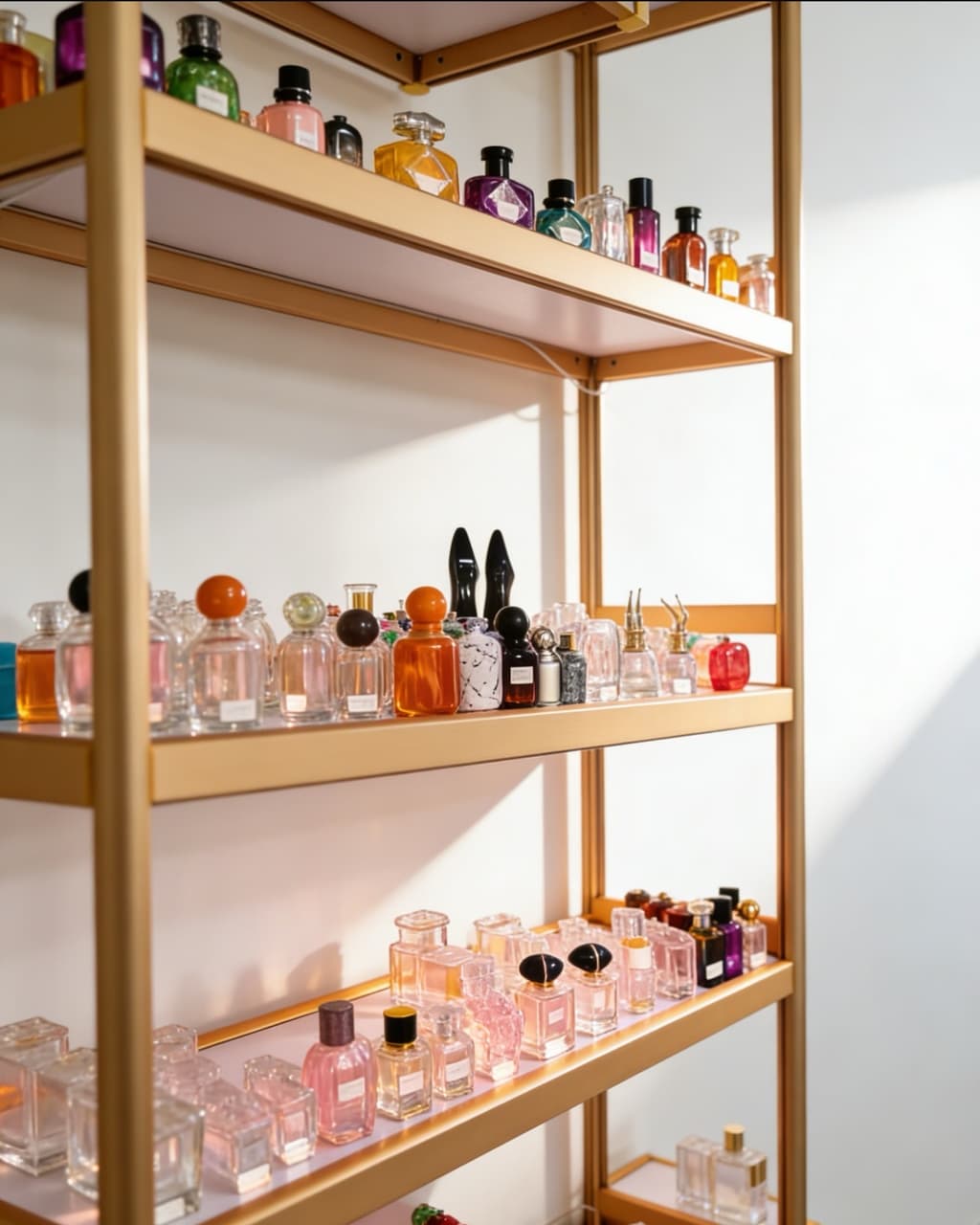
For most indie perfume brands, the real question is not just unit price. It is whether a discovery card or sleeve can look premium enough to support a full-bottle sale without pushing packaging costs too high. A simple structure stays affordable, while custom die-cuts, foil, embossing, and multiple SKUs increase the total. If you want a faster factory quote, send size, quantity, artwork count, finish, and delivery country first.
Need pricing for perfume bottle labels, cap badges, or premium decoration?
Send us your specs for Vinyl, UV DTF, or Nickel Stickers.
What is the average perfume sample card cost by quantity?
The short answer is that volume changes the cost sharply, and 1,000 sets is usually the best-value tier. Factory data shows a standard card + sleeve set at $0.62 for 100 sets, $0.30 for 500 sets, and $0.21 for 1,000 sets. The reason is simple: setup fees are spread across more units, and offset printing becomes practical after 500 units.
The raw paper parts are only about $0.11 per set for 300gsm board, scent strip paper, and coated sleeve stock. The rest comes from print setup, finishing, and hand assembly. This is why a small run can feel expensive even when the structure looks simple.
| Order Size | Typical Print Method | Unit Price (USD) | Total Est. (USD) | Notes |
|---|---|---|---|---|
| 100 sets | Digital | $0.62 | $62.00 | High setup burden per unit |
| 500 sets | Hybrid | $0.30 | $150.00 | Common MOQ for branded launch |
| 1,000 sets | Offset | $0.21 | $210.00 | Best value for repeat SKUs |
Budget Estimator Disclaimer: All figures shown in USD, converted at the reference rate of 7.20 RMB = 1 USD at time of writing. These estimates are for planning only, not a formal quotation. Actual prices vary by specs, MOQ, artwork count, finishing, packing method, and destination.
Why does sample sleeve packaging fragrance pricing vary so much?
The main cost drivers are print setup, structure complexity, and finishing. A flat custom perfume tester card with one slit for a 1.5ml to 2ml vial is cheaper than a wrapped sleeve with custom folds, glued pockets, or multi-vial inserts. If you add a custom shape, there is usually a die-cut mold fee of about $41.38. If you need extra color matching rounds, expect about $6.90 per revision.
A one-time digital print setup is about $20.69. Offset plate fees are about $55.17, usually justified on runs above 500 units. Lamination or UV coating adds around $0.04 per unit, while manual assembly adds around $0.03 per unit. Barcode printing is small at $0.003 per unit, but premium effects can push cost up faster than buyers expect.
For perfume and cosmetics launches, adding stickers or metal badges to the sample sleeve and card to strengthen brand perception can be achieved with branded decoration such as a nickel sticker, metal plate, or a subtle UV DTF sticker if the sleeve design allows it. These are usually applied selectively on premium gift kits rather than entry giveaway cards.
How does China factory pricing compare with local Western sourcing?
China factory pricing is usually 2 to 5 times lower at the same quantity, especially at 100 to 500 sets. Based on current market benchmarks, local sourcing in North America, Europe, or Australia often lands at $1.50 to $3.00 per unit for 100 sets, $0.80 to $1.50 for 500 sets, and $0.50 to $0.90 for 1,000 sets. In contrast, the factory-direct benchmarks here are $0.62, $0.30, and $0.21.
This gap is driven by labor, setup, and finishing overhead. For procurement teams, the tradeoff is lead time planning and freight management. Sampling normally takes 3 to 5 working days, then mass production takes 7 to 12 working days after approval. During November to January, add 5 to 7 days due to seasonal congestion.
| Order Size | Factory-Direct China | Typical Local Western Sourcing | Gap |
|---|---|---|---|
| 100 sets | $0.62/unit | $1.50-$3.00/unit | About 2.4x to 4.8x higher locally |
| 500 sets | $0.30/unit | $0.80-$1.50/unit | About 2.7x to 5x higher locally |
| 1,000 sets | $0.21/unit | $0.50-$0.90/unit | About 2.4x to 4.3x higher locally |
Budget Estimator Disclaimer: All figures shown in USD, converted at the reference rate of 7.20 RMB = 1 USD at time of writing. These estimates are for planning only, not a formal quotation. Actual prices vary by specs, MOQ, destination, freight terms, paper grade, and finishing options.
Comparing 100, 500, or 1,000 sets for your launch budget?
Send your artwork, vial size, and target MOQ for a faster cost breakdown.
What should you send to get an accurate quote faster?
You should send six basic details first, because missing specs create the biggest quote delays. For a perfume discovery set packaging cost request, suppliers need the card size, vial size, quantity, paper preference, finish, and delivery country. If artwork will be split across 2 to 5 fragrance variants, mention that at the start because it affects print planning and carton packing.
Perfume Sample Card Quote Request Template
Size / Dimensions: Card and sleeve size, plus vial diameter and height
MOQ: 100 / 500 / 1,000 / other
Material Preference: 300gsm board, coated paper, textured paper, FSC option
Finish / Surface Treatment: Matte lamination, UV, foil, embossing, barcode
Application Scenario: Discovery set, retail insert, PR mailer, counter giveaway
Delivery Country: USA, UK, EU, Australia, Middle East, etc.
Artwork Count: One design or multiple fragrance SKUs
A practical example: an indie fragrance brand launching three scents may order 500 sets split into 3 artworks with a standard slit card and printed sleeve. That keeps the unit cost near the mid tier while preserving shelf presentation. If the same project adds foil and a custom vial cavity, the unit cost rises, but it may still make sense if the sample campaign supports a $150+ full-bottle conversion.
For decoration add-ons beyond paper, WowSticker can also support related branding elements such as vinyl stickers for outer packs or resin stickers for gift presentation components.
Is a premium custom perfume tester card worth the extra cost?
Yes, if the sample is used to drive full-bottle conversion or retailer presentation, but no if it is only for low-cost mass giveaway. A plain structure keeps cost low for trial campaigns. Premium finishes make more sense when the sample is part of a curated discovery box, influencer kit, or boutique counter display.
As of 2025, fragrance discovery demand remains strong, and global category growth is estimated around 15% to 20% CAGR. At the same time, FSC-certified and uncoated textured papers are seeing around 10% to 15% price premiums in many export markets. For startups, the best value is often a clean CMYK card with matte lamination. For established perfume brands, a refined sleeve with tactile paper or selective foil can justify the higher spend.
The practical next step is to lock your vial size and launch quantity first, then compare one standard version against one premium version. That gives a real decision basis instead of guessing from visual references alone.
Need a quote before approving your discovery set budget?
WhatsApp your specs now for MOQ, lead time, and finish recommendations.
What are the key takeaways before you place an order?
The most important point is that volume, structure, and finish matter more than raw paper cost. A standard perfume sample card cost can be very workable at $0.21 to $0.30 once you reach 500 to 1,000 sets, while low-MOQ projects at 100 sets carry a clear setup surcharge. Buyers should confirm vial size, artwork count, and whether they need foil, embossing, or custom die-cuts before comparing quotes. WowSticker remains relevant here because perfume and cosmetics buyers often need both printed packaging and coordinated decoration parts from one factory source.
What is the minimum order quantity for custom perfume sample sleeves?
For fully custom printed work, 100 sets is a practical starting point, but the unit cost is highest at that level. Most brands see a better balance at 500 sets, where setup fees spread out more efficiently. If you are testing several fragrances, ask whether the MOQ applies per artwork or per total order.
How much does it cost to add hot foil stamping or embossing to a tester card?
The exact cost depends on area coverage, tooling, and quantity. As a budgeting rule, premium finishing will increase both setup and unit cost, especially below 500 sets. If your project is a retail-facing discovery set or influencer kit, foil or embossing may be worth it. For mass giveaway cards, standard CMYK with lamination is usually the better value.
Which option is better for a startup brand: 100 sets or 500 sets?
If budget allows, 500 sets is usually the better decision. At 100 sets, the estimated unit cost is about $0.62, while 500 sets drops to about $0.30. That is a major difference in unit economics. Startups planning PR mailers, discovery kits, and retailer sampling usually get better value and more professional consistency at 500 sets.
What should I send before asking for a quote?
Send the card and sleeve dimensions, vial size, MOQ, material preference, finish, delivery country, and the number of artwork versions. If you already have dielines or brand guidelines, include them. This reduces back-and-forth and helps the supplier confirm whether a simple slit card or a more secure structural sleeve is the better fit.
Can I split a 1,000-unit order across multiple fragrance designs?
Often yes, but it depends on print method, artwork count, and how the order is packed. A split run across 2 to 5 SKUs is common for discovery collections, but too many versions can reduce printing efficiency. Confirm the split ratio early, because it affects plate planning, setup allocation, and carton labeling.
Are eco-friendly and FSC-certified paper options significantly more expensive?
Usually they are moderately more expensive rather than dramatically more expensive. In many export markets, FSC-certified or textured uncoated papers add about 10% to 15% over standard coated stock. For premium perfume brands, that increase can be justified if sustainability positioning is part of the product story and retail presentation.