From Idea to Shelf: A $10K Indie Perfume Brand Launch Scenario
A realistic indie perfume brand launch budget can fit inside $10,000, but only if the founder controls MOQ, keeps the first run small, and makes packaging decisions at the right stage instead of overspending in month one. WowSticker (wowsti.com) has years of factory-direct experience in custom labels, stickers, and packaging decoration for perfume and cosmetics brands worldwide, and this case study shows how one bootstrapped launch could move from concept to retail-ready shelf in 90 days with 12 key decisions, a line-by-line budget, and practical packaging choices. If you are planning your own first run and want decoration costs checked early, use the structure below and get your specs reviewed before you lock bottle, box, and label quantities.
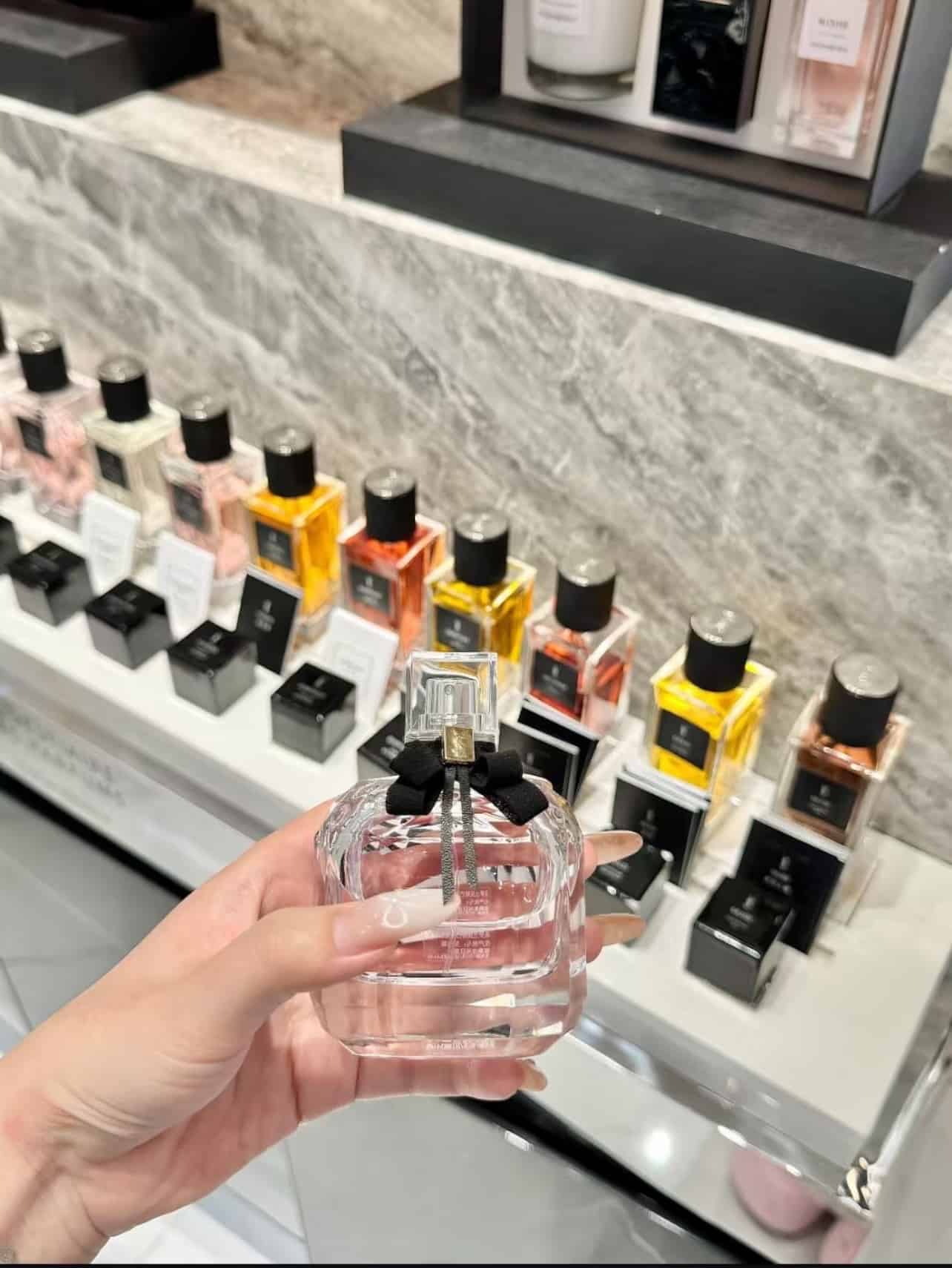
This scenario is built for a founder in the US or Europe launching a small-batch eau de parfum line with one SKU, one bottle size, and a direct-to-consumer first release. The target is not mass retail. The target is a professional-looking launch that can support samples, creator seeding, and a first production run without burning all cash on custom tooling. All figures shown in USD, converted at the reference rate of 7.20 RMB = 1 USD at time of writing.
Need pricing for perfume bottle labels, cap badges, or premium decoration?
Send us your specs for Vinyl, UV DTF, or Nickel Stickers.
How can a $10,000 perfume launch actually work?
Yes, a $10,000 launch can work if the first goal is proof of sell-through, not scale. The founder in this scenario set three hard rules on day 1: launch one scent only, keep finished goods below 500 units, and reserve at least 15% of cash for post-launch marketing. That discipline prevented the two most common startup mistakes: ordering too many bottles and over-customizing packaging before market feedback.
The model below follows a $10000 perfume brand case study logic: one fragrance, one 50 ml bottle, one folding carton, one label/deco system, and one landing-page-driven launch. This is also a small perfume brand launch plan because it assumes the founder is not using a full-service prestige manufacturer with 5,000 to 10,000 unit MOQs. Instead, the founder sources formula, filling, stock bottles, and decoration in modular steps.
| Budget Area | Planned Spend (USD) | Share of $10,000 | Main Constraint |
|---|---|---|---|
| Formula, evaluation, and pilot batch | $2,800 | 28% | Small-batch lab MOQ |
| Bottle, pump, cap, and filling | $2,150 | 21.5% | Stock packaging availability |
| Carton and decoration | $1,150 | 11.5% | Print quantity and finish scope |
| Compliance and documentation | $1,250 | 12.5% | Market-specific filing |
| Branding, photography, and website | $1,050 | 10.5% | Creative outsourcing |
| Sampling and launch marketing | $1,100 | 11% | Creator seeding efficiency |
| Buffer and freight overrun | $500 | 5% | Unexpected changes |
| Total | $10,000 | 100% | Controlled first run |
What happened during the 90-day launch timeline?
The 90-day timeline worked because each spending decision was delayed until the previous risk was reduced. Instead of buying all materials in the first 30 days, the founder moved in four phases: concept, validation, packaging lock, and launch prep. That sequencing matters more than most first-time founders expect.
| Day Range | Phase | Key Decisions | Budget Released |
|---|---|---|---|
| Day 1-15 | Concept and brief | 1) Target price point, 2) hero scent direction, 3) target customer | $450 |
| Day 16-30 | Formula screening | 4) perfumer/lab choice, 5) formula revision count, 6) bottle size | $2,100 |
| Day 31-45 | Supply chain lock | 7) stock bottle source, 8) pump/cap compatibility, 9) filling partner | $2,350 |
| Day 46-59 | Compliance and artwork | 10) label legal copy, 11) market compliance route | $1,200 |
| Day 60-75 | Packaging decision stage | 12) final decoration level and MOQ | $1,450 |
| Day 76-90 | Content, seeding, and launch | Sampling list, product photos, landing page, ship-out plan | $2,450 |
Two numbers drove every decision. First, the founder wanted a retail price near $95 to $120 for 50 ml. Second, the first finished batch had to stay near 300 to 400 saleable bottles. That batch size is large enough for launch content, gifting, and initial orders, but still small enough to protect cash flow.
What did the founder spend on product, packaging, and compliance?
The biggest spend was not decoration. It was formula plus filled goods. Many founders assume luxury appearance consumes most of the budget, but in a regulated category like fragrance, the heavier cost centers are formula work, compliant labeling, alcohol handling, and low-MOQ component sourcing.
1. Formula and pilot production
The founder spent $2,800 here: roughly $1,400 for formula development and revisions, $500 for stability-related checks and documentation support, and $900 for a pilot compound and internal wear testing materials. In US and UK small-batch perfumery, labs that accept 5-10 kg compound runs typically cost more per kg than high-volume houses in Grasse or New York prestige networks. The tradeoff is flexibility.
2. Filled goods and core components
For 350 units of 50 ml eau de parfum, the founder allocated $2,150 to stock glass bottle, atomizer, cap, alcohol base handling, and filling labor. This worked only because the bottle was selected from stock inventory instead of custom mold inventory. The founder rejected a heavier glass option that looked better in renders but increased component cost by about 18% and freight weight by more than 20%.
3. Compliance and legal copy
The compliance bucket reached $1,250. That covered safety documentation support, artwork compliance checks, and early MoCRA-related recordkeeping preparation for the US route. For EU sale, founders often need a higher allowance because CPSR and responsible-person requirements can add another several hundred dollars depending on formula and market scope. This is where many launch budgets fail: they ignore documentation until artwork is already printed.
| Cost Group | MOQ / Scope | Budget (USD) | Notes |
|---|---|---|---|
| Formula creation and revisions | 1 scent, 2-3 revisions | $1,400 | Small-batch lab route |
| Pilot materials and test batch | Internal sample cycle | $900 | Pre-production validation |
| Documentation and compliance checks | US-first launch scope | $1,250 | MoCRA prep and label review |
| Stock bottle, pump, cap, filling | 350 units | $2,150 | One SKU only |
How was the packaging budget controlled without making the brand look cheap?
The founder kept the premium look by decorating selectively, not by customizing everything. The packaging budget in this perfume packaging budget example was capped at $1,150 for carton plus bottle decoration. That amount is tight, so the right move was to use stock structure and then choose one visual hero surface.
At the day 60-75 packaging decision stage, WowSticker products were used to build three decoration tiers for comparison. This is where founders often save the launch. Instead of approving a high-cost rigid box too early, they compare decoration impact per dollar.
| Decoration Tier | WowSticker Product | MOQ | Estimated Cost (USD) | Use Case |
|---|---|---|---|---|
| Tier 1: Lean launch | Vinyl Sticker | 1000 pcs | $18.29 | Front bottle label or carton seal for entry-level shelf test |
| Tier 2: Premium bottle impact | UV DTF Sticker | 1000 pcs | $48.30 | Transfer-like raised decoration for glass bottle branding |
| Tier 3: Retail display support | Window Sticker | Project-based | $120-$260 | Popup shelf, studio window, or launch event display graphic |
Those numbers changed the founder's decision process. A rigid box upgrade would have consumed $700 to $1,200 alone at low quantities, while a premium bottle decoration route with UV DTF Sticker preserved a luxury visual cue for under $50 in label transfer cost at the reference spec. The founder therefore chose a stock carton, matte print exterior, and premium bottle decoration rather than an expensive box with a plain bottle.
WowSticker was brought in at this stage because decoration was the last visual lever still open after bottle dimensions and legal copy were fixed. That sequence matters. If decoration is selected before final panel text is approved, founders often reprint labels, lose a week, and spend twice. In this case, one Vinyl Sticker test sheet and one UV DTF approval set were enough to finalize the look.
Comparing bottle label options for your first 300 to 1,000 units?
Send your bottle size, artwork, and target MOQ for fast Vinyl or UV DTF pricing.
Why did the founder avoid custom-everything packaging?
Because custom-everything kills launch flexibility at low volumes. For early-stage perfume brands, bottle mold changes, metal badge tooling, rigid box inserts, and multilayer carton effects can trap cash before the market proves demand. The founder used 12 decision gates and rejected four tempting upgrades:
- Custom bottle mold: rejected due to MOQ and lead time risk
- Weighted zamak cap: rejected due to unit cost increase of about 25%
- Rigid magnetic gift box: rejected due to low-quantity packaging cost spike
- Multi-SKU launch: rejected because it multiplied formula, compliance, and sample cost
The founder kept the story premium through copy, photography, and controlled decoration. That is a practical lesson from almost every small perfume brand launch plan: customers notice coherence more than they notice how many custom components were used. A clean bottle, crisp decoration, strong scent story, and well-shot content usually beat an overbuilt package with weak demand generation.
Typical market route vs factory-direct decoration route
| Feature | Typical small-market sourcing | Factory-direct decoration route |
|---|---|---|
| Label/deco MOQ | Often fragmented across local vendors | Centralized low-cost planning |
| Revision cost | Higher when multiple suppliers are involved | Lower if artwork and size are locked once |
| Luxury effect per dollar | Can be diluted by standard paper labels only | Higher with UV DTF on stock glass |
| Launch speed | Slower with repeated local sampling | Faster when bottle decoration is finalized late but cleanly |
What information should founders send to get a faster packaging quote?
Send the bottle size, decoration area, MOQ, finish, and destination first. That cuts out the usual back-and-forth and makes decoration budgeting far more accurate. For perfume and cosmetics founders, the missing inputs are usually label dimensions and whether the artwork needs to sit on curved glass, carton board, or retail display surfaces.
Packaging Quote Checklist for Faster Pricing
- Size / Dimensions: bottle label width x height, carton panel size, or display graphic size
- MOQ: 300, 500, 1000, or other target quantity
- Material preference: Vinyl Sticker, UV DTF Sticker, or Window Sticker
- Finish / Surface treatment: matte, gloss, transparent, metallic look, raised effect
- Application scenario: glass perfume bottle, paper box, popup retail shelf, studio window
- Delivery country: US, UK, France, UAE, or other destination
For example, if a founder sends only “I need labels for a perfume,” the supplier still has to ask for bottle size, quantity, finish, and country. If the founder instead sends “50 ml bottle, front panel 50 x 30 mm, 500 or 1000 pcs, black artwork on clear film, shipping to California,” pricing becomes faster and sample risk drops.
What was the final result of this $10K launch scenario?
The launch was viable because the founder protected cash for selling, not just making. By day 90, the brand had one finished fragrance, compliant artwork, 350 units of saleable inventory, product photos, a simple storefront, and a seeding plan for 30 to 50 creators. The packaging looked premium because decoration was used strategically, not because every component was custom. The estimated landed cost per unit stayed in a range that could still support a $95 to $120 retail price with room for samples and promotions.
This scenario also shows the practical role of WowSticker in a fragrance launch. For early-stage brands, bottle and packaging decoration often decides whether the product looks like a hobby item or a shelf-ready prestige item. Used at the right decision point, wowsti-style factory-direct decoration can preserve budget while improving perceived value. The real lesson is simple: lock formula and compliance first, then choose the one packaging surface that will do the most visual work.
Ready to cost out your first perfume packaging run before production starts?
Share your bottle specs, label size, and destination for a response within 2 hours.
FAQ: what do founders still need to know before launch?
Can I realistically launch a professional perfume brand with $10,000?
Yes, if you launch one SKU, use stock packaging, and keep your first run controlled. A $10,000 budget is usually enough for formula work, a small production batch, basic compliance, packaging, and launch content. It is usually not enough for custom bottle tooling, multiple scents, and broad retail distribution at the same time.
What are the biggest hidden costs when launching an indie fragrance?
The most common hidden costs are compliance review, repeat samples, freight overruns, and packaging changes after artwork is approved. Founders also underestimate sampling for creators and customer service replacements for leakage or transit damage. A 5% to 10% contingency is practical even in a small launch.
Which packaging option is better for a startup brand: Vinyl Sticker or UV DTF Sticker?
If the goal is lowest cost and fast iteration, Vinyl Sticker is usually the better entry option. If the goal is a more premium bottle look on stock glass, UV DTF Sticker often delivers stronger shelf impact per dollar. For startups, the right choice depends on bottle shape, artwork detail, and whether the bottle itself must carry the luxury impression.
What should I send before asking for a quote?
Send label size, bottle material, target quantity, finish preference, and delivery country. If available, include dielines or a bottle photo with marked decoration area. This helps suppliers quote correctly for curved surfaces, transparent artwork, and shipping. Without these details, most first quotes are only broad estimates.
How much should I budget for IFRA and FDA MoCRA compliance?
For a small US-first launch, founders often set aside several hundred to over $1,000 depending on formula complexity and consultant support. If EU market entry is included, the budget should usually be higher because documentation and responsible-person requirements can add more cost. Do not treat compliance as an afterthought.
Is a premium packaging upgrade worth the extra cost on the first run?
Usually only one upgrade is worth it on the first run. For many brands, that upgrade is bottle decoration rather than a highly custom box. If a premium effect helps the product photograph better, improves shelf presence, and stays within MOQ reality, it can be worth the spend. If it delays launch or absorbs marketing cash, it usually is not.