Cost of Perfume Molds: Custom Glass vs Custom Caps
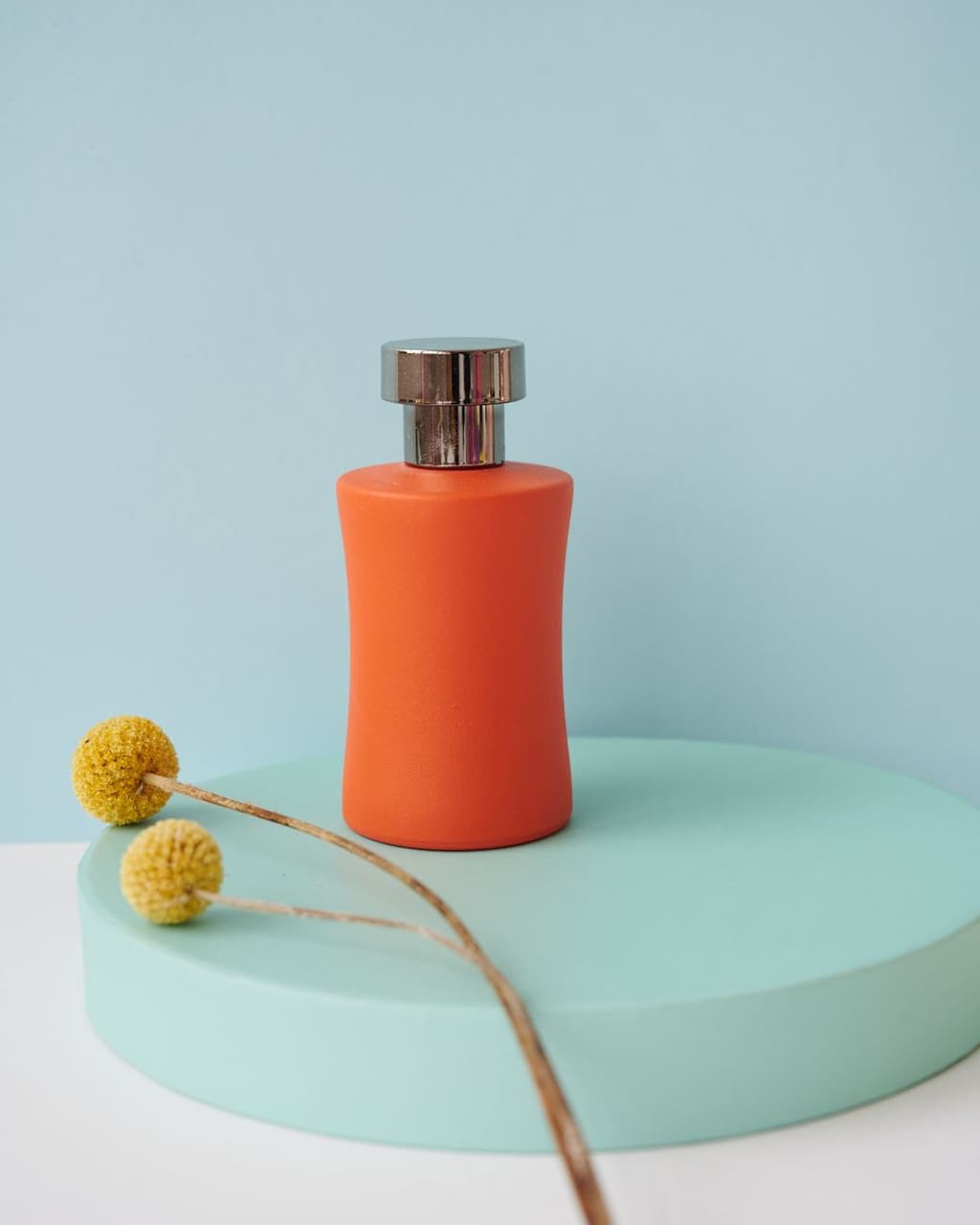
The short answer: perfume glass mold cost is usually much higher than cap tooling, and for most startup or mid-volume fragrance brands, a hybrid route is the smarter investment. WowSticker (wowsti.com) has years of factory-direct experience in custom labels, stickers, and packaging decoration for perfume and cosmetics brands worldwide, and the same budget pattern appears again and again: private glass tooling can run $1,500 to $5,000 in China-based sourcing, while cap molds often start around $500 to $2,000, with lower MOQs and shorter lead times. If your goal is premium shelf impact without tying up cash in heavy tooling, ask for a factory-direct review before you commit. The best use of early budget is often standard public-mold glass plus a custom cap or premium surface decoration, not a full custom bottle from day one.
Need pricing for perfume bottle labels, cap badges, or premium decoration?
Send us your specs for Vinyl, UV DTF, or Nickel Stickers.
For buyers comparing custom mold vs standard glass bottle options, the real decision is not just tooling price. You also need to compare MOQ, sampling cost, production speed, breakage risk, and where your packaging budget creates the most visible brand value. Data from China factories shows a clear gap: standard pricing for glass bottles typically starts at 30,000 units, while metal or plastic caps are often workable at 10,000 units. In premium Europe and the US, that gap becomes much larger, with bespoke glass mold programs commonly reaching $15,000 to $50,000+. That is why many fragrance brands now keep the bottle standard and shift budget into closure design, metal trim, and 3D branding details.
What is the real perfume glass mold cost compared with custom caps?
Perfume glass mold cost is usually 2x to 10x higher than cap tooling, depending on region and complexity.
A bottle mold is more expensive because glass forming uses high-temperature production, more complex cavity design, and tighter dimensional control around finish, wall thickness, weight, and visual symmetry. A cap mold, whether zinc alloy or ABS plastic, is still a real tooling project, but it usually needs less capital and reaches saleable production faster.
| Tooling Type | China-Based Estimate (USD) | EU/US Estimate (USD) | Typical MOQ | Lead Time | Key Note |
|---|---|---|---|---|---|
| Private perfume glass mold | $1,500 - $5,000 | $15,000 - $50,000+ | 30,000 units for standard pricing | 35 - 45 days total project cycle | Highest upfront investment; bottle shape drives brand identity |
| Custom zinc alloy cap mold | $500 - $2,000 | $3,500 - $9,000 | 10,000 units for standard pricing | 20 - 30 days total project cycle | Luxury feel; heavy weight; plating options |
| Custom plastic cap mold | $500 - $1,500 | $8,000 - $20,000 | 10,000 units for standard pricing | 20 - 30 days total project cycle | Lower unit cost; can use VM finish for metal look |
| Standard public-mold glass bottle | $0 new tooling | $0 new tooling | Often flexible by stock availability | Fastest | Best for testing market demand |
For a fragrance founder launching 10,000 to 20,000 units, this difference matters more than it first appears. A custom bottle may consume several thousand dollars before the first production run starts. By contrast, a cap mold or decorative badge project can create a strong custom look while keeping working capital available for formula, cartons, marketing, and channel development.
How do bottle tooling cost, cap cost, and MOQ change your total packaging budget?
The mold itself is only one part of the budget; MOQ and unit economics usually decide whether the project is viable.
Source A shows why bottle projects often strain early budgets. For a 50ml to 100ml perfume bottle, a standard-mold bottle costs about $0.21 to $0.35 per unit, while a private-mold version rises to $0.39 to $0.63 per unit. A zinc alloy cap with plating is often $0.49 to $0.83 per unit, which means the cap can cost 2x to 3x more per unit than the glass bottle itself. That sounds counterintuitive, but it does not mean the cap should be avoided. It means the best ROI often comes from customizing the cap or adding premium decoration while keeping bottle tooling fixed.
| Component | MOQ | Unit Price (USD) | Lead Time | Notes |
|---|---|---|---|---|
| Standard-mold glass bottle (50ml - 100ml) | 30,000 units for base pricing | $0.21 - $0.35 | 25 - 35 days | 10,000 units usually add about 15% premium |
| Private-mold glass bottle | 30,000 units for base pricing | $0.39 - $0.63 | 25 - 35 days | Tooling extra: $1,500 - $5,000 |
| Custom zinc alloy cap | 10,000 units for base pricing | $0.49 - $0.83 | 15 - 25 days | 5,000 units usually add about 20% premium |
| Custom ABS cap with VM finish | 10,000 units for base pricing | $0.11 - $0.21 | 15 - 25 days | Good low-cost metallic look option |
| Assembly of cap to bottle | Project based | Quoted separately | +5 - 7 days | Fit testing is critical |
Here is the key buying logic: if you pay for private bottle tooling and still need 30,000 units to hit normal pricing, you are committing cash in two places at once. But if you choose a standard public-mold bottle and a custom cap at 10,000 units, you reduce tooling exposure and lower inventory risk. For many niche perfume brands, that is the safer first launch path.
The data proves that custom mold costs can be too high. A safer route is to use a standard public-mold bottle and standard cap, then redirect the saved budget into a 3D Metal Plate or Nickel Sticker to create a custom-mold feel at a much lower cost.
In plain sourcing terms, the data supports this strategy clearly: private bottle tooling can lock up $1,500 to $5,000 before mass production, and premium Western suppliers can push that to $20,000 to $50,000+. Instead, many brands choose a standard bottle and standard closure, then invest the saved thousands into a 3D Metal Plate or Nickel Sticker. That creates a near-custom, private-mold visual effect at a much lower cost. This is one of the most practical luxury shortcuts used in perfume and cosmetics packaging today, and WowSticker regularly sees stronger ROI from this route than from full bespoke glass for first or second production runs.
Want to compare bottle tooling vs decorative branding cost side by side?
Send your bottle size, MOQ, and finish plan for a faster factory-direct estimate.
Why is custom glass more expensive than custom perfume cap manufacturing?
Glass tooling costs more because the process is hotter, slower, heavier, and less forgiving than cap production.
Buyers often ask why a bottle shape can cost several times more to tool than a closure. The answer is in process and risk. A bespoke glass bottle requires cavity development, neck finish accuracy, weight balance, wall thickness control, and repeated sample validation. In many cases, one visual change in the shoulder or base affects filling, coating, carton fit, and pallet stability. That is why perfume bottle tooling cost increases quickly when the shape moves away from standard cylindrical or rectangular geometry.
Cap tooling, while still technical, is usually simpler to revise. A zinc alloy cap uses die casting and post-finishing such as polishing or plating. A plastic cap uses injection molding and can simulate metal with vacuum metallization. Lead times from Source A reflect that gap: 25 to 35 days for bottle production after deposit, versus 15 to 25 days for cap production after mold approval. Add 5 to 7 days for assembly and fit testing, and the bottle still remains the slower path.
What changes drive up glass mold quotes?
Three factors raise glass tooling cost fast: non-standard bottle geometry, thicker base design, and custom neck finish. A heavy-bottom 100ml bottle uses more glass and tighter control than a light flint bottle. A unique neck diameter may also force custom pump and collar sourcing, not just bottle tooling. In Europe and the US, this can move a project from $15,000 to $35,000+ quickly.
What changes drive up cap mold quotes?
For custom perfume cap manufacturing, the main cost drivers are material, number of parts, and decorative finish. A simple ABS cap with VM finish may stay near the low end. A heavy Zamac cap with magnets, logo engraving, insert structure, or multi-layer assembly will cost more. Still, even with complexity, cap tooling usually remains below premium glass tooling budgets.
What hidden costs should buyers include before approving a mold?
Sampling, inspection, logistics, and maintenance can add 10% to 25% to the first project budget if ignored.
This is where many first-time buyers under-budget. Source A gives several cost items that should be added before approval. Glass mold sample fees are around $417 to $1,111 per design, while cap mold samples are about $208 to $556. Existing mold samples may be free to $70, which is another reason standard bottles are useful for market testing.
| Cost Item | Typical Cost (USD) | When It Applies | Why It Matters |
|---|---|---|---|
| Glass mold sample | $417 - $1,111 | New bottle design | Validates shape, volume, neck tolerance |
| Cap mold sample | $208 - $556 | New cap design | Checks finish, fit, logo, assembly |
| Third-party inspection | $208 - $347 per man-day | Bulk production | Useful for appearance and fit issues |
| Domestic trucking to port | $417 - $694 per 20ft container | China export shipments | Impacts total landed cost |
| LCL port delivery | $21 - $42 per CBM | Smaller shipments | Common for sample or trial runs |
| Customs documentation | $42 - $70 per shipment | Export paperwork | Often omitted in early budgeting |
| Glass breakage allowance | 3% - 5% extra units | Transit planning | Important for fill-line yield planning |
In Western sourcing, hidden costs can also include mold maintenance, exclusivity agreements, and IP clauses. A premium glassmaker may charge annual mold maintenance or require a minimum production volume to keep the mold active. Buyers should ask whether the tooling fee includes pilot molds, production molds, repair, and ownership rights.
Which option is better: full custom bottle, custom cap, or standard bottle plus decoration?
For most brands under 30,000 units, standard bottle plus decoration or a custom cap usually gives the best balance of cost and shelf impact.
This is where the decision becomes practical, not theoretical. If you are a heritage fragrance house planning broad retail distribution and long-term SKU stability, a full custom bottle may be justified. But if you are a boutique brand, DTC fragrance startup, or regional cosmetics line, a hybrid approach often delivers stronger cash efficiency.
| Option | Upfront Tooling Burden | MOQ Pressure | Speed to Launch | Best For |
|---|---|---|---|---|
| Full custom glass bottle + custom cap | Highest | High | Slowest | Established perfume brands with stable forecast |
| Standard bottle + custom cap | Medium | Moderate | Faster | Brands wanting tactile luxury without full glass tooling |
| Standard bottle + standard cap + 3D decoration | Lowest | Lowest | Fastest | Startups, line extensions, market tests, seasonal launches |
A real-world example: a niche fragrance brand targeting 12,000 units for launch might spend $1,500 to $5,000 on private bottle tooling, then still face a unit-price premium because it is below the 30,000-unit standard tier. That brand could instead select a stock bottle, use a plated or custom-fit cap, and add a branded Nickel Sticker or Metal Plate to the bottle or cap top. The finished look can read as premium and proprietary, while cash stays available for sampling, influencer seeding, and second-batch reorders. This is often the more bankable route as of 2025.
What to send for a faster quote
- Bottle size or dimensions: 30ml, 50ml, 100ml, neck finish if known
- MOQ target: 5,000 / 10,000 / 30,000+ units
- Material preference: glass, zinc alloy, ABS, Surlyn-like premium plastic
- Finish or surface treatment: plating, VM, painting, engraving, embossed logo
- Application scenario: perfume, cosmetics, gift set, travel size
- Decoration request: label, cap top badge, Nickel Sticker, Metal Plate
- Delivery country and target launch date
How should buyers compare China, Europe, and the US for perfume mold projects?
China is usually the lower-capex option, while Europe and the US offer stronger premium positioning but much higher tooling commitments.
Source B makes the regional gap very clear. Bespoke glass tooling in Europe can reach $20,000 to $50,000+, while the Americas often sit around $15,000 to $35,000. For custom cap molds, Turkey and Italy often quote $3,500 to $9,000 for Zamac, while premium plastic cap tooling in Europe can be $8,000 to $20,000. For a buyer focused on low initial capex, Asia remains the more flexible sourcing base. For a buyer focused on “Made in Europe” positioning, exclusivity, or nearshoring, the cost premium may be acceptable.
That said, the same decision logic still applies across all regions: if the bottle does not need to be proprietary on day one, avoid expensive glass tooling and put budget into visible premium details. WowSticker often supports this exact approach with decorative branding parts that raise perceived value without requiring a new bottle family.
Need help choosing between stock glass, custom caps, and 3D metal branding?
Share your target MOQ and market, and get a practical packaging route within 2 hours.
Why does the hybrid strategy often win on ROI?
The hybrid route lowers tooling risk and often delivers better early-stage return on cash.
If a brand has $8,000 to allocate to primary packaging development, one path is to spend most of it on bottle tooling, sample rounds, and MOQ-related inventory. Another path is to use standard glass, standard or lightly customized caps, and invest in premium details that customers actually notice at shelf distance and in hand-feel moments. Those details may include cap-top badges, embossed branding, and metal-effect identifiers. For many beauty buyers, those changes are enough to separate a premium SKU from a generic one.
This is also where factory-direct decoration partners matter. WowSticker can help perfume and cosmetics brands create private-mold visual impact through branded surface components instead of forcing a high-risk bottle development cycle too early. In commercial terms, that means protecting cash flow while still improving differentiation.
The practical conclusion is simple: custom glass makes sense when forecast volume, brand maturity, and long-term exclusivity justify it. If not, start with stock glass, then customize the cap and visible branding elements. That is usually the smartest answer when comparing custom mold vs standard glass bottle options in 2025.
FAQ
Which is better for a startup brand: custom glass mold or custom cap?
For most startup perfume brands, a custom cap or premium decoration is the safer first investment. A private bottle mold may cost $1,500 to $5,000 in China-based sourcing and much more in Europe or the US, while bottle MOQ is often tied to 30,000 units. A cap project can start lower, move faster, and preserve cash for marketing and reorder flexibility.
Which is better for luxury positioning: bespoke bottle or stock bottle with metal decoration?
If budget is strong and the SKU will stay in market for years, a bespoke bottle gives the highest exclusivity. But for many luxury launches, a stock bottle with a premium cap, Metal Plate, or Nickel Sticker creates enough visual distinction at a much lower cost. The best choice depends on forecast volume, retail channel, and whether the bottle shape itself is central to the brand story.
How much does a custom perfume glass mold cost in Europe or the US?
Premium European glass mold programs commonly range from $20,000 to $50,000+, while high-quality US or Mexico projects often fall between $15,000 and $35,000. These figures can include pilot mold work, testing, and production tooling. The exact price depends on bottle geometry, cavity count, glass weight, neck finish, and the supplier’s heritage positioning.
What is the price difference between custom glass molds and custom Zamac cap molds?
In China-based sourcing, private glass molds are typically around $1,500 to $5,000, while zinc alloy or plastic cap molds are often about $500 to $2,000. In Europe and Turkey, Zamac cap molds are commonly $3,500 to $9,000, still below many bespoke bottle programs. So the glass tool is usually the larger capex decision.
Can I use a custom cap on a stock glass perfume bottle to save money?
Yes, and this is one of the most common cost-control strategies in fragrance packaging. It removes bottle tooling cost, reduces development time, and often lowers MOQ pressure. The key is neck compatibility, fit testing, and assembly validation. Many brands combine stock glass with a custom cap and branded metal detail to create a premium look without full custom bottle development.
Do I own the perfume mold once I pay the tooling fee?
Not automatically. Buyers should confirm ownership, exclusivity, storage conditions, maintenance responsibility, and what happens if annual volume is not met. Some suppliers treat the tooling fee as access rather than full ownership. Always ask for written terms covering mold exclusivity agreement, repair responsibility, and whether the factory can use the same design for other customers.
How many units can a bespoke glass mold produce before replacement or maintenance?
Mold life varies by material, cavity design, maintenance, and production temperature. Suppliers may not publish a single standard number, so buyers should request expected mold life, maintenance schedule, and refurbishment cost upfront. This matters more for long-running fragrance SKUs than for short seasonal collections. In premium sourcing, maintenance fees can be part of total cost of ownership.
What should I send before asking for a quote?
Send bottle size, target MOQ, material choice, finish details, destination country, and whether you want full custom tooling or a hybrid route. If you already have artwork or 3D files, include them. If your goal is faster launch with lower risk, also ask for standard bottle options plus decorative upgrades like Nickel Sticker or Metal Plate so you can compare both paths clearly.