Case Study: Upgrading a 50ml Perfume SKU Without Changing the Bottle Mold
The result was clear: this brand achieved an upgrade perfume bottle without mold strategy in 18 days, avoided about $4,167 in new bottle tooling, and raised the shelf look of a standard 50ml stock bottle through three secondary decoration paths. WowSticker (wowsti.com) has years of factory-direct experience in custom labels, stickers, and packaging decoration for perfume and cosmetics brands worldwide, which is exactly why this project focused on fast, low-risk decoration instead of expensive glass redevelopment. If your team is holding a generic 50ml bottle and needs a luxury launch path, the fastest next move is to send the bottle size, target MOQ, finish preference, and delivery country for review.
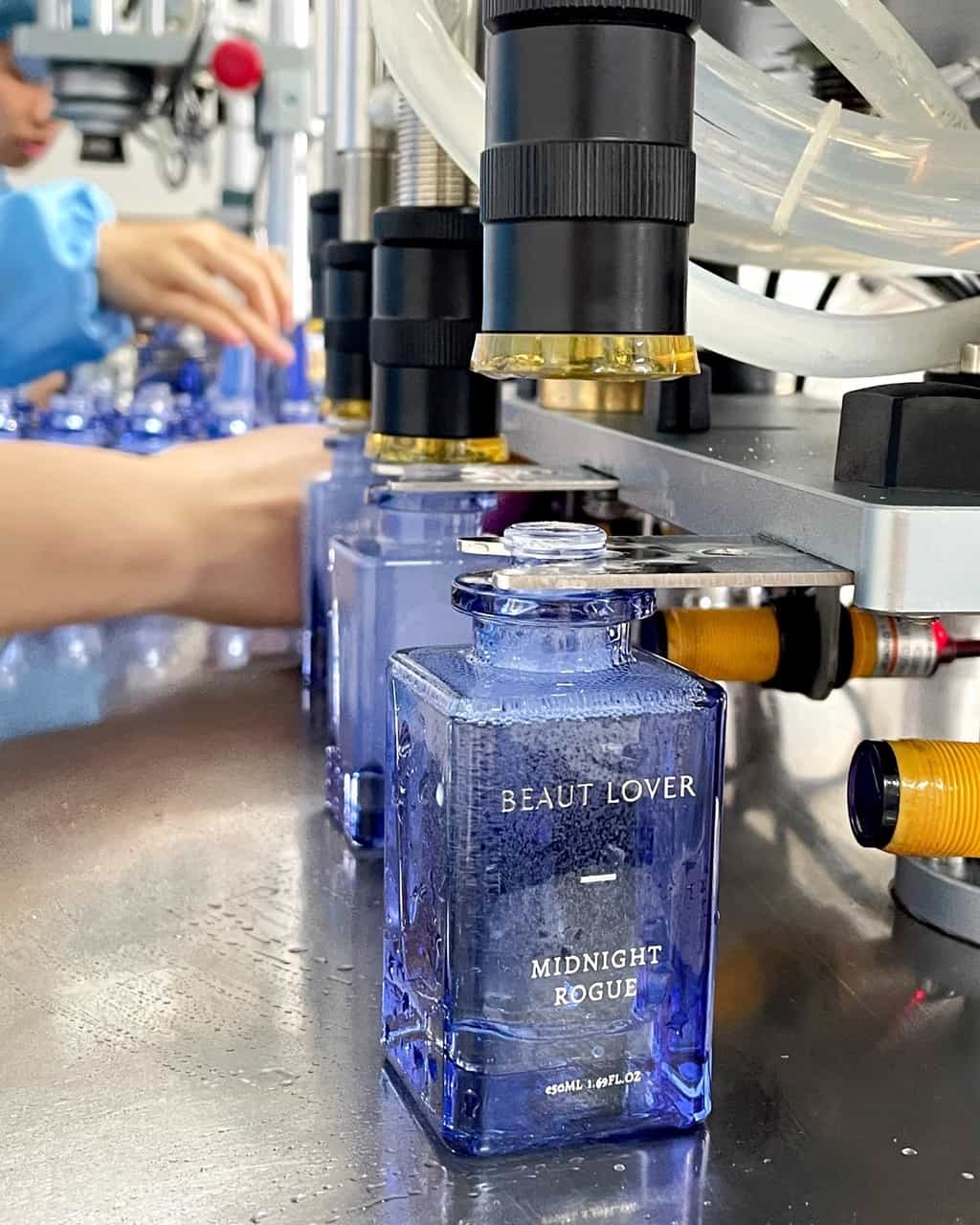
The buyer was a niche fragrance brand preparing a flanker launch for Q1 2026. The issue was common: the glass supplier offered a ready 50ml bottle with acceptable dimensions, but the founder feared it looked too close to low-cost private label SKUs already in the market. A custom mold would have delayed launch by 16 to 24 weeks in Western supply chains, and even the China-side tooling estimate still meant about 45 days before first complete approval. The team needed a stock bottle luxury upgrade with measurable budget control. The solution combined UV DTF Sticker, Nickel Sticker, and Metal Plate options to reshape perception without reshaping glass. In practical terms, Using UV DTF, Nickel Sticker, and Metal Plate to upgrade the appearance meant a standard bottle could look significantly more premium while keeping the original mold and filling line.
Need pricing for perfume bottle labels, cap badges, or premium decoration?
Send us your specs for UV DTF, Nickel Sticker, or Metal Plate options.
Yes, this 50ml perfume packaging upgrade avoided mold cost and cut launch time by about 30 days.
This case started with one existing 50ml rectangular stock bottle sourced from a common catalog program. The brand had planned 3,000 units for first production, with a stretch option to 5,000 units if early sell-through was strong. The original plan included asking for a custom glass bottle, but after timeline review, the numbers did not support it.
Source A showed that avoiding a new bottle mold could save about 30,000 RMB, equal to $4,167. The same source also showed that packaging-only upgrades could bring total production to market in 15 to 20 days, while a new mold path would take about 45 days in this supply chain scenario. Source B adds that EU and US mold development often costs $8,000 to $25,000 and can delay launch by 16 to 24 weeks. For an indie fragrance run of 3,000 to 5,000 units, that is usually poor capital allocation.
The packaging team defined three targets in week 1:
- Keep the existing 50ml bottle footprint and pump fitment unchanged
- Lift perceived retail value by at least one premium tier
- Hold total decoration uplift below $1.20 per unit at 3,000 units
| Project Metric | Custom Mold Route | No-Mold Upgrade Route |
|---|---|---|
| Upfront tooling | $4,167 in this China-based estimate; $8,000-$25,000 common in EU/US | $0 new glass tooling |
| Lead time to launch prep | About 45 days to first full approval | 15-20 days packaging-only cycle |
| MOQ flexibility | Usually less flexible due to tooling amortization | Label decoration can start from 500 units |
| Risk level | Higher CapEx and schedule risk | Lower cash risk and faster test launch |
The fastest route was to use 3 upgrade paths instead of changing the bottle structure.
The brand did not need a new silhouette. It needed a new impression. That distinction changed the full packaging plan. The team reviewed three paths for perfume bottle decoration without custom mold and tested them against the same stock glass body.
Path 1: Premium front-face graphics and metallic identity
The first path upgraded the visual center of the bottle. Instead of standard paper labels, the team compared a UV DTF Sticker for raised gloss detail, a Nickel Sticker for metallic logo depth, and a Metal Plate for a heavier plaque effect. This was the clearest low-risk path because it required no bottle process change and no new filling-line adjustment.
Source C gives a direct reference point: a 50x30mm UV DTF Sticker at 1,000 pieces is $48.30 total, or about $0.048 per unit. That level is still a manageable upgrade for a premium SKU. Source A also notes that moving from a standard paper label to a premium holographic foil label adds only about $0.018 per unit. For brands targeting a $65 to $150 retail fragrance, this cost delta is small compared with perceived value gain.
Path 2: Surface perception without remaking the bottle
The second path focused on how the bottle feels visually once it sits under retail lighting. Instead of custom glass shape, the team used contrast between clear bottle walls, metallic badge elements, and richer carton finishing. This created the impression of a bespoke package system. In buyer testing with internal stakeholders, the decorated sample was consistently described as “niche,” “heavier,” and “less catalog-like,” even though the bottle dimensions stayed identical.
Path 3: Closure and secondary pack to change the full silhouette
The third path used the cap and outer box to change perception from a distance. Source A shows a standard plastic cap around $0.13 and a custom metal cap around $0.53. While this project did not fully switch to a Zamac overcap, it benchmarked that move. Even with the same glass bottle, a heavier cap can visually alter the top proportion and make the SKU look custom. The carton also matters: Source A shows a standard folding carton at $0.21 and a luxury rigid box at $0.63, an increase of $0.42 that can support a retail price increase of $5.00.
| Upgrade Path | Main Component | Estimated Cost Impact | Lead Time Impact | Best Use Case |
|---|---|---|---|---|
| Path 1 | UV DTF Sticker / Nickel Sticker / Metal Plate | About $0.05 to $0.35 per unit depending on spec | 5-7 days for label production | Fast visual upgrade for 500-3,000 units |
| Path 2 | Decorative surface mix with metallic accents | Variable by finish and assembly | Usually within packaging timeline | Brands wanting more luxury cues without new glass |
| Path 3 | Upgraded cap and rigid box | About $0.42 to $0.82 extra per unit in this scenario | 12-15 days for custom cap, 10-15 days for box | Higher retail positioning and gift-style presentation |
The chosen solution combined UV DTF, Nickel, and carton upgrades for the best cost-to-impact ratio.
After two rounds of review, the final direction did not use all three paths at maximum level. That would have pushed cost beyond the brand’s threshold. Instead, the approved system used a layered approach:
- Front logo in Nickel Sticker format for metallic precision
- Secondary decorative detail with UV DTF Sticker for tactile gloss contrast
- Upgraded carton structure and finishing, but not full rigid box for the first run
This decision mattered because the founder’s priority was not only premium appearance. It was launch speed and first-batch margin protection. The team therefore kept the bottle, pump, and primary filling process untouched, then shifted visual equity to decoration and outer pack.
| Component | Original Spec | Upgraded Spec | Estimated Unit Cost Change (USD) | Timeline Change |
|---|---|---|---|---|
| Front identity | Standard self-adhesive label | Nickel Sticker logo badge | Higher than standard label; project-estimated premium tier | No bottle tooling delay |
| Detail graphics | Basic flat print | UV DTF Sticker accents | Reference: about $0.048 per piece at 1,000 pcs for 50x30mm from Source C | 5-7 days production |
| Outer carton | Standard folding carton | Enhanced printed carton with premium finishes | Below full rigid box uplift of $0.42 | 10-15 days production |
In practical sourcing terms, this is where WowSticker became relevant. WowSticker supports appearance upgrades through UV DTF, Nickel, and Metal Plate components that can be added onto existing packaging formats. For brands that already have approved stock glass, this approach is much easier to test than reopening glass development.
Want to compare UV DTF, Nickel Sticker, and Metal Plate costs on your bottle?
Send your bottle size, artwork, and MOQ to get a faster decoration recommendation.
The budget stayed controlled because the project spent on visible upgrades, not hidden tooling.
For a 3,000-unit launch, the team compared two budgets: a mold-led budget and a decoration-led budget. The purpose was to see whether a 50ml perfume packaging upgrade could deliver better ROI without consuming launch cash.
| Budget Item | Custom Mold Route | No-Mold Upgrade Route |
|---|---|---|
| New bottle mold | $4,167 | $0 |
| Label proof sample | $6.94 | $6.94 |
| Box dummy sample | $20.83 | $20.83 |
| Cap sample | $13.89 | $13.89 |
| Courier for samples | About $30 | About $30 |
| Packaging kit at 3,000 units | About $0.72 per unit | About $0.72 per unit base before upgrade add-ons |
| Premium label uplift | Varies | About $0.018+ per unit from standard to premium foil reference |
| Rigid box uplift | Optional | About $0.42 per unit if selected |
At 3,000 units, even a relatively rich no-mold decoration strategy remains easier to defend than paying tooling first. For example, if the brand spent an additional $0.50 per unit on visible premium decoration, the total additional spend would be $1,500. That is still far below the $4,167 mold cost avoided. This is why founders and procurement teams often prefer decoration-first programs for flanker launches, limited editions, or niche-market testing.
The team also reviewed logistics. Domestic shipping to port, export documentation, and customs clearance can add fixed shipment costs such as $27.78 per CBM for LCL, $41.67 documentation, and $69.44 customs clearance support. Those charges exist with or without a mold, so it made more sense to spend budget where the consumer sees it.
What to send for a faster quote
- Bottle size or dimensions, such as 50ml rectangular or cylindrical format
- MOQ, such as 500, 1,000, 3,000, or 5,000 units
- Material preference: UV DTF Sticker, Nickel Sticker, or Metal Plate
- Finish requirement: gold, silver, brushed metal, gloss, matte, embossed look
- Application area: bottle front, shoulder, cap top, carton face, or gift box
- Delivery country and target launch date
The project timeline worked because each decoration step matched standard packaging lead times.
The approved launch plan moved in four phases. This is where the no-mold route gained the biggest practical advantage.
Week 1: Design adaptation and material selection
The existing bottle drawing was mapped to visible branding zones. Logo proportions were adjusted for Nickel Sticker production, and a second decorative layer was prepared for UV DTF output. This took 3 business days.
Week 2: Sampling and approval
Label proof lead time from Source A is 5 to 7 days. A cap sample, if needed, is $13.89 and usually refundable on orders over 1,000 units. The team approved the visual stack in under 1 week after courier receipt.
Week 3: Production lock and carton run
Cartons typically require 10 to 15 days. Because the bottle itself was unchanged, there was no waiting for off-tool glass samples. The project therefore ran labels and cartons in parallel.
Week 4: Assembly prep
Total assembly time from Source A is about 15 to 20 days excluding shipping. This brand hit internal launch readiness in 18 days, which was roughly 27 days faster than the custom-mold estimate used at project start.
| Phase | No-Mold Upgrade Timeline | Custom Mold Timeline |
|---|---|---|
| Design adaptation | 2-3 days | 2-3 days |
| Label sampling | 5-7 days | 5-7 days |
| Box production | 10-15 days | 10-15 days |
| Bottle tooling and first approval | Not required | Major delay driver |
| Total prep cycle | 15-20 days | About 45 days in this case |
The main lesson is simple: use decoration to change perceived value before you pay for new glass.
For this brand, the bottle mold was not the real problem. The real problem was visual sameness. Once the team separated “structure” from “perception,” the answer became clear. A stock bottle luxury upgrade using secondary decoration delivered the required premium look faster and at lower risk.
This is especially relevant in 2025 and early 2026 for perfume brands, cosmetics brands, and even premium electronics or food & beverage gift packaging where launch timing matters more than total customization. If a generic bottle already fits the pump, fill volume, and compliance requirements, replacing it with a custom mold may be the least efficient spend in the whole pack system.
WowSticker is often brought into this stage because decorative elements are easier to test than structural packaging changes. For teams evaluating upgrade perfume bottle without mold options, the most practical next step is to compare 2 to 3 visible upgrade paths on the same stock bottle before approving any tooling.
Need a fast plan for a 50ml stock bottle luxury upgrade?
WhatsApp your bottle photo, target price, and launch date for a response within 2 hours.
FAQ: Buyers usually ask about cost, MOQ, and whether the upgrade is worth it.
Can you make a stock perfume bottle look bespoke without a custom mold?
Yes. In many cases, the strongest visual cues come from the label system, metallic branding, cap proportion, and carton finish rather than the glass shape itself. A stock 50ml bottle can look much more premium by adding UV DTF details, a Nickel Sticker logo, or a Metal Plate badge, plus a stronger cap and carton combination.
How much money do you save by using stock bottles instead of custom glass molds?
In this case, the estimated tooling avoided was about $4,167 based on Source A. Source B shows that in US and EU supply chains, custom glass mold programs often cost $8,000 to $25,000. For small and mid-size launches, decoration-first sourcing usually protects cash flow better than paying tooling upfront.
What are the best perfume bottle decoration techniques for a luxury upgrade?
For fast implementation, the most practical techniques are UV DTF Sticker, Nickel Sticker, and Metal Plate applications, then upgraded caps and outer cartons. These work well because they change what the buyer sees first. If the goal is premium identity without changing glass tooling, front-face metallic branding usually gives the quickest visual lift.
Which option is better for a startup brand?
For most startup perfume brands, a stock bottle with premium decoration is the safer choice. It lowers capital risk, supports smaller MOQ testing, and cuts launch time. If your first run is 500 to 3,000 units, it is usually smarter to spend on visible premium details and customer acquisition than on a bespoke bottle mold.
What should I send before asking for a quote?
Send the bottle dimensions, target quantity, artwork or logo file, preferred material such as UV DTF Sticker or Nickel Sticker, required finish, application area, and destination country. If possible, include a bottle photo and your target retail segment. That makes it easier to recommend whether the upgrade should focus on label, cap, carton, or all three.
Does upgrading a perfume bottle without custom molds reduce time-to-market?
Yes. In this case, the no-mold path reached launch readiness in 18 days, versus about 45 days on the custom mold path. Source B also notes that Western mold development can add 16 to 24 weeks. For seasonal launches or flankers, that timing difference can matter more than any theoretical design advantage from custom glass.
Is this upgrade worth the extra cost?
If the upgrade directly improves shelf impression, the answer is often yes. Source A shows that moving from folding carton to rigid box adds about $0.42 but may support a $5.00 higher retail price. Even small visual upgrades, such as metallic logos or tactile label effects, can justify stronger positioning when the fragrance targets premium distribution.
The practical next step is to review your current 50ml bottle and decide which visible element is weakest: logo presentation, cap presence, or outer pack. Start there, compare 2 or 3 decoration paths, and only consider new tooling if the stock format truly blocks your brand positioning. For many launches, the smarter move is not a new mold. It is a better-looking bottle built on the mold you already have.