Defective Perfume Sprayers Case Study: Rescuing a 1,000-Bottle Batch
A 1,000-bottle perfume run that looked headed for scrap was recovered in 9 working days, and the brand preserved about 80% of the batch value instead of writing off the full production. WowSticker (wowsti.com) has years of factory-direct experience in custom labels, stickers, and packaging decoration for perfume and cosmetics brands worldwide, and this defective perfume sprayers case study shows the practical side of crisis control: isolate leaking units, replace failed sprayers, remove damaged labels, and restore sellable presentation fast enough to protect a launch window. If you are dealing with leaking pumps, label damage, or trace marks after rework, the fastest next step is to send bottle size, label size, quantity, and destination for a factory-direct review.
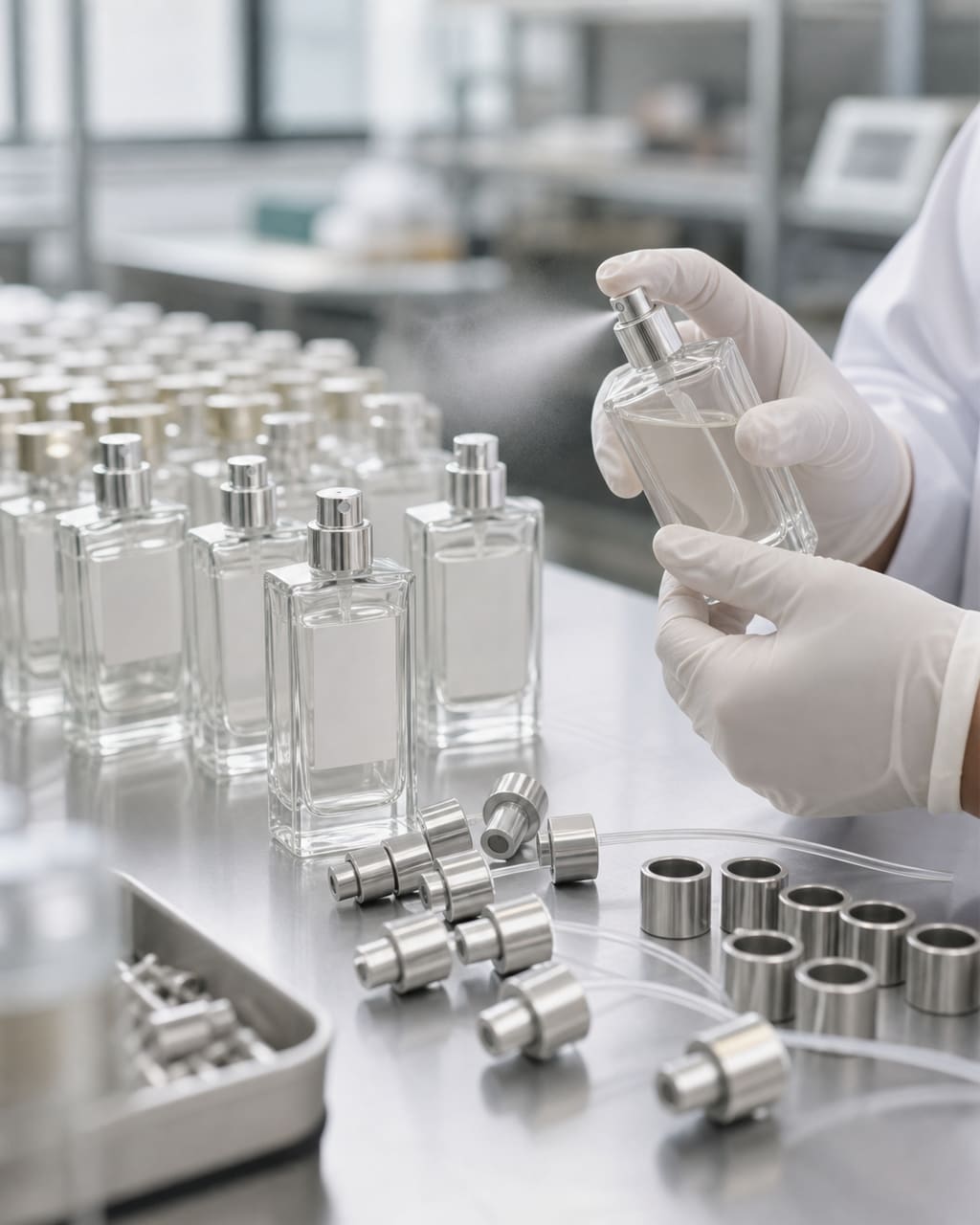
The crisis started 14 days before shipment. During final carton sampling, 126 of 300 tested bottles showed leakage around the crimp area or sprayed a harsh stream instead of a fine mist. The client, a niche fragrance brand preparing a seasonal launch, faced three bad options: scrap the whole lot, rework locally at Western labor rates, or organize controlled salvage. The fastest workable route combined pump replacement with packaging restoration. Leaks often ruin already-applied labels, so the rescue plan included stripping damaged old labels and covering marks with high-opacity blockout labels or tamper-evident overlays to bring the product back to life. The rebuild used Vinyl Sticker for base relabeling and UV DTF Sticker for premium decorative recovery on selected units.
Need pricing for perfume bottle labels, cap badges, or premium decoration?
Send us your specs for Vinyl, UV DTF, or Nickel Stickers.
The batch was saved by replacing pumps, triaging labels, and relabeling the damaged units.
This defective perfume sprayers case study involved a 50ml eau de parfum packed in clear glass with a crimp pump and printed front label. The production lot was 1,000 bottles. Unit product value at batch cost level was estimated at $12.40 per finished unit, including juice, glass, pump, cap, filling, label, and carton. Total at-risk inventory value was therefore about $12,400 before freight and retail margin.
Initial testing found two main failure modes. First, 29% of checked bottles leaked after horizontal rest for 12 hours. Second, 13% produced a jet or side spray, a classic perfume manufacturing failure linked to actuator or crimp inconsistency. Because the sampled failure rate was far above the usual 1% to 2.5% packaging tolerance range referenced in Western QA practice, the client paused shipment immediately.
The brand’s first concern was the fragrance itself. Could the juice be preserved without contamination? The answer was yes, but only if rework was controlled. The second concern was visual damage. On many bottles, leaked liquid had wrinkled or stained the original paper labels. In these cases, the damaged label had to be removed, residue cleaned, and the area recovered with replacement decoration. High-opacity blockout stock was chosen where old print shadows might still show through, while tamper-evident overlays were reserved for bottles that needed both cosmetic rescue and extra post-rework trust signaling.
The root cause was a mixed pump issue: crimp variance, gasket mismatch, and dip-tube inconsistency.
The team reviewed retained pump samples and operator records from the original assembly. Three technical issues were identified within 48 hours.
1. Crimping tension drift
Measurements on failed units showed the crimp skirt was outside target range by 0.12mm to 0.18mm on a meaningful share of bottles. That created weak sealing around the neck finish and caused seepage during transport simulation.
2. Gasket compatibility problem
A subset of pumps appears to have used a gasket batch with lower chemical resistance to the fragrance formula. Oily notes and alcohol exposure can accelerate swelling or loss of sealing performance. This explained why some bottles passed on day 1 but leaked after 72 hours.
3. Dip-tube length variation
Dip tubes on several bad samples were 1.5mm to 2.0mm off target. That does not always cause leakage, but it can produce sputtering, poor atomization, or squirting instead of misting. For a premium scent, that defect is enough to trigger returns even if the fill does not leak.
For the client, this was not just a technical issue. It was a launch risk. The order represented one seasonal release and a large share of working capital. Scrapping 1,000 units would have erased weeks of production and forced a delayed refill plan. In North America or Europe, local rework labor alone often runs $25 to $45 per hour, so the rescue plan had to keep manual handling tight and measurable.
The rescue process took 9 working days from failure confirmation to ready-to-pack stock.
The salvage defective cosmetic batch protocol was built around containment, clean handling, and visual recovery. Timeline discipline mattered because the launch date could not move more than one week.
| Day | Action | Output | Measured Result |
|---|---|---|---|
| Day 1 | Failure confirmation and quarantine | 1,000 bottles isolated by lot | 126/300 sample units failed leak or spray test |
| Day 2 | Root cause review and replacement pump sourcing | Approved alternate sprayer lot | New test lot passed 24-hour seal check |
| Day 3-4 | Manual de-capping and pump removal on failed and suspect units | 782 bottles reworked | Glass breakage kept below 1.2% |
| Day 4-6 | Pump replacement and controlled re-crimping | 760 bottles reassembled | Post-rework leak rate under 2% |
| Day 5-7 | Label removal, cleaning, and relabeling | 418 bottles cosmetically restored | Cover-up success rate above 95% |
| Day 8 | 48-hour rest test, spray test, and carton repack | Sellable stock confirmed | 801 bottles approved |
| Day 9 | Final QC release and shipment preparation | Launch protected | About 80% of batch value retained |
The most delicate step was fixing leaking perfume bottles without contaminating the contents. Bottles with external leakage but stable fill were not decanted. Instead, operators removed failed pumps under controlled handling, checked neck finish cleanliness, and installed the replacement sprayer lot. Only a small number of heavily compromised units required liquid transfer. That kept fragrance exposure low and reduced oxidation risk.
Visual recovery was equally important. About 418 bottles had labels affected by leaked perfume, adhesive whitening, wrinkling, or edge lifting. Those labels were stripped, surfaces were cleaned, and replacement decoration was applied. For standard front branding, a 50x30mm Vinyl Sticker format worked well because it tolerated minor bottle curvature and gave strong ink hold. For selected premium units and logo areas, a 50x30mm UV DTF Sticker added a more upscale raised look without needing a full bottle reprint.
The cost of rework was far lower than scrapping, especially when label recovery was included.
The client compared two financial paths: scrap and restart, or rework and salvage. The difference was large enough to justify immediate action. The numbers below use the actual scenario assumptions plus the provided WowSticker decoration pricing for 1,000 pieces.
| Cost Item | Scrap and Restart | Rework and Salvage | Notes |
|---|---|---|---|
| At-risk finished goods value | $12,400 | $12,400 | 1,000 bottles at estimated batch cost of $12.40 each |
| Replacement sprayers | $0 | $420-$650 | Depends on pump spec and approved alternate lot |
| Manual rework labor | $0 | $780-$1,250 | Pump removal, re-crimping, QA, repack |
| Label restoration | $0 | $18.29 vinyl to $48.30 UV DTF per 1,000 pcs | Reference WowSticker 50x30mm pricing |
| Cleaning and consumables | $0 | $90-$180 | Adhesive removal, wipes, trays, QC materials |
| Disposal / write-off cost | $300-$900 | $0-$120 | Depends on local waste and damaged unit count |
| Restart lead time impact | 3-6 weeks | 9 working days | Critical for launch protection |
| Recovered sellable units | 0 initially | 801 approved units | Approx. 80% value recovery |
Using 801 recovered units against the original estimated inventory value, the client retained roughly $9,932 of product value. Even after adding rework and decoration costs, the economic case clearly favored salvage. That is why this defective perfume sprayers case study matters for procurement teams: once fragrance is already filled, the label and decoration layer becomes part of the rescue strategy, not just a branding detail.
| Product | MOQ | Unit Price (USD) | Lead Time | Notes |
|---|---|---|---|---|
| Vinyl Label 50x30mm | 1,000 pcs | $0.0183 | Typically short-run friendly | Good for blockout relabeling on damaged bottle fronts |
| UV DTF Sticker 50x30mm | 1,000 pcs | $0.0483 | Typically short-run friendly | Good for premium logo recovery and decorative upgrade |
Have a leaking batch and need rework-friendly labels fast?
Send bottle photos, label size, quantity, and destination for Vinyl or UV DTF pricing.
Label rescue worked because damaged old labels were stripped and hidden with high-opacity replacements.
Leakage often destroys a label before anyone notices the pump issue. Alcohol-based perfume can creep into paper edges, cause bubbling, and leave a tide mark on the bottle face. In this project, about 42% of the reworked bottles had some label or adhesive damage. A plain reapplication would not have been enough, because old print shadows and glue marks can show through thin stock.
That is where blockout construction matters. A high-opacity gray-back or blockout label can cover residual graphics and surface blemishes from the first label. The bottle looks intentional again instead of patched. For bottles that needed a stronger trust signal after rework, tamper-evident overlays were added on outer packaging or closure zones. This is one of the less discussed but practical lessons in any salvage defective cosmetic batch program: the rescue does not end when the leak stops. It ends when the product can pass visual inspection and customer unboxing standards.
WowSticker has handled similar packaging decoration recovery needs for perfume brands and cosmetics lines, where replacement artwork must align quickly with existing cap color, bottle finish, and carton design. In projects like this, Vinyl Sticker is often the most economical rescue layer, while UV DTF Sticker is used when the brand wants the corrected units to look closer to a premium launch standard.
What information speeds up a rescue quote
Send these details for faster pricing and feasibility review:
- Bottle size and dimensions
- Label size or printable area
- MOQ or total defective quantity
- Material preference: Vinyl Sticker or UV DTF Sticker
- Finish or surface treatment needed
- Application scenario: bottle front, cap, carton, tamper seal
- Delivery country and target deadline
- Photos of leakage damage or old label residue
The main prevention lesson is to test pumps earlier and build a visual recovery plan before launch.
The easiest batch to rescue is the one that never fails in the market. This perfume manufacturing failure exposed three avoidable gaps: incoming pump validation, extended compatibility testing, and weak contingency planning for decoration. A few practical controls would have reduced the damage.
Use staged spray and leak testing
Do not rely on one-time inline checks. Test pumps at filling, after 24 hours, and after 72 hours with horizontal rest and repeated actuation. If 300 sampled bottles show anything above a low single-digit defect pattern, stop shipment.
Check component compatibility on the actual formula
Alcohol, oils, and fragrance compounds can attack gaskets differently. Run compatibility checks on the final formula, not just water or alcohol proxy tests. A gasket issue can hide for days.
Plan relabeling before you need it
For perfume brands and cosmetics teams, a rescue SKU for labels is cheap insurance. Short-run replacement Vinyl Sticker artwork and premium UV DTF Sticker accents can reduce recovery time from weeks to days. As of 2025, that matters even more in markets with stronger waste rules and pressure to avoid unnecessary disposal.
For Western brands, local rework can be expensive enough that offshore or factory-supported relabeling becomes attractive. The real decision is not only technical. It is economic: how much value can be saved before launch timing collapses? In this case, the answer was clear because 801 units were approved after rework and the visual standard remained commercially acceptable.
Facing a packaging failure before shipment?
Share the defect photos and specs now to check whether relabeling or decorative cover-up can save the batch.
The practical outcome was simple: rework beat scrapping, and decoration recovery protected the launch.
This defective perfume sprayers case study ended with 801 approved bottles out of an at-risk 1,000-bottle lot, a 9-day rescue window, and about 80% of product value preserved. The technical fix was pump replacement. The commercial fix was relabeling damaged units quickly enough to restore shelf appearance. For buyers dealing with fixing leaking perfume bottles, that combination matters. A leaking bottle can damage far more than the sprayer; it can ruin the label, the carton, and the launch calendar.
The key lesson is straightforward: once a filled batch exists, every recoverable layer counts. Pump replacement saves functionality. Blockout and replacement decoration save presentation. Together, they can turn a near-total write-off into a controlled salvage plan. WowSticker and wowsti-related rescue scenarios are most relevant when the issue is not just leakage, but visible packaging damage that still needs to look market-ready after rework.
These are the buyer questions that usually come up before deciding to rework or scrap.
How do you fix a defective perfume sprayer on a sealed glass bottle?
The usual method is controlled pump removal, neck inspection, replacement with an approved pump lot, and re-crimping followed by leak and spray testing. If the fragrance inside is still stable and contamination risk is controlled, the liquid does not always need to be transferred. The process must be done carefully to limit glass breakage and preserve fill accuracy.
Can you extract and save perfume if the pump mechanism fails?
Yes, but it should be the exception, not the first choice. If the bottle has major leakage or neck damage, liquid transfer may be necessary. However, each transfer increases handling risk, oxidation exposure, and possible fill loss. In many cases, replacing the pump directly on the existing bottle is safer and faster than full decanting.
What causes perfume atomizers to leak or squirt instead of mist?
The most common causes are poor crimp consistency, gasket compatibility issues, damaged actuator parts, and wrong dip-tube length. Leakage usually points to a seal problem around the neck or pump body. Squirting instead of misting often relates to actuator geometry or tube variation. Both issues should be checked with repeated spray and rest tests, not only one-time line inspection.
Is it more cost-effective to scrap or rework a defective batch of fragrance?
If the glass and juice are still usable, rework is often cheaper than scrapping, especially for 500 to 5,000 unit runs. In this case, the batch cost at risk was about $12,400, while rework plus relabeling remained a small fraction of that. The answer depends on defect rate, local labor cost, contamination risk, and how many units can still pass final QC after repair.
Which option is better for a startup brand: Vinyl Sticker or UV DTF Sticker for salvage work?
For most startup brands, Vinyl Sticker is the lower-cost and faster recovery option, especially when you need to cover old marks or replace a damaged front label. UV DTF Sticker costs more, but it gives a more premium raised look and can help corrected units feel closer to a finished launch product. Many brands use vinyl for broad recovery and UV DTF only on hero areas.
What should I send before asking for a quote on rework labels?
Send bottle photos, bottle dimensions, label size, quantity affected, preferred material, application area, and destination country. If possible, include close-ups of leakage damage, old label residue, and current artwork files. This helps suppliers judge whether blockout material, standard vinyl, or UV DTF is the best fit and whether the turnaround matches your shipment deadline.