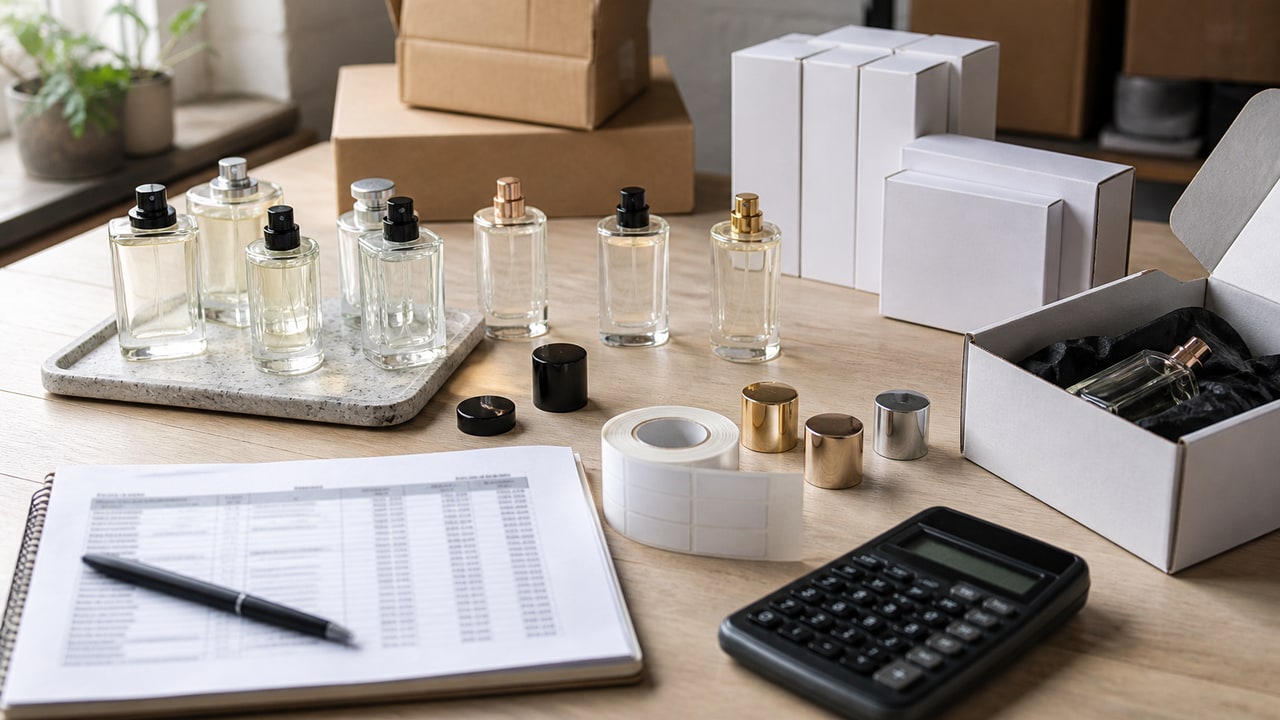
Case Study: A $8K Perfume Brand Launch on a Tight Budget

wowsti perfume label experience

This perfume launch case study shows that one indie brand got 3 SKUs to market on a total first-order budget of $8,000 by cutting box complexity, using stock components, and upgrading labels first. WowSticker (wowsti.com) has years of factory-direct experience in custom labels, stickers, and packaging decoration for perfume and cosmetics brands worldwide, and this exact budget logic appears again and again in early-stage launches: spend on what the customer sees in hand, delay what only raises MOQs. If you are planning a small perfume budget launch, the fastest path is usually simple bottle sourcing, compliant juice, and strong decoration through Vinyl Sticker or UV DTF Sticker instead of expensive rigid boxes.

Perfume launch case study for an $8K indie perfume brand launch with 3 SKUs and low-budget packaging

The result: the brand launched in 11 weeks, placed 1 first production order, and kept packaging spend under control by following a clear budget priority path: upgrade labels first, then consider complex outer boxes later. That approach matters because in a bootstrapped fragrance project, cash is usually trapped by formulation, filling, compliance checks, and small-batch logistics long before premium packaging delivers a real return.

Need pricing for perfume bottle labels, cap badges, or premium decoration?

Send us your specs for Vinyl, UV DTF, or Nickel Stickers.

How did this $8K perfume launch case study work in real numbers?

The short answer: the brand reduced component risk, limited the first launch to 3 SKUs, and treated packaging as a conversion tool, not a vanity spend. The founder was launching a direct-to-consumer niche line aimed at North American buyers aged 25-38. The total available cash was $8,000. The initial concept had 3 scents in 50ml bottles, each with a small sample program to support social seeding and early reviews.

The usual mistake in an indie perfume brand launch is spending too much too early on custom molds, heavy cap development, and rigid paper boxes with layered finishing. That can consume 20% to 35% of the total budget before a single repeat order exists. In this case, the founder instead sourced stock glass and standard sprayers, then focused on bottle appearance through label decoration. This is where WowSticker entered the planning logic: decoration had to look premium at low MOQ without forcing a full packaging rebuild.

Timeline mattered. In week 1, the brand locked formulas and target retail. By week 3, stock bottle options were selected. By week 5, label decoration tests were approved. By week 8, filled units and samples were ready. By week 11, the first order shipped. For a launch under $10,000, that is fast enough to keep momentum while still allowing proofing and corrections.

Launch Metric Result Why It Mattered
Total budget $8,000 Forced strict prioritization across formula, packaging, and marketing
SKU count 3 SKUs Enough variety for discovery without overcomplicating inventory
First production order 1 combined order Reduced fragmented shipping and coordination cost
Launch timeline 11 weeks Fast enough for seasonal launch relevance
Decoration strategy Label-first, box-later Protected cash while keeping premium shelf look
Budget Estimator Disclaimer: All figures in this article are estimates for planning only, not a formal quotation. Actual prices vary by specs, MOQ, finish, compliance requirements, and destination. All figures shown in USD, converted at the reference rate of 7.20 RMB = 1 USD at time of writing.

What was the actual $8,000 budget breakdown?

The budget was split to protect product readiness first, then visual presentation, then launch traffic. Based on the available market data and the structure used in this case, the founder allocated most cash to fragrance juice, filling, compliance support, and basic packaging. Outer box upgrades were intentionally delayed until reorder stage.

This is the most useful lesson for any founder managing a small perfume budget: the bottle is the hero, but the bottle does not need a fully custom paper architecture on day one. If the label and direct bottle decoration look clean, the first customer still experiences a premium product.

Budget Category Spend (USD) % of Total Notes
Formulation, juice, and filling $2,400-$2,800 30%-35% Included 3 scents, small-batch fill, and sample volume planning
Stock bottles, sprayers, caps $1,400-$1,800 18%-23% Used standard components to avoid tooling and high MOQs
Labels and bottle decoration $120-$350 2%-4% Low-cost visual upgrade through Vinyl Sticker or UV DTF Sticker
Outer cartons and inserts $500-$900 6%-11% Kept simple on first run; no advanced foil, embossing, or magnetic rigid box
Website, branding assets, photography $1,000-$1,400 13%-18% Lean Shopify build, product page visuals, launch copy
Samples, gifting, and shipping $700-$1,000 9%-13% Used for micro-influencer seeding and review generation
Compliance, testing, contingency $800-$1,200 10%-15% Held back to avoid last-minute launch delays
Budget Estimator Disclaimer: These values are planning estimates only and do not constitute a formal quotation. Actual costs vary by formula house, bottle source, packaging specification, MOQ, destination, and freight timing. All figures shown in USD, converted at the reference rate of 7.20 RMB = 1 USD at time of writing.

The biggest budget rule was simple: first do the label upgrade, then do the complex outer box later. That path gave the brand a polished appearance at a fraction of the cost of premium carton development. For new perfume brands, this sequence reduces cash lockup and shortens lead time by 2 to 4 weeks in many cases.

Label-first cost example from WowSticker pricing

Using Source C, the decoration budget was very manageable. A Vinyl Sticker at 50x30mm, 1000 pieces was priced at $18.29. A UV DTF Sticker at the same size and quantity was $48.30. Even after freight and proofing, the label layer remained one of the lowest-cost visual improvements in the entire launch.

Decoration Option MOQ Unit Price (USD) Lead Time Notes
Vinyl Label 50x30mm 1000 pcs $18.29 total / about $0.018 per piece Sample and production timing depends on artwork Good for clean logo and bottle-face branding
UV DTF Sticker 50x30mm 1000 pcs $48.30 total / about $0.048 per piece Sample and production timing depends on artwork Better for raised premium effect on glass or cap surfaces
Typical local market small-run decoration Low MOQ, often fragmented $0.06-$0.15 per piece [ESTIMATED] Varies by vendor Often higher cost with less consistency across multiple SKUs
Budget Estimator Disclaimer: WowSticker prices above come from the provided pricing source and are for planning reference only. They are not a formal quotation. Actual prices vary by size, quantity, finish, artwork complexity, and destination. All figures shown in USD, converted at the reference rate of 7.20 RMB = 1 USD at time of writing.

Want to compare label-first decoration against full box development?

Send your bottle size, artwork, and MOQ for a fast Vinyl or UV DTF estimate.

Why did the brand choose labels before complex boxes?

Because labels changed the perceived quality fast, while complex boxes increased MOQ, approval time, and cash risk. For early fragrance launches, buyers usually interact first with the bottle image online and then the bottle itself in hand. That means visible bottle decoration often affects conversion more directly than premium carton engineering.

In this case, the founder first considered foil-stamped cartons with molded inserts. That would have pushed packaging spend from roughly $700 to more than $1,800 on the first run, depending on MOQ and print process. Instead, they kept the outer carton simple and focused on clear front branding plus tactile bottle decoration. The result was a better-looking unit without tying up another $1,100+ in non-core inventory.

WowSticker solutions fit this stage because they let new brands test market response before committing to heavier packaging. A UV DTF Sticker can create a more premium applied look on bottles or caps, while a Vinyl Sticker stays efficient for informational or front-face branding. For brands selling online, that combination often gives enough visual finish to launch credibly.

Priority Decision Label Upgrade First Complex Box First
Cash required Low Medium to high
MOQ pressure Lower Higher
Lead-time risk Lower Higher due to proofs and structural approvals
Visual impact on bottle photos High Low to medium
Best stage First launch Second or third reorder

How was the launch timeline managed in 11 weeks?

The launch stayed on schedule by locking decisions early and avoiding custom component development. When a founder only has one first production order, every extra proof cycle matters. The timeline below shows the practical sequence used to keep the project moving.

Week Main Task Key Output
1-2 Formula and SKU definition 3 scents selected, target bottle size fixed
2-3 Compliance review and bottle sourcing Stock bottle shortlist, spray and cap match confirmed
3-5 Label artwork and decoration testing Front branding and mandatory info layout approved
5-7 Sample filling and carton approval Launch photography samples and mailer units prepared
7-9 Website build and influencer list Product pages, founder story, and gifting plan ready
9-11 Final fill, assembly, and shipment First sellable order completed
Budget Estimator Disclaimer: Timelines shown are planning examples only. Actual lead times vary by formula approval, artwork changes, packaging readiness, and destination logistics. They are not a delivery commitment or formal quote.

This matters for a perfume launch case study because speed is not just operational. It protects content momentum. On TikTok and Instagram, a launch window that slips by 3 to 5 weeks can break the founder’s content rhythm and delay first reviews. According to the market research provided, North America accounts for more than 30% of global fragrance revenue, and DTC growth is heavily shaped by social discovery. That means launch timing and sample distribution are commercial issues, not just production issues.

What marketing worked for this indie perfume brand launch?

The brand used samples, short-form video, and micro-influencer seeding instead of paid PR. That fit the audience behavior seen in the supplied market data: Gen Z and Millennial fragrance buyers respond strongly to visual storytelling, authenticity, and community-led review culture. The founder did not hire an agency. Instead, they shipped discovery samples and focused on product-in-hand content.

The initial sample run included approximately 80 to 120 small vials across creators, early customers, and friendly reviewers. The budget for this section was only $700 to $1,000, including shipping. The key was consistency: each creator received the same branded scent card, simple visual identity, and a clear founder story. The better the bottle looked on camera, the more credible the launch felt. Again, this supports the label-first strategy.

For an indie perfume brand launch, this approach usually outperforms overbuilt packaging with no sampling support. A buyer may forgive a simpler folding carton. They are less likely to forgive no scent discovery path, weak social proof, or a delayed launch.

Channel Budget Range Expected Role Why It Fit an $8K Launch
TikTok / Reels content $0-$300 Awareness Founder-led content kept costs low
Micro-influencer gifting $400-$800 Reviews and trust Better ROI than broad paid ads at this stage
Email capture and sample follow-up $50-$150 Conversion Helped recover interest from samplers
PR agency $2,000-$5,000+ Traditional awareness Too expensive for this first-order budget

What should buyers send to get a faster packaging quote?

The fastest quote comes when the brand sends size, material, finish, application, MOQ, and delivery country in one message. Most delays happen because suppliers receive artwork without bottle size, or a target look without quantity. For startups, this can add several days across back-and-forth emails.

If your launch plan follows the same budget discipline shown in this case, start with bottle decoration specs first. WowSticker can estimate low-risk decoration options much faster when the basic technical information is clear.

Perfume Decoration Inquiry Template

Send these details for a faster quote:

  • Size / dimensions of the label or decoration area
  • MOQ or planned quantity
  • Material preference: Vinyl Sticker or UV DTF Sticker
  • Finish / surface treatment required
  • Application scenario: glass bottle, cap, carton, sampler card
  • Delivery country
  • Artwork file format and number of SKUs

For many first launches, one front label size and one side-information size across 3 SKUs can simplify costing and speed approval.

WhatsApp us with your specs

Launching soon and need bottle decoration priced this week?

Share your SKU count, bottle size, and target finish for a quick factory-direct estimate.

What can other founders learn from this $8K launch?

The main lesson is to protect launch cash by ranking spend in this order: compliant product, stock components, label upgrade, simple carton, then advanced box features after reorder. That sequence gave this brand a real market entry instead of a beautiful but delayed packaging concept.

As of 2025, the global perfume market remains large at about $50.4 billion in 2022 with projected 5.9% CAGR through 2030, and indie fragrance continues to benefit from buyer demand for niche identity. But the economics of entry still punish over-customization. Most founders do not fail because their first box was too simple. They fail because cash disappears into low-priority specs before sales validate the line.

For that reason, this perfume launch case study is not really about making packaging cheap. It is about making packaging strategic. If one decoration change costing under $50 to $350 can lift bottle perception while saving over $1,000 versus complex outer packaging, that is a rational first-step decision. Once reorder volume is stable, premium secondary packaging becomes easier to justify.

That is also why WowSticker appears in many early-stage planning conversations: not because labels solve everything, but because labels often solve the right problem first.

FAQ: What do buyers usually ask before a low-budget perfume launch?

How much does it really cost to launch an indie perfume brand?

A realistic small launch can start around $6,000 to $15,000 depending on formula source, bottle choice, and compliance scope. In this case, 3 SKUs were launched on $8,000 by using stock components, simple cartons, and low-cost label decoration instead of high-MOQ custom packaging.

How should I allocate an $8,000 budget for a perfume launch?

Start with formula, filling, and compliance first. Then secure stock bottles and sprayers. After that, upgrade bottle appearance through labels or direct decoration. Keep outer cartons simple on the first run. Reserve 10% to 15% for sample shipping, corrections, and launch delays.

Which option is better for a startup brand: Vinyl Sticker or UV DTF Sticker?

For a startup, Vinyl Sticker is usually the lower-cost choice for front branding and information labels. UV DTF Sticker is better when the brand wants a more tactile, premium applied effect on glass or caps. The right choice depends on bottle shape, artwork detail, and budget.

Is a premium box upgrade worth the extra cost on the first order?

Usually not. For first orders, premium boxes often increase MOQ, approval cycles, and total packaging spend without improving online conversion as much as better bottle presentation. A simpler box plus stronger bottle decoration is often the better commercial choice until reorder demand is proven.

What should I send before asking for a quote?

Send the bottle size, label dimensions, SKU count, MOQ, material preference, finish requirement, application surface, artwork file, and delivery country. A complete message can reduce quoting time significantly and helps suppliers recommend whether Vinyl Sticker or UV DTF Sticker is more suitable.

Can I start a perfume line with low minimum order quantities?

Yes, but only if you avoid over-customizing too early. Use stock glass, standard caps, limited SKU count, and simple folding cartons. Then use label decoration to improve appearance. That combination is one of the most practical ways to manage low MOQ production without damaging the brand look.

The practical next step is to map your launch budget by visual impact and cash risk, not by packaging ambition. If your first order is still unproven, keep the bottle looking strong, keep the box simple, and move premium carton complexity to the second stage once reorder volume supports it.