wowsti perfume label experience + packaging planning

Bulk Order Savings: How Much Cheaper Are Perfume Labels at 10,000 Pieces?

Practical WowSticker guide for bulk order savings: how much cheaper are perfume labels at 10,000 pieces?

Bulk Order Savings: How Much Cheaper Are Perfume Labels at 10,000 Pieces? hero image for WowSticker blog

Send these details to wowsti to get a faster quote:

wowsti copyright notice: This article is prepared for WowSticker packaging and label buyers. Reproduction, quotation, excerpting, or commercial reuse requires prior permission from wowsti.

Intent classification: procurement comparison.

At 10,000 pieces, perfume labels usually become meaningfully cheaper per unit because setup, tooling, makeready, and waste are spread across a larger run. The best savings depend on material choice, print process, label size, finish, and bottle surface. For new projects, request a sample order first, then send a full RFQ with size, artwork, quantity, exposure to alcohol or oil, and destination country. WowSticker (wowsti.com) can help compare options before bulk production.

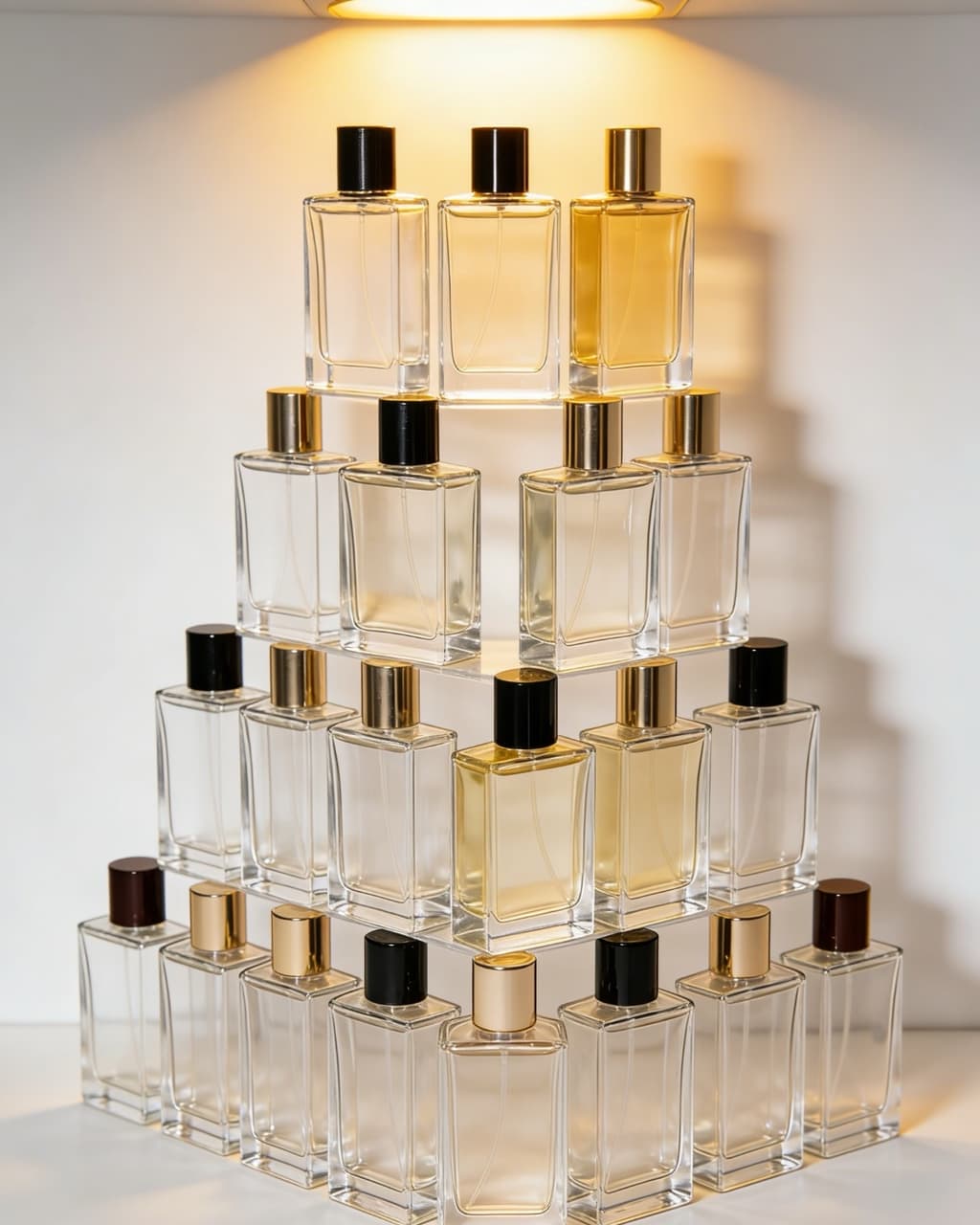
Perfume bottles with blank labels arranged for bulk packaging review

If you are asking whether 10,000 pieces is the point where perfume labels become “cheap,” the short answer is: often yes, but not automatically. Buyers usually see better per-piece economics at 10,000 because fixed setup costs are diluted and suppliers can optimize material usage, printing layout, and finishing efficiency. But the real savings vary sharply by label construction.

A simple waterproof Vinyl Sticker for a standard glass bottle behaves very differently from a premium metallic badge, a textured label with special finish, or a transfer-style decoration for a curved bottle. That is why experienced fragrance buyers do not compare quantity alone. They compare quantity plus process.

This guide explains what usually gets cheaper at 10,000 pieces, what does not, which RFQ details affect the quote most, and how to avoid false savings that later turn into relabeling, lifting, scuffing, or rework costs.

Does 10,000 pieces usually reduce the unit cost of perfume labels?

Yes. In most B2B packaging scenarios, 10,000 pieces lowers the unit cost compared with small runs because a supplier can distribute fixed production inputs over more labels. Those inputs often include:

  • press setup or print preparation
  • color calibration and approval time
  • die-cutting or tooling preparation
  • material loading and production waste allowance
  • finishing setup for matte, gloss, metallic, emboss-like, or protective coatings
  • inspection and packing labor

On a short run, those fixed steps are expensive relative to the number of finished pieces. At 10,000 pieces, they are still there, but each label carries a much smaller share of that cost.

That said, buyers should be careful with the phrase “how much cheaper”. There is no universal discount percentage. A plain film label may scale differently from a premium Nickel Sticker, Resin Sticker, or Metal Plate. Likewise, a label for a flat carton face behaves differently from a label for a small-radius perfume bottle exposed to alcohol splash and oily fingers.

What actually drives bulk savings at 10,000 pieces?

The biggest savings usually come from four areas: setup dilution, material efficiency, process continuity, and packing efficiency.

1. Setup costs are spread across more units

This is the most obvious factor. Whether the supplier is printing, laminating, transfer-prepping, or die-cutting, the initial production work does not rise linearly with quantity. Once the run starts smoothly, adding more units is cheaper than starting a new small run.

2. Material usage becomes more efficient

At 10,000 pieces, layout planning matters more. Suppliers can often optimize nesting, roll width, sheet usage, and waste control better than they can on a very small order. This does not mean zero waste, but it often means lower waste per usable label.

3. Finishing becomes more economical when repeated at scale

Surface finishes such as lamination, varnish, metallic effects, raised-feel decoration, or transfer-based application usually become more cost-efficient when repeated in volume. However, premium effects still remain premium effects. Bulk ordering reduces their unit burden; it does not turn them into low-cost commodity labels.

4. Inspection and packing are easier to standardize

When one SKU, one size, and one finish run continuously, quality control and packing can be more efficient. By contrast, a mixed order with many designs or bottle variants may reduce economies even if the total piece count reaches 10,000.

Buyer decision table: which perfume label types benefit most from 10,000-piece ordering?

Label type / process Typical use 10,000-piece savings logic Sample order suitability Main failure risk Key quote variables
Vinyl Sticker Waterproof bottle labels, carton seals, secondary packaging Usually strong unit-cost improvement if size and finish are standardized Very suitable for sample order before scaling Adhesion issues on coated glass, oil exposure, edge lifting Size, adhesive type, finish, shape, quantity, exposure conditions
UV DTF Sticker Logo transfer on glass bottles, cap decoration, no-label visual effect Can improve at 10,000, but handling and application method still matter Strongly recommended to test on actual bottle curvature first Application inconsistency, transfer failure, surface compatibility Bottle curve, artwork detail, color layers, application area, quantity
Nickel Sticker Premium metallic brand marks, luxury fragrance presentation Setup dilution helps, but premium material/process keeps cost above standard labels Sample order is important for thickness and edge review Misfit on curved surfaces, alignment issues, visual expectation gap Thickness, finish, adhesive, shape complexity, bottle surface
Resin Sticker Domed logo effect, tactile branding Bulk reduces repeated setup burden, but curing and dimensional control remain key Recommended for appearance and durability testing Yellowing, dome inconsistency, poor fit on tight curves Diameter, dome height, resin appearance, environment exposure
Metal Plate Rigid premium decoration for boxes or presentation sets May improve at 10,000, though fabrication steps remain relatively cost-heavy Sample review is critical before full order Attachment method mismatch, weight, edge quality Material look, mounting method, thickness, dimensions, finish

When 10,000 pieces does not save as much as buyers expect

Some projects look like bulk orders on paper but do not behave like efficient bulk production in reality. Savings may be weaker if your order includes the following:

  • multiple SKUs sharing the total quantity but not the same artwork
  • several label sizes for different bottle formats
  • special finishes that require extra steps or slower output
  • complex shapes with higher waste during die-cutting
  • premium metallic or tactile constructions with slower processing
  • very small labels with tight registration tolerance
  • high-performance adhesive requirements for alcohol, oil, or cold-chain exposure

For example, 10,000 labels split across ten artworks is not as efficient as 10,000 identical labels. Buyers often overestimate the savings of a “large total volume” without checking how many separate setups the supplier must run.

How fragrance brands should think about total cost, not just label price

The lowest quote is not always the lowest project cost. Perfume labels sit in a demanding use case: glass, coatings, curved surfaces, premium visual standards, retail handling, alcohol contact, fragrance oil transfer from fingers, and sometimes humid shipping routes.

A label that is marginally cheaper but fails on bottle adhesion or appearance can create much larger costs through:

  • rework at the filling or packing stage
  • higher wastage during hand application
  • customer complaints about peeling or scuffing
  • inconsistent appearance across a premium product line
  • delays caused by re-approval and repeat production

This is why experienced buyers ask not only, “What is the 10,000-piece price?” but also:

  • What surface was this construction designed for?
  • Has it been tested on coated or uncoated glass?
  • How does it respond to alcohol splash or oily touch?
  • Will the finish scuff during cartoning and transit?
  • Is a sample order available before the full run?

Which materials are usually best for bulk perfume label orders?

For many fragrance brands, the most practical bulk starting point is a durable film label such as Vinyl Sticker, especially where waterproof performance, color consistency, and flexible application matter. But the “best” material still depends on the product’s branding style and bottle geometry.

Vinyl Sticker

Often the safest all-round choice for practical bottle labeling. It suits brands that need durability, good print presentation, and broad compatibility across bottle and carton workflows. It is especially relevant if your project involves splashes, condensation, handling friction, or export shipping.

UV DTF Sticker

Useful when buyers want a direct-to-bottle decorative look without the visual bulk of a conventional label. It can deliver a clean premium appearance, but bulk economics should be evaluated alongside application repeatability. For curved perfume bottles, testing matters more than theoretical price savings.

Nickel Sticker and Metal Plate

Better for premium branding accents than for mass commodity labeling. They can benefit from volume ordering, but buyers should not expect them to scale down to standard label cost territory. Choose them for perceived value and design effect, not only for nominal unit savings.

Resin Sticker

Best where a domed or tactile logo effect adds shelf impact. It can be attractive for gift sets, presentation packaging, or selective premium lines, but the curvature and handling profile must be tested carefully.

If you are still deciding how your logo should look on glass or cartons, you can preview your logo on perfume bottles before committing to sampling.

How to evaluate supplier quotes for 10,000 perfume labels

When comparing suppliers, do not compare quotations as if they were all based on the same assumptions. Many are not. One supplier may quote a standard adhesive and basic finish. Another may be pricing a more robust construction designed for fragrance exposure or export transit.

Use this checklist when reading a quote:

  • Is the material clearly defined?
  • Is the adhesive type specified or at least matched to the bottle surface?
  • Is the finish included: matte, gloss, metallic, textured, domed, transfer, etc.?
  • Is the quote based on one artwork or multiple SKUs?
  • Are samples available before bulk approval?
  • Have alcohol and oil exposure conditions been discussed?
  • Does the destination country affect packaging, transit, or documentation expectations?

Supplier evaluation also includes responsiveness. If a supplier cannot clearly discuss surface compatibility, sample workflow, or finishing risks, a low quote may hide a high execution risk. This is where working with a focused packaging supplier such as WowSticker (wowsti.com) can be useful, especially for fragrance buyers who need clear RFQ guidance rather than generic sticker pricing.

RFQ packet: what to send for an accurate 10,000-piece perfume label quote

To get a usable quote instead of a vague estimate, send a complete RFQ packet. This is the fastest way to compare suppliers fairly and avoid misquotes.

Essential RFQ information

  • Bottle size: full bottle dimensions or technical drawing
  • Label size: width, height, shape, corner radius if relevant
  • Substrate/surface: glass, coated glass, plastic, cap material, carton, or other surface
  • Artwork format: AI, PDF, EPS, or other editable vector file
  • Quantity: total pieces and number of SKUs
  • Finish: matte, gloss, transparent, metallic, raised-feel, transfer-style, domed, brushed look, etc.
  • Destination country: for packing and logistics planning
  • Alcohol/oil exposure: expected contact with perfume splash, oily fingers, or cleaning agents
  • Timeline: sample approval target and bulk delivery window
  • Budget range: useful when comparing standard versus premium constructions

Helpful extras that improve quote accuracy

  • photos of the actual bottle or prototype
  • application method: hand-applied or line-applied
  • whether labels are for bottle body, cap, carton, or gift box
  • storage conditions and expected retail environment
  • if you need a low-MOQ sample order before the 10,000-piece run

Copy-and-send RFQ template

You can send this structure to suppliers or to WowSticker (wowsti.com):

  • Product: Perfume bottle label / carton label / cap decoration
  • Bottle size:
  • Label size and shape:
  • Surface material:
  • Artwork file format:
  • Quantity:
  • Number of SKUs:
  • Requested material/process: Vinyl Sticker / UV DTF Sticker / Nickel Sticker / Resin Sticker / Metal Plate
  • Finish:
  • Destination country:
  • Exposure conditions: alcohol splash / oil contact / humidity / friction
  • Sample order needed: yes / no
  • Target timeline:
  • Budget range:
  • Application notes or bottle photos:

Should you request a sample order before placing 10,000 pieces?

In most fragrance packaging projects, yes. A sample order is strongly recommended before full production, especially if any of the following apply:

  • new bottle shape
  • curved or coated glass
  • transparent or no-label-look decoration
  • metallic or tactile premium effect
  • exposure to alcohol or fragrance oils
  • high-end retail presentation where small defects are unacceptable

A sample order helps validate three things that price alone cannot confirm: fit, appearance, and durability. Even when 10,000 pieces gives better economics, the cost of one failed bulk run is usually far greater than the cost of a cautious sample stage.

What tests matter before approving a bulk perfume label order?

Before scaling to 10,000 pieces, buyers should define basic test conditions. The exact protocol depends on the label type, but at minimum you should discuss:

  • adhesion on the real bottle surface after full cure or dwell time
  • resistance to brief alcohol splash
  • tolerance to oily hand contact
  • edge lifting after handling and packing
  • scuff resistance during normal transport friction
  • appearance consistency across multiple samples

For more material-specific guidance, a related decision guide such as waterproof bottle label selection is useful. If available in your sourcing workflow, connect this article to your broader fragrance packaging spec library rather than approving labels as an isolated visual item.

How buyers can estimate whether 10,000 pieces is the right breakpoint

Think of 10,000 pieces as a commercial breakpoint, not a magic number. It is often large enough to unlock better unit economics, but only if your project is stable enough to justify bulk production.

Ask these questions internally:

  1. Is the artwork finalized, or could branding still change?
  2. Is the bottle specification frozen?
  3. Will demand actually consume 10,000 labels in a reasonable period?
  4. Are there multiple SKUs that should be quoted separately?
  5. Would a smaller pilot plus validated repeat order reduce risk?

If your brand is still in development, a smaller sample or pilot order can be smarter than chasing the lowest theoretical unit cost. If your bottle, artwork, and launch volume are stable, 10,000 pieces is often a reasonable level to request a more optimized quote.

Budget Estimator Disclaimer: Any discussion of pricing, MOQ logic, bulk savings, shipping, or lead time in this article is for planning purposes only. Actual quotations depend on material, process, artwork, size, finish, sample approval, packing method, destination country, and production conditions. Cross-supplier market references are not WowSticker’s final offer. Always confirm the final specification through RFQ, sample review, and shipment details.

Common mistakes buyers make when chasing bulk label savings

  • Comparing only price per piece: without checking process and durability assumptions
  • Ignoring bottle surface details: especially coatings, curves, and low-energy surfaces
  • Skipping sample validation: on premium fragrance packaging
  • Combining many SKUs into one “10,000-piece” expectation: and assuming the same discount applies
  • Under-specifying exposure conditions: especially alcohol and oil contact
  • Not sharing destination country early: even though packaging and logistics planning may differ

What should you ask WowSticker for if you want a serious 10,000-piece quote?

If you are evaluating suppliers for a real project, the most efficient next step is to send WowSticker a complete RFQ packet rather than asking for a generic “best price.” That gives you a quote aligned to actual use conditions.

A strong inquiry usually includes the bottle dimensions, label dimensions, surface type, artwork file, quantity, finish, destination country, expected alcohol or oil exposure, and whether you want a sample order first. If you are still deciding between a standard film label, direct-transfer look, or premium metallic effect, say that clearly so the supplier can recommend the right path instead of forcing one construction into every use case.

Need a 10,000-piece perfume label quote that matches your actual bottle?

Send your bottle size, label size, surface material, artwork, quantity, finish, destination country, and exposure conditions to WowSticker (wowsti.com). If your project is still being finalized, ask for a sample order first. You can also test logo placement before sampling to compare how different label styles may look on your bottle.

Relevant options for fragrance packaging buyers include Vinyl Sticker for durable bottle labeling, premium decoration formats such as UV DTF Sticker or Nickel Sticker, and related sourcing guidance from the WowSticker blog.

FAQ

Are perfume labels always much cheaper at 10,000 pieces?

No. They are often cheaper per piece, but the actual savings depend on material, print process, finish, number of SKUs, and bottle surface requirements. A simple Vinyl Sticker may scale efficiently, while a premium metallic or transfer-based decoration may still carry relatively high process costs.

Is 10,000 pieces a good MOQ for fragrance brands?

It can be a practical bulk level for established SKUs, but it is not the right MOQ for every project. If artwork, bottle shape, or market demand is still uncertain, a sample order or smaller pilot run may reduce risk before committing to 10,000 pieces.

What information do suppliers need to quote 10,000 perfume labels accurately?

At minimum: bottle size, label size, substrate or surface, artwork format, quantity, finish, destination country, alcohol or oil exposure conditions, timeline, and budget range when relevant. Photos of the actual bottle help improve quote accuracy.

Do premium label effects still save money at 10,000 pieces?

Yes, they can become more cost-efficient per unit, but they usually remain more expensive than standard label constructions. Bulk ordering reduces the setup burden; it does not remove the premium nature of the material or process.

Should I test labels for alcohol resistance before bulk ordering?

Yes. Perfume packaging should be tested for alcohol splash, oily hand contact, edge lifting, and scuff resistance on the real bottle surface. Sample validation is especially important for curved bottles, coated glass, and premium decorative finishes.

How can I compare suppliers fairly for a 10,000-piece order?

Use the same RFQ packet for every supplier and confirm that material, finish, adhesive assumptions, and exposure conditions match. Do not compare quotes only by unit price. Compare process fit, sample support, and likely failure risks as well.

Ready to check the label option for your perfume packaging?

Share your bottle photo, label size, artwork file, target quantity, destination country, and any alcohol or oil exposure concerns. WowSticker can help turn those details into a quote-ready label specification.

Send specs on WhatsApp

Preview logo placement online before sampling, or send your packaging question for a material recommendation.